Blog in Polish/po polsku:
http://ontario-nature-polish.blogspot.ca/2012/07/pywanie-na-kanu-w-parku-kawartha.html
More photos:
http://www.flickr.com/photos/jack_1962/sets/72157631372460608/

Our first ‘real’ camping trip of the season! I visited Silent Lake Provincial Park in 2009 with about 20 people from Meetup; this time only Catherine and I went there. The park is located south of Bancroft, near highway 28—and just north of Kawartha Highlands Provincial Park. This park, encompassing 376 square km, is the largest park in Ontario south of Algonquin Park. It was established less than 10 years ago and until 2010, it was possible to camp there for free—however, as of 2011, permits are required and camping is allowed only on designated campsites. The park has plenty of lakes and canoe routes—some require portaging and thus access to quite pristine and motorboat-free lakes. Since there are quite a few private properties (cottages) in the park, motorboats are permitted on many lakes, yet to prevent the use of motorboats for camping, overnight mooring of motorboats is prohibited in the park.

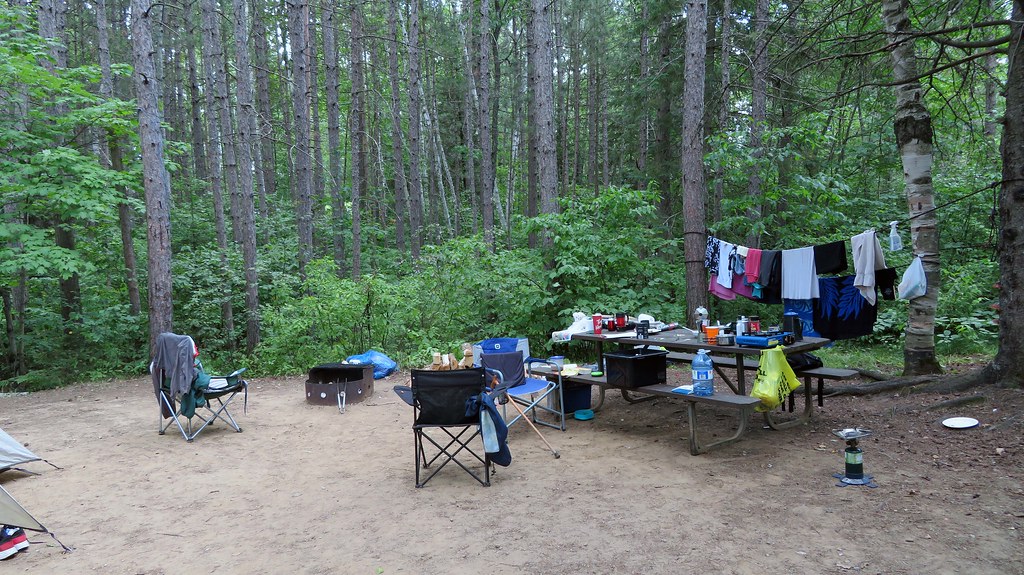
Because neither Catherine nor I have visited this park before, we wanted to explore its various lakes—and Silent Lake Park made a perfect ‘base-camp’. A week or so before the trip I had done an online research and jotted down numbers of the best campsites in the park. Upon arrival, we managed to get a nice campsite. In less than two hours we set up the tent and unloaded all the other stuff. Early in the evening the weather abruptly changed and we knew something was brewing—at one point it became dark literally in 15 seconds (yes, like in a movie theatre!), a strong gusts of wind hit the campsite, we heard thunder and later saw lighting. It became so windy that I was afraid that tree branches might fall and damage my car (as it happened in 2002 in Arrowhead Park, when a sudden wind blast made a lot of damage in the park—and falling twigs made indentations in my then just-purchased vehicle), so we quickly drove and parked near a comfort station. Thirty minutes later the storm moved away and we even succeeded in starting a campfire. Soon a bunch of raccoons paid us a visit and thus we had to hang our garbage on a cloth line, as they were extremely adept in spreading it all over our campsite. On a few occasions we saw deer (or doe) in the park.

While staying in the park, we made four canoe trips, each time driving with the canoe to Kawartha Highlands. Our first trip was on Wolf Lake on June 20, 2012. Since it was our first canoeing trip of the season, after paddling about one kilometre, we realized we had forgotten... our life jackets (which we usually do not wear on smaller lakes and during nice weather), so we had to paddle back to the car to get them. Later we stopped on a small island to have lunch and continued paddling to the end of the lake, to a relatively short portage leading to Crab Lake (140 m) and then leisurely paddled back. We saw at least one campsite with two campers occupying it—as well as met a solo windsurfer who tried to surf to his cottage, yet was practically stationary as there was hardly any wind. We struck up a conversation with him and eventually gave him a lift, or rather a tow.

The next day we paddled on Long Lake—its name being very appropriate, as it was a very long lake indeed! Next to the parking lot was the Long Lake Lodge with several cottages located on the top of rocky hills (later we met and talked to the owner of this lodge, http://www.longlakelodge.ca/,—we got quite interested in the cottages and might rent one in the fall). It was a very nice paddle—until the weather deteriorated! We stopped on a campsite, donned our rain suits and soon it began to rain. We waited for well over one hour for the rain to stop... Even though it was one of the longest days of the year, it was almost 8 pm and we decided to head back in spite of the rain and reached the parking lot just before 9 pm.
On June 22, 2012, we drove to Anstruther Lake, one of the largest in the park. We thought we could do a lot of paddling there... but when we saw the lake, we did not like it: it was too big and too open—and because it was windy, we knew it would be difficult to paddle on it. Catherine, disappointed with yesterday’s rain, suggested that we go back to Long Lake and paddle to the very end—and it turned out to be a very clever decision! Soon we were passing the familiar shores of Long Lake, left behind the campsite where we temporarily stayed on yesterday (it was already occupied) and reached a portage leading to Buzzard Lake. A canoeists with his two kids was about to start portaging his canoe & camping equipment there; since Catherine wanted to see Buzzard Lake, she grabbed a few of his belongings and accompanied him while I took several photographs of some old shed and boat. Later she told me that this gentleman was a school principal at a Christian School.

As we were paddling on, we saw a canoe with two young guys; they said they were going camping for the weekend (it was Friday). After a short time the lake became larger—we saw a number of cottages along its shores as well as a few campsites on its southern shore. We decided to stop at one of them and have cold beer. We were very surprised to see that it was occupied by a lonely raccoon which appeared to be sick and was trying to approach us.

Although raccoons are very common, it is highly unusual to see them during the day—especially tame ones! We tried to scare it off and eventually it disappeared in the forest. Fifteen minutes later we saw the canoe with the two guys who were actually planning to stay on this campsite (it was probably the greatest campsite in the area!). We chatted with them for a while, then paddled to a very nice island just meters from the campsite, sat on a bench and admired the sunset.

At 9:00 pm we got into the canoe, said ‘bye’ to the two guys at the campsite (they had already set up their tent and a huge tarp) and paddled back, arriving at the parking lot at 10:00 pm. Altogether we paddled over 13 km.

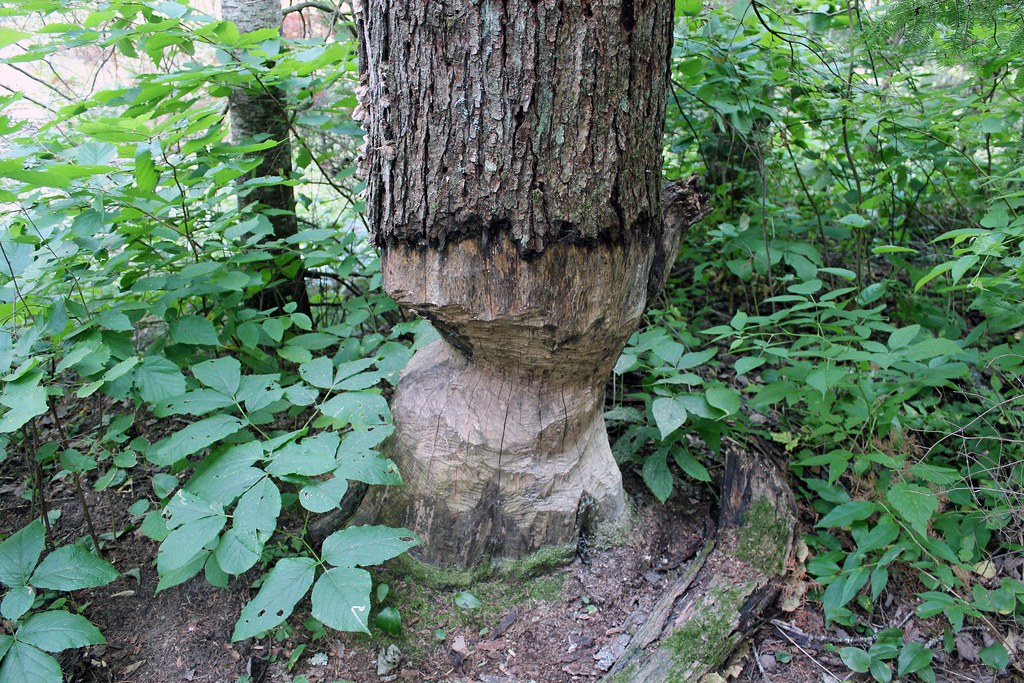
On Saturday, June 23, 2012, we went canoeing in the evening on Eels Lake. We spent some time in a bay near the put-in, full of dead roots, and later paddled north and then turned south into a small bay. The area appeared to be quite wild and after several minutes we reached a long beaver dam—with a beaver sitting on the other shore.

We carried the canoe over the dam and got into another part of the lake, created by the beaver dam (otherwise it would have been a very shallow, swampy area). It was absolutely worth it—it looked very pristine and natural, some of the lake was very shallow and swampy. We spotted a house (cottage?) hidden in the forest, but it appeared nobody was living there. After paddling around the lake, we observed the sunset and then headed back to the car.

It rained on Sunday, starting in the morning. Unable to go paddling, we drove to the nearby town, Apsley near dinnertime for a nice meal. It turned out that the local restaurant, “Swiss Bear”, closed at 3:00 pm on Sundays. We found another place which was closing in 15 minutes but the waitress/cook/bottle washer graciously accommodated our requests.

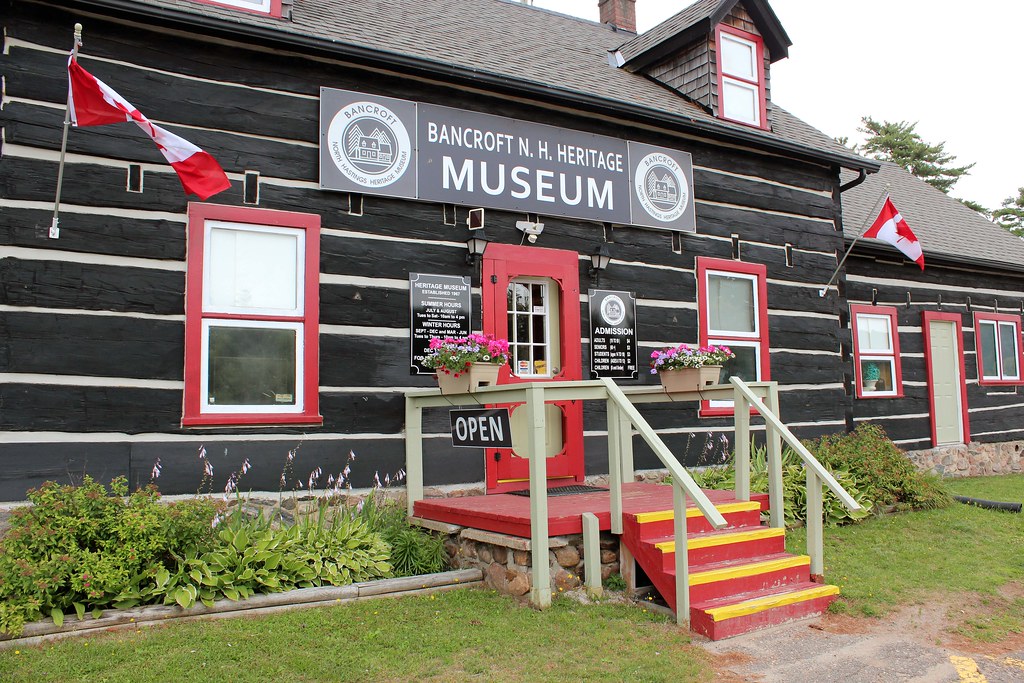
Later we went back to Apsley; Catherine bought ice cream and later we went to a dollar store where we found a few interesting items at great prices! We also went to Bancroft—a very picturesque town; after walking down the main street, we went to a supermarket where, due to power outage, no credit/debit cards were accepted and most shoppers were unable to pay for their purchases (luckily, I carried some cash with me). We also bought a bag of firewood at Home Hardware and then headed back to the park.
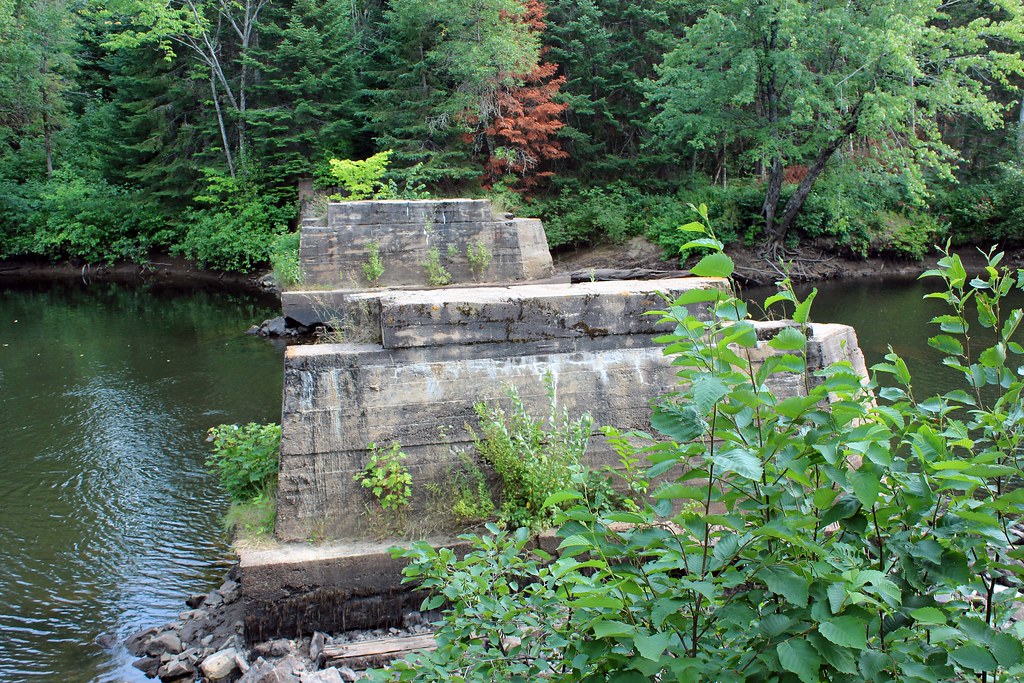
On Monday we packed up and began driving to Toronto. On our way back we visited the town of Lakefield, stopped near the old train station and then drove to Peterborough—the road was following the Otonabee River and the former railway bed—we even saw an old rail bride.

In Peterborough we stopped near the Duke of Wellington Loyal Orange Lodge, built in 1852 and now owned by Trent University. There was a pedestrian bridge over the Otonabee River/Trent Canal—and nearby I saw an abandoned railway swing bridge, as well as the old railway embankment: as the bridge swung, it linked with the rail tracks on the embankment and the train could pass over the channel.

Of course, the tracks must have been lifted long ago as the embankment was now overgrown with vegetation and the bridge quite rusty. There were lots of scullers plying the waterway in their small, sculled boats.

I am really glad we visited this park—it is located relatively close to Toronto and it offers pretty good canoeing and camping opportunities. I am sure we will go there again to canoe and camp!
Blog in Polish/po polsku:
http://ontario-nature-polish.blogspot.ca/2012/07/pywanie-na-kanu-w-parku-kawartha.html
More photos:
http://www.flickr.com/photos/jack_1962/sets/72157631372460608/