Sunday, October 20, 2019

TWO WEEKS IN THE HOTEL CARISOL LOS CORALES AND A DAY TRIP TO SANTIAGO DE CUBA—JANUARY, 2018


Our 13th trip to Cuba in 9 years and 2nd to the Carisol Los Corales since November, 2010 commenced in Toronto on January 4, 2018 by Air Cubana. We immediately recognized the 23 year old, all-black livery Airbus A320, as we had flown it to Cienfuegos in January, 2016 (LY-COM). After a 3.5 hour flight we landed in Santiago de Cuba just before 6:00 pm. Upon arrival I exchanged money, getting 153 CUC for CAD $200 (i.e., 76.50 CUC for CAD $100), the hotel offered 74 CUC for CAD $100. The only problem was a small musical band that suddenly materialized next to me, playing loud music while I was busy counting & checking the money—they could not have chosen a worse time & place for their performance! Furthermore, they expected a tip—in your dreams! The bus ride to the hotel took over one hour and we still managed to have dinner.

Junior Suite H-4, Carisol, which we got the second day and spent there 13 nights (upper floor, on the left). In spite of all the predicaments we faced, it was quite nice!

Two weeks before the departure, we had sent an email to the hotel, asking to either upgrade us to a bungalow at additional cost (bungalows were not offered by Hola Sun) or give us a quiet room, far from the pool and the entertainment area. Unfortunately, we got a room in Los Corales in the 500 section, number 520, which almost exactly met the conditions that we had NOT asked for. It was facing the swimming pool and the entertainment area, so the first night it was quite noisy because of the show and later people kept congregating in the bar area. The back of the hotel building faced two abandoned structures and a field where various farm animals grazed. The following day after 10:00 am the pool music began. By the way, in 2010 we stayed in room 516!

View from our balcony-yes, that's a horse! We saw horses, donkeys and even a herd of cows/goats passing just in front of our door!
We were determined the change the room. The next day we approached the front desk, only to be told by a stern & rude clerk that there was no availability of any bungalows or rooms. We insisted on speaking to the manager who was much more receptive and said that with a fee of 20 CUC per night per 2 persons we could move to a bungalow at Los Corales or a junior suite at Carisol.

View from our balcony-a storm and rain are coming!

Incidentally, the previous evening, upon our arrival at the hotel, we inquired about upgrading to a bungalow and the stern clerk at the reception desk told us it would cost extra 30 CUC for 2 persons per night; apparently the price had gone down overnight ;). We went to the Carisol, spoke to the person at the reception desk there, were given an upper level junior suite in the “H” section and soon we moved in—Angel, a very nice hotel employee, drove us & our 5 suitcases in a golf cart.

Another view from our balcony on similar bungalows.

The next day we paid almost CAD $400 for the upgrade and the safe (2 CUC per day). However, from the outset we experienced a plethora of problems (which I mention later in this review) and my friend demanded a refund of the extra money we paid for the upgrade. Fortunately, she did get it back, albeit in CUCs.

At the beach, original carvings by tourists from Poland

During the first 7 days of our stay we had the worst weather ever in Cuba—it was cold, windy, cloudy and raining (one evening we experienced such a heavy rainfall that we were unable to go to the dinner), so we never spent any time on the beach. I was sorry for those who came for vacation for just one week! The weather improved significantly during the second week, it was sunny and hot (up to +30 C), although it rained at least once.

The bad weather almost forced me to spend more time than I had been planning on reading books. The first book I read was “Stalin: The Court of the Red Tsar” by Simon Sebag Montefiore. Although it was quite long, it was also very readable and I finished it in just several days. I had read several books on Stalin before, but this was probably the most comprehensive and impressively researched. A book about a monster and his evil lackeys, who blindly follow him and carry out his every order, no matter how thoughtless, cruel or reckless.

The second book, “The Kite Runner” by Khaled Hosseini, was a wonderful book. The story was incredible, yet very painful—so much so that eventually I found it quite difficult to read. Yet I am glad I did.

On the beach with the hotel's employees

Certainly, the Carisol is much quieter than the Los Corals, as the latter has nightly entertainment and other activities. We could freely use all facilities & restaurants at both hotels and did not mind the 5 or so minute walk to the other hotel and back. At 10:30 in the morning a very entertaining & inspiring Cuban lady was conducting stretching exercises on the beach. Catherine heartily participated and she really enjoyed them. The beach was quite nice, but there were not enough palapas or trees providing shade, so we had to ‘reserve’ them early in the morning by 8 am. 


Is it really a Tarantula?

At Carisol, around the pool and after the rainfall, we saw many toads and several times they gave a unique & noisy performance in the evening. Another evening, on our way to dinner, we spotted a big spider—we were told it was a tarantula. Just a few days later Catherine spotted an identical spider in the resort’s washroom and she said it was a very unnerving encounter. There were plenty curly-tailed lizards all over the property, which often chased one another on the beach the way chipmunks do in Canada.


Then we moved to the Carisol section and got a junior suite in building “H”. The junior suite was on the upper floor, facing the ocean, and had a balcony with two comfortable chairs. We also had a view of the mountains. There are 4 units in each building, 2 on the ground floor and 2 on the upper floor. We were never bothered by entertainment noise or any other sounds and never saw any bugs in our room, except for tiny ants which were usually on the balcony, attracted by drops of liqueur. On the balcony we spotted a large green leafcutter-type grasshopper and a small gecko. From our room’s balcony we often watched horses & donkeys grazing the grass just in front of our room (what a wonderful environmental way to mow the grass!). On two occasions we were quite surprised to witness a herd of about 10 big bulls and cows passing just meters from our room as well as a herd of goats. Some horses had bells, so at night we heard them long before we saw them. Actually, we enjoyed those animals very much, as they gave a genuine rustic touch to the resort.

From our room #520 in the Los Corales section we could see such animals and the abandoned buildings, supposedly a hotel for the resort's employees.

Unfortunately, encountered a number of problems during our stay:

  • There was NO hot water whatsoever for the first 7 (seven!) days.
  • Cold water was just trickling for the first 7 days, so even our cold showers were difficult to take.
  • We (as well as many other tourists) had NO water (cold or warm) at all on 3 separate occasions and such shortages lasted from about 3 to 20 hours at a time. Some newly arrived tourists were very upset as they desperately wanted to take a shower after their flights.
  • One evening the balcony, bedroom & bathroom lights suddenly went out. The technician was unable to fix them, but they were back on the next afternoon.
  • The air conditioner did not work for the first 2 days (the remote control was missing), but since it was cool outside, it was not a big issue then. Later it was functioning, but every while it stopped (probably the circuit breakers tripped and had to be reset).
  • During the second week we had no A/C for 2 nights, even though we notified the front desk numerous times. Eventually a maintenance guy came, reset the breakers and showed me how to do it. Yet the A/C stopped working just minutes after he left. Despite my resetting the circuit breakers many times, they kept tripping every few minutes and after 1 hour we gave up. It was quite hot, we left the door open, but mosquitoes got into our room and finally we had to close the door and ended up having a rather uncomfortable night. The air conditioner seemed OK after something was replaced, as it kept working without interruptions. We also got our lights back after a night of semi-darkness.
  • Power went down about 6 times, but it was restored immediately, within less than 20 seconds. Yet probably due to the power surge the coffee maker which we brought from Canada broke.
  • The TV set worked, but the audio sound was very distorted and the closed captioning did not work, so we never turned it on again (in our case, it was not really a problem, as we do not have TV sets and do not watch TV back home anyway).
  • There was no telephone in the room—each time there was an issue with our room, we had to walk all the way to the reception to report it.
The food was not bad and probably both of us gained several pounds!

There was plenty of food and it would be difficult to go hungry, but it was quite repetitive and relatively basic. Well, I never go to Cuba expecting gourmet cooking—yet I still managed to gain about 5 lbs.! We had meals at both Carisol and Los Corales—the latter was more crowded. Outdoors dining at both hotels was awesome (one of the reasons we went to this resort), but not always available. Breakfast egg stations served eggs & omelets, but most times they were slow and inefficient, some inexperienced cooks had problems even with cracking the eggs! Lunch & dinner: cooks prepared pork, beef, hamburgers, hot-dogs, turkey—but I never saw shrimps & fish. The buffet food was quite tasty & healthy, yet almost identical every day. For dinners we ordered red wine, which was below average—well, nothing really unexpected. Service was spotty—some servers were very good, others mediocre. At Carisol a 7-person Cuban band played Cuban music, but a little too loud, it was often impossible to conduct a conversation. Besides, when the band was playing inside the restaurant, the acoustics was terrible, the cacophonous sounds were deafening! At Los Corales there was probably a different musical band—one evening it played excellent Cuban jazz music which I loved. At Los Corales there was a restaurant adjacent to the main one, which offered pizza and spaghetti. We went there once and had a pizza, which was OK.
A short ride in this boat on Laguna Baconao was quite pleasant

We only went once went to the outdoor a’ la carte restaurant at Carisol (La Piazza). We waited for one hour for the food, the order was not correct and could not be changed. The beef was like shoe leather and the desert consisted of… melted ice cream. In addition, the 7 or 8 piece musical band was standing very close to our table and was very loud; I considered tipping them NOT to play. Overall, it was a disappointing experience and it was relief to leave—it is much better to go to the regular buffet.

Of course Catherine did not pass this occasion and immediately posed next to this antique car for a photo! 

It was a pity that we stumbled upon so many problems—especially that some of them were eventually rectified AFTER our (often repeated) interventions—meaning that they could have been fixed BEFORE! Besides, many other hotel guests we met had had similar (and even worse) problems, some had to change rooms several times, especially after the heavy rains, which caused inside flooding and leaking. I guess a proactive approach is not the hotel’s forte. Overall, I would give the resort 2.5 out of 5 stars.

This donkey was a frequent habitue of the resort grounds

In spite of all the predicaments we encountered, we had gone to Cuba with a (very) open mind and we made our vacation enjoyable, taking whatever occurred in strides. Besides, we enjoyed the surrounding mountainous scenery, bike riding, visiting nearby villages as well as watching the ocean, mountains and the horses, donkeys, cows & goats from our balcony.

Would we return to this resort? Incredibly, the answer is ‘yes’, provided that we could ensure getting a problem-free, ocean-view junior suite in Carisol.

Blow holes near the hotel

Our Hola Sun package included a free trip (by a horse-drawn buggy) to Laguna Baconao & the crocodile farm. We also had a 20 minute boat tour (3 CUC extra per person) on the lagoon—the scenery was beautiful, as it was surrounded by mountains. The crocodile farm basically consisted of 4 cages containing large dozing crocs, do not expect an eco-tour ;).

Pumpkin in Jarden de Cactus with our rental bikes

The hotel (Los Corales) offered free bike rental for a 24 hours period, to be returned at 10:00 the next morning, but their quantity was very limited and were often unavailable. But at least they were maintained on a regular basis by the guy in charge of the rental. We rented bikes on 3 occasions and rode to the village of Baconao, Laguna Baconao, Jarden de Cactus, Hotel Costa Morena, the Blow Holes (!) and the Aquarium. Easy, yet awesome jaunts!

Elementary school in the village of Baconao, Marti's bust and a Cuban flag

When we had visited the village of Baconao in 2010 (by a horse carriage), I had taken a number of photos of local residents. This time I brought them with me—and yes, I met two women whose photos I had taken 8 years ago! The village now had a nice restaurant where we had beer. We also walked on a narrow path between homes, sometimes talking to the residents. We also met one guy who spoke English, we talked to him, his mother and his brother. He asked us if we had any hats—we promised to bring him some and indeed, we rode to the village again several days later and brought him two hats. There was also a school; since it was morning, a lot of kids were coming from various directions. Nearby was a gate manned by a guard—the road was off limits to non-Cubans because it led to the vicinity of the American military base in Guantanamo. Supposedly the area around the base is full of mines.

This road leads to the vicinity of the American military base in Guantanamo and is off limits to tourists. In the past we saw a guard there, but this time the booth was empty and Catherine wanted to take advantage of this situation and ride there

At the hotel we met a very nice woman from Quebec who also spoke fluent Spanish. Incidentally, she had some major problems flying Air Cubana to Cuba—she was kicked off the flight, then had to take a different flight, landed in Cienfuegos, I believe, took a bus and then a cab to get to the hotel. We talked to her on several occasions and one day the three of us rode the Jarden de Cactus (as per her suggestion). What a great garden! The gardener in charge of the place showed us so many different plants (and our friend graciously translated everything for us) and at the end took us to the very top of the hill—the view was awesome, we could see the ocean and the Hotel Costa Morena. Later we rode to the hotel and had a couple of drinks there.

Blow holes near the hotel

We also saw the Blow Holes (just past the Aquarium). We left the bikes and descended to the rocky shore, where they were located. They are formed when the sea caves grow landwards into vertical shafts, which can cause abrupt blasts of water from its gaping hole. There were many of them and we could hear them ‘breathing’; then every minute of so, as the waves the rocks, water and air rushed into these crevices and burst out. I found one hole which was probably too far from the see and instead of spraying water, it only released air. I covered the hole with a coconut—and suddenly it was pushed about 10 feet up in the air! We spent some time, enjoying this interesting spectacle.


Goats in the village across from the hotel

There was also a small village vis-à-vis the hotel. We walked there on our last day and visited several farms. One had plenty of cute goats. Then we took another dirt road and eventually reach the hotel.

Only for pedestrians!

We had also planned to go to Santiago de Cuba and stay there for one or two nights. Because just before our trip I had gotten an extremely nasty flu, which almost caused me to cancel our vacation, we decided to shorten our trip to this lovely city for just one day. Since the hotel offered a free bus ride to Santiago on Sunday, we took advantage of it. We took advantage of a free bus trip to Santiago de Cuba on Sunday—it was certainly a highlight of our stay at the resort. 


It departed from the hotel at 10:00 am, arrived in the city at 11:30 am and left back for the resort at 4:00 pm, giving us just over 4 hours to explore the city. We managed to walk from Plaza de Dolores along the main pedestrian street (Francisco Vicente Aquilera) to Parque Cespedes. There were plenty of shops & shoppers and no cars! I took several photos just in front of the building with a blue balcony—it was there that Fidel Castro had announced the triumph of the revolution on January 1, 1959! Then we talked to a taxi driver—his antique American car (Willy Jeep) from 1942, was quite unique, only a very limited number of such model were still extant and his was the only one in Cuba. In 2010, at this very spot, I had taken a photograph of a very nice Cuban lady—I brought this photo with me and the driver immediately recognized her. She was not there, but he said he would give the photo to her.
A new taxi driver in Santiago de Cuba!  On the left the building with a blue balcony—it was there that Fidel Castro had announced the triumph of the revolution on January 1, 1959!

We wanted to see the Cathedral, but it was closed. We just went up the stairs and had an awesome view of the whole Plaza.


In front of the building with a blue balcony—it was there that Fidel Castro had announced the triumph of the revolution on January 1, 1959!


While walking around, we met Alfredo, an English-speaking, 37 year old Cuban guy who became our unofficial guide. Catherine remembered one man’s words of wisdom—“Hire a local guide and he will keep the beggars away”. We walked with him to Tivoli and the waterfront. There were lots of industrial buildings, but no big ships. I took several photos of kids playing in front of a house. 


Then we hailed a horse carriage and asked the owner how much he wanted to take us to the Cementerio Santa Ifigenia and back. After some haggling we decided on 10 CUC and rode there. As we got there, some Cuban told us that we should quickly walk there to see the 2:00 pm change of the guard at Fidel Castro’s grave. 


The grave, consisting of a granite boulder, is decorated with a plate that reads simply: "FIDEL”. It was located very close to the tombs of Jose Marti and other Cuban heroes. Nearby were the graves of fallen participants of the Cuban Revolution, but unfortunately, we were not allowed to go near them, I only saw a myriad of plates with their names. There was a security guard, telling us where to take photos and where not to go. Uniformed soldiers were standing under shaded structures. Then at 2:00 pm a number of guards emerged from the adjacent building and marched towards the various tombs. Overall, it was an interesting spectacle. We quickly walked to the horse carriage and rode back to the town center. Our guide remained with us; we invited him to an outdoor bar for beer and at the end gave me 10 CUC and two razors for which he seemed grateful. 


We were back at Plaza de Dolores at 3:30 pm. I walked around the Plaza, took some photos and then spotted a Cuban guy singing a song—I videotaped him and almost missed the bus that started leaving without me!


Santiago de Cuba is a very beautiful time and I wish I could spent several days exploring it—well, probably I would not mind walking at the Cementerio Santa Ifigenia for the whole day, as it contains so much of Cuban history.


NEW PERSONAL BLOG

On April 11, 2026, I launched a new blog: Autographs, Pins and Memories.

In this blog, I share my memories of Poland in the 1970s, as well as recollections from later years and from my life in Canada. I also write about my collection of autographs, photographs, pins and other objects connected with my life, including the stories behind them.

The blog is available in two language versions: English and Polish.

Wednesday, August 1, 2018

CAR CAMPING TRIP TO KILLBEAR, KILLARNEY AND MASSEY PROVINCIAL PARKS AND PHILIP EDWARD ISLAND, SEPTEMBER 7-27, 2017


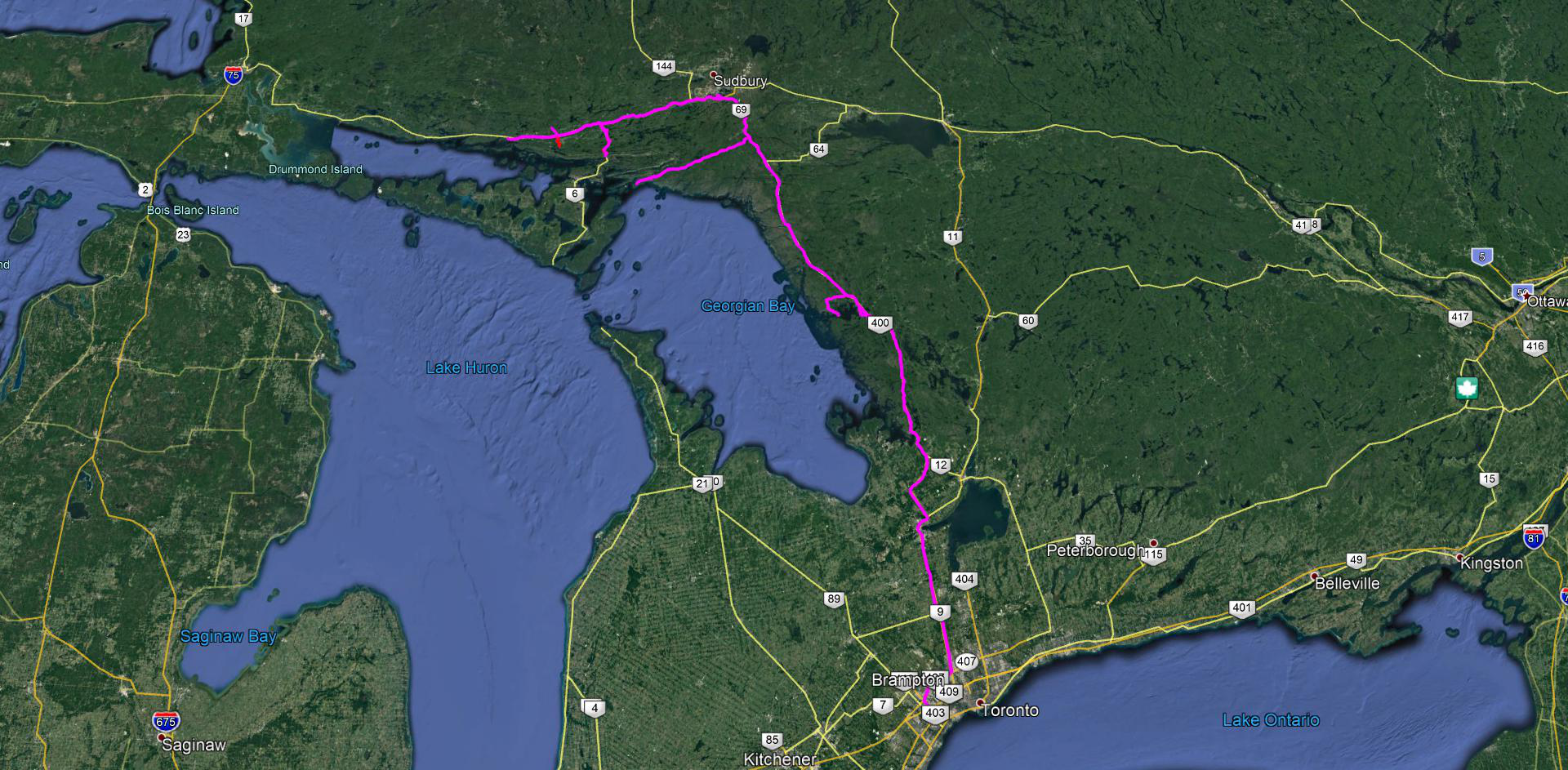
Our trip in Ontario

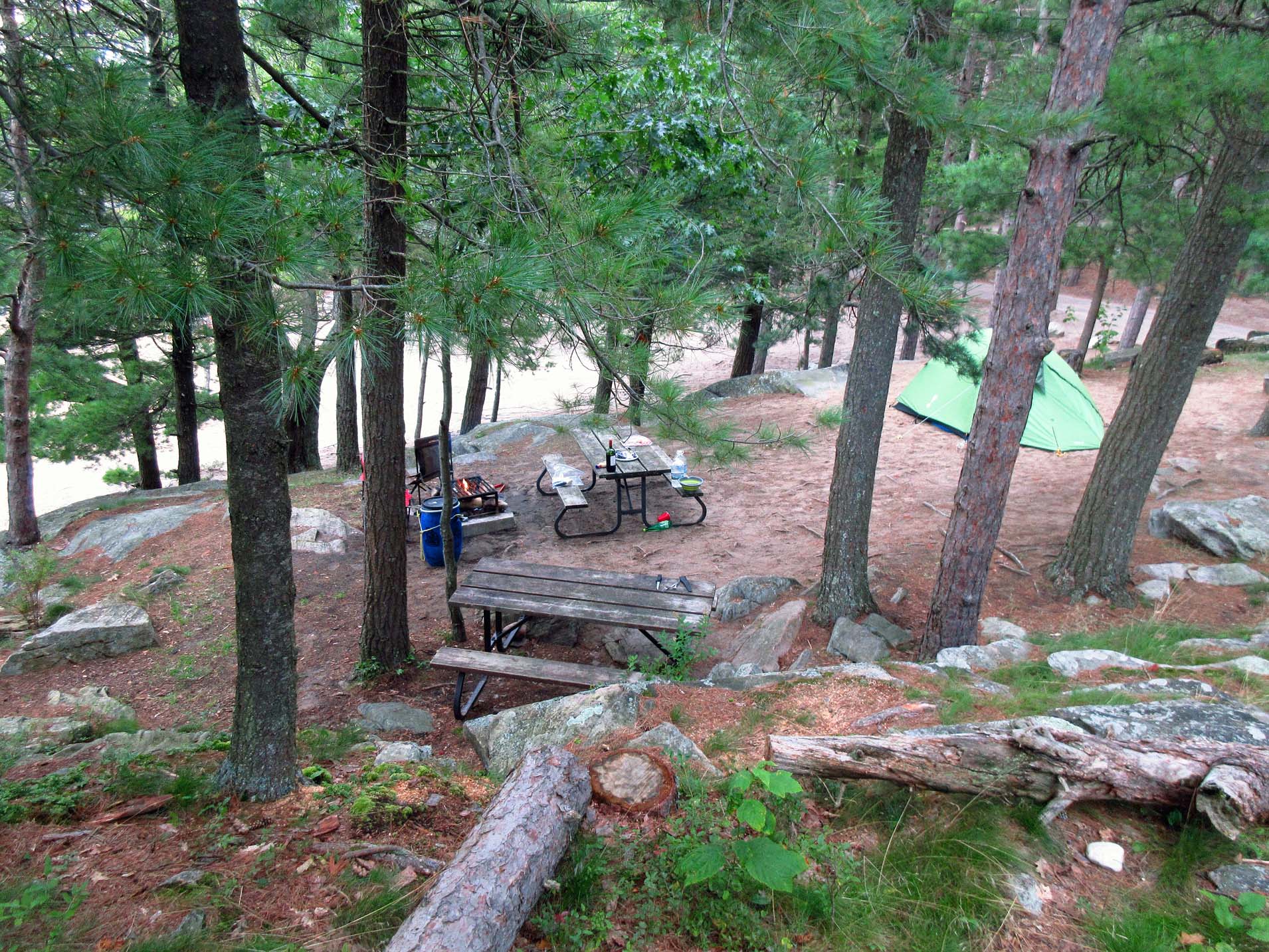
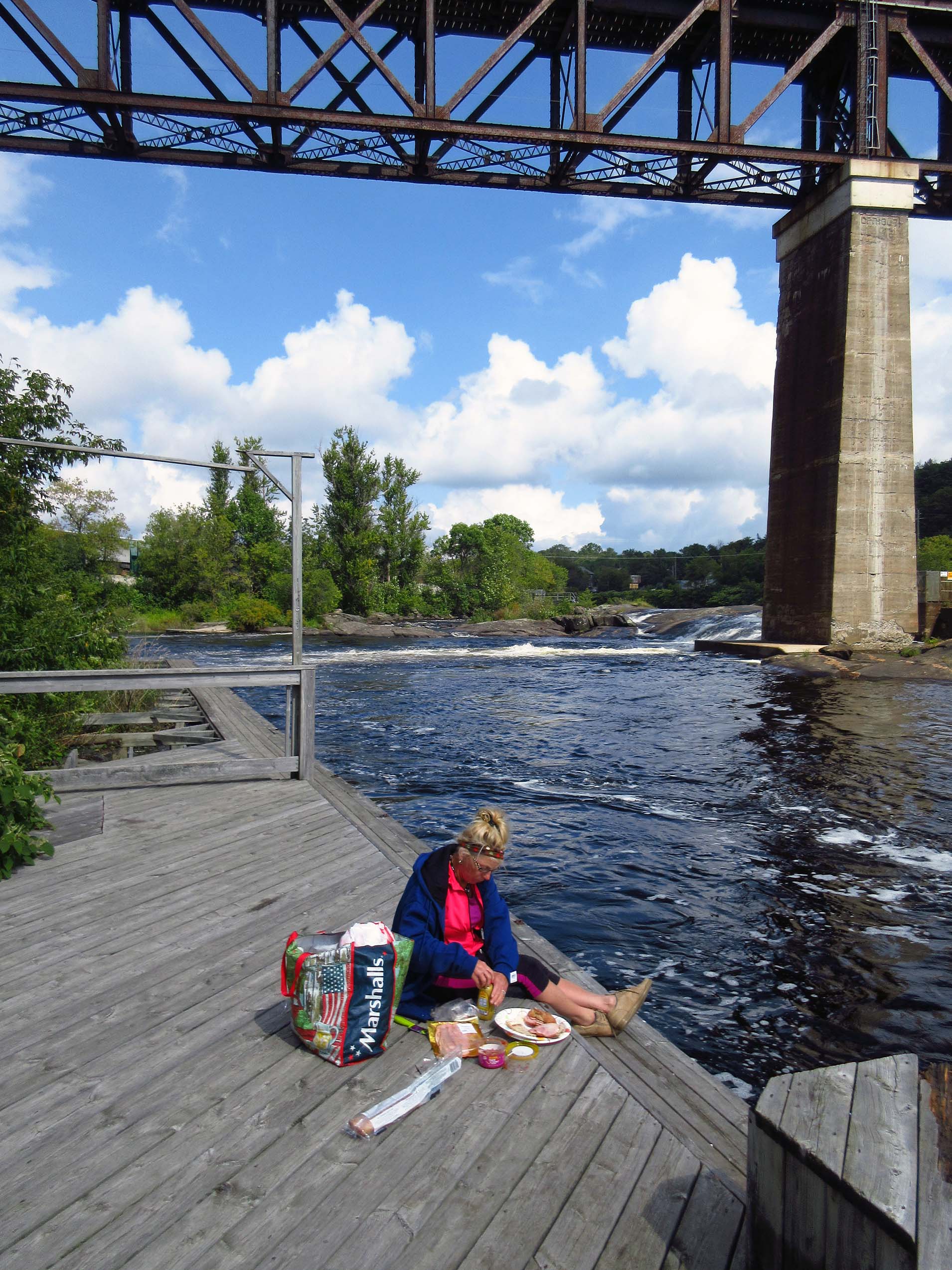
After coming back 5 days ago from our camping trip in the USA and Ontario (http://ontario-nature.blogspot.com/2018/07/car-camping-trip-across-minnesota.html), we were again ready for another autumn adventure, just in Ontario—both of us drove separately and of course, we took the canoe with us. We had a reservation coming up in Killarney Park in several days and decided to spend this time in Grundy Lake Provincial Park. We left Mississauga early in the morning and our first stop was Parry Sound—we visited our favorite bookstore, “Bearly Used Books”. In the bookstore the radio was on and while Catherine was listening to the weather forecast, it mentioned Killbear Provincial Park—what an excellent idea, we had completely forgotten about this park! After a quick visit to No Frills & Heart Store, we had a traditional lunch under the railway trestle over the Seguin River and proceeded to Killbear. The park employee gave us a list of vacant campsites and we loved one of them, number 1042, it was gorgeous, overlooking the beach and rocks and allowing us to admire spectacular sunsets from our campsites. For some reasons it looked very familiar to me… As Catherine was backing up from the site’s parking, the van’s tailpipe got stuck in the gravel… and then I had the déjà vu moment: in 2014 we had spent one night at this park, camping on a nearby campsite number 1139 (just over the rocky hill from #1042)—but we had also checked out this campsite then and as Catherine had been backing up, exactly the same thing had taken place—her tailpipe had gotten stuck in the gravel!


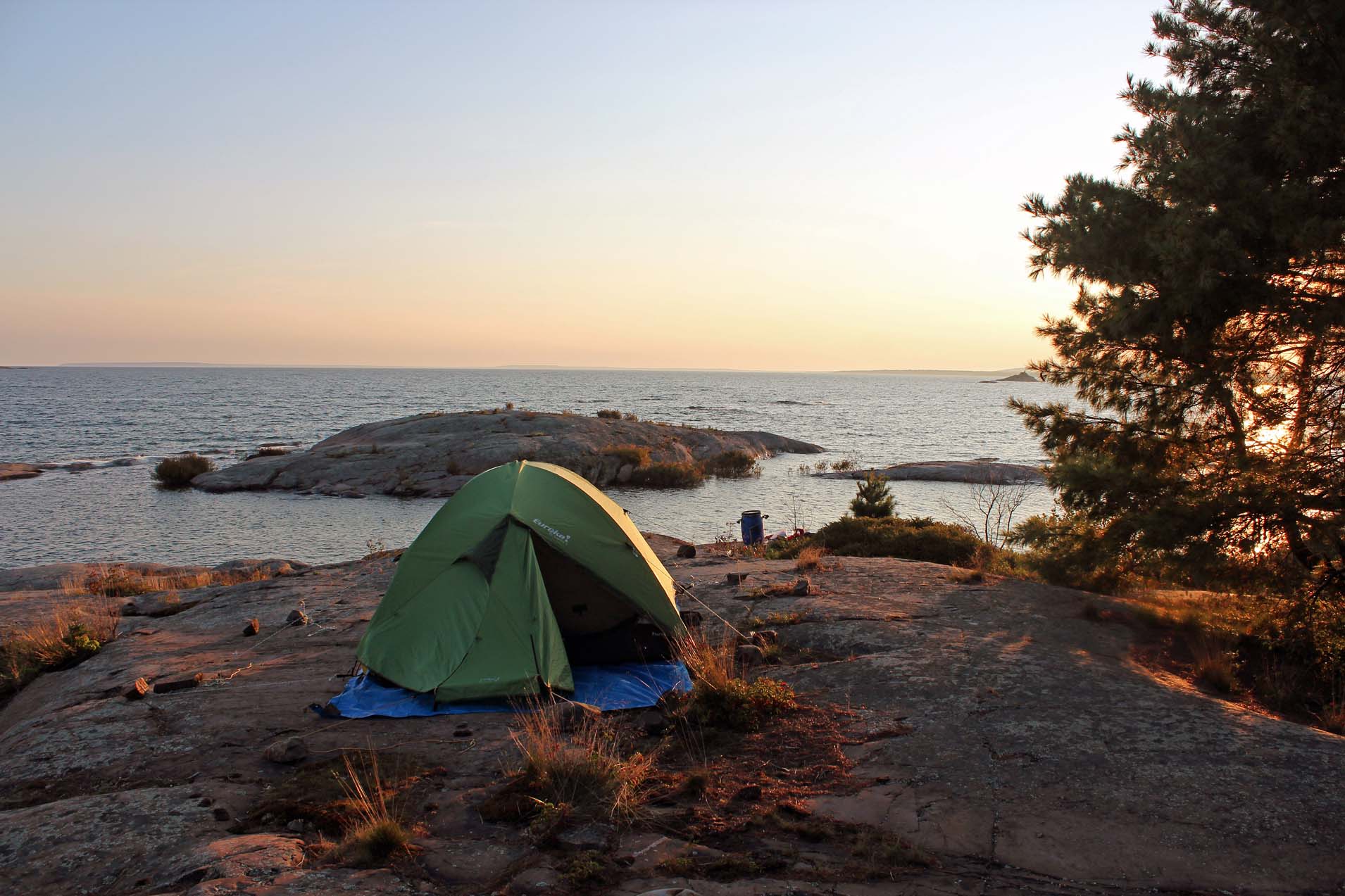
We drove as fast as we could to the park office, paid for the campsite and soon I was setting up the tent. Usually I can easily do it by myself, but because of strong (and cool) wind, I had to ask Catherine to help me—as well as used the guy lines attached to the fly.

The view from our campsite. Amazing!

This time I brought with me a very absorbing book by Michael Weisskopf “Blood Brothers. Among the Soldiers of Ward 54”. The author, a senior correspondent for Time magazine and a Pulitzer Prize finalist, lost his hand while riding through Bagdad in the back of a U.S. s Army Humvee in 2003. He was sent for treatment to Ward 57 at Walter Reed Medical Center, the wing of the armed forces hospital reserved for amputees, where he met a lot of soldiers who had lost limbs in the war. It was a very powerful book, showing the usually unknown side of any war. Being wounded is one thing—but the recovery process, in many cases, was very long, torturous, painful and frustrating. It certainly presented that part of war we hardly ever think about. At 300 pages, it took me just a few nights to finish the whole book. It was very poignant and emotional.


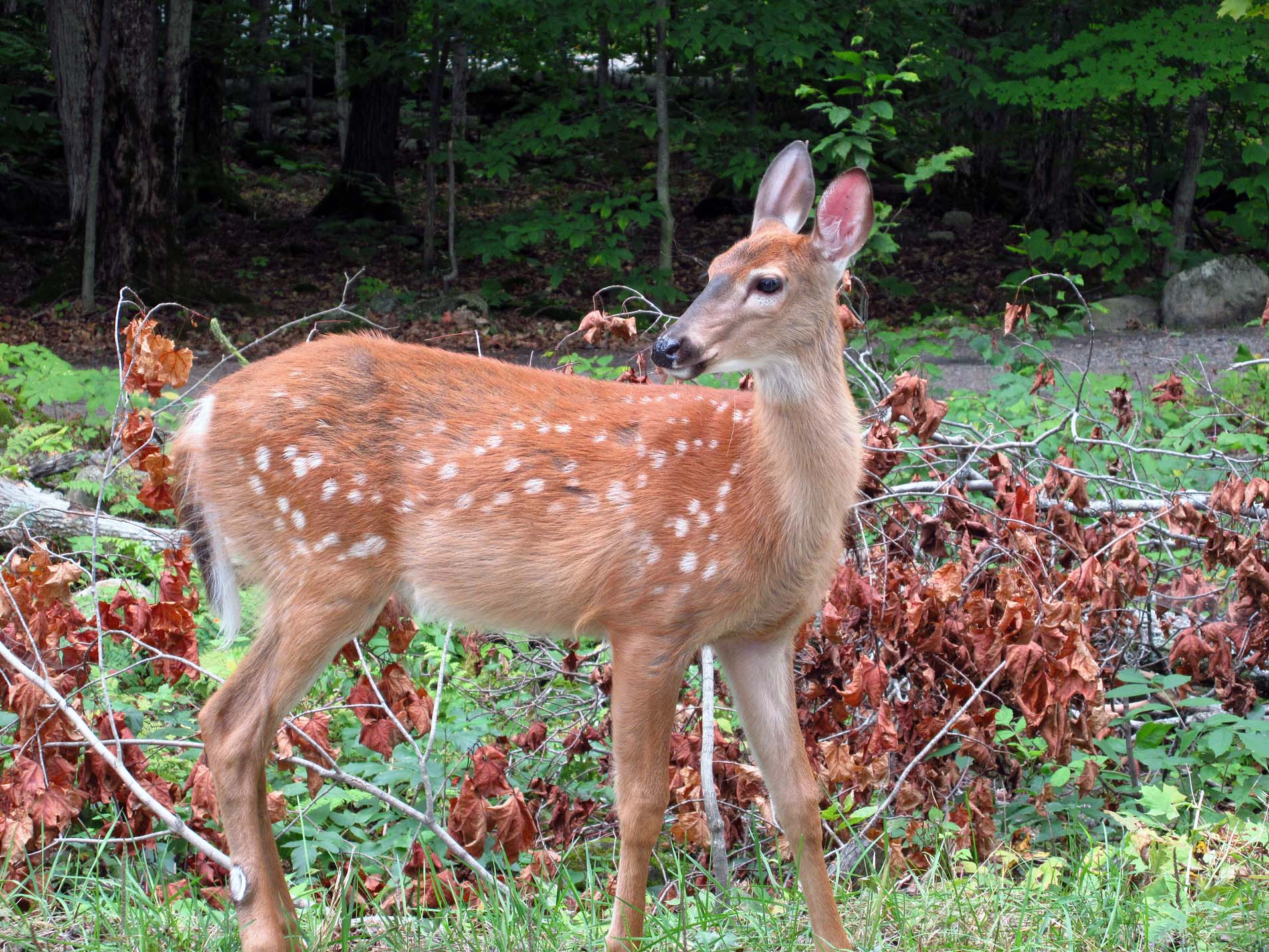
We stayed at this park for 3 days (until Sunday) and every day went for a hike (a hiking path paralleled the road), saw plenty of deer, I took photographs of interesting-looking mushrooms as well as we spoke with a couple who had just purchased a new small silver camper. The Visitor Center was very nice, too—we chatted with a young employee for a while and she told us that in previous years the park had had plenty of issues with black bears: some had managed to break into locked cars (certainly without using the car keys!) and one bear alone had supposedly been responsible for over 20 such break-ins—it had to be euthanized and now we could see it on display in the Visitor’s Center. Every afternoon we admired sunsets from our campsite and later had a campfire. The campground filled up on Friday, but it was still quiet.


On Saturday we drove back to Parry Sound to do shopping at No Frills and Hart Store, as well as went again the “Bearly Used Books” bookstore, where we spent at least one hour. Catherine bough several autobiographies of Canadian comedy actors and audio disks to listen to on her drive back to the U.S.A. I spotted “The Secret Speech” by Tom Rob Smith, the author of “Child 44” and immediately bought it. Interestingly, but it was in Parry Sound where I had purchased “Child 44” in 2014 and devoured it while we were camping on Franking Island! This was the second part of the trilogy. Although probably not as good as the first one, I kept reading it every night while camping in Killarney and on Philip Edward Island. I also bought Leon Uris’ “Mila 18” and “Holocaust Journey. Travelling in Search of the Past” by Martin Gilbert—both books depicted many places which I knew or was familiar with. We talked to the bookstore’s owner for a while, who told us a lot of fascinating things about Parry Sound and her bookstore. I also spotted a few books authored by Terry Boyle (whom I had met twice, last time at “Gilly’s Restaurant” after the Franklin Island canoeing trip in 2015) and found out that he had passed away on July 11, 2016. He was just 63 years old. So sad-I loved his books about Ontario!
Parry Sound. Our traditional site, under the trestle, where we always have our lunch

We also checked out the abandoned hospital in Parry Sound (a new one had been built since) and a train station. It was closed—nowadays there were just several trains stopping there, going to Toronto and Sudbury.

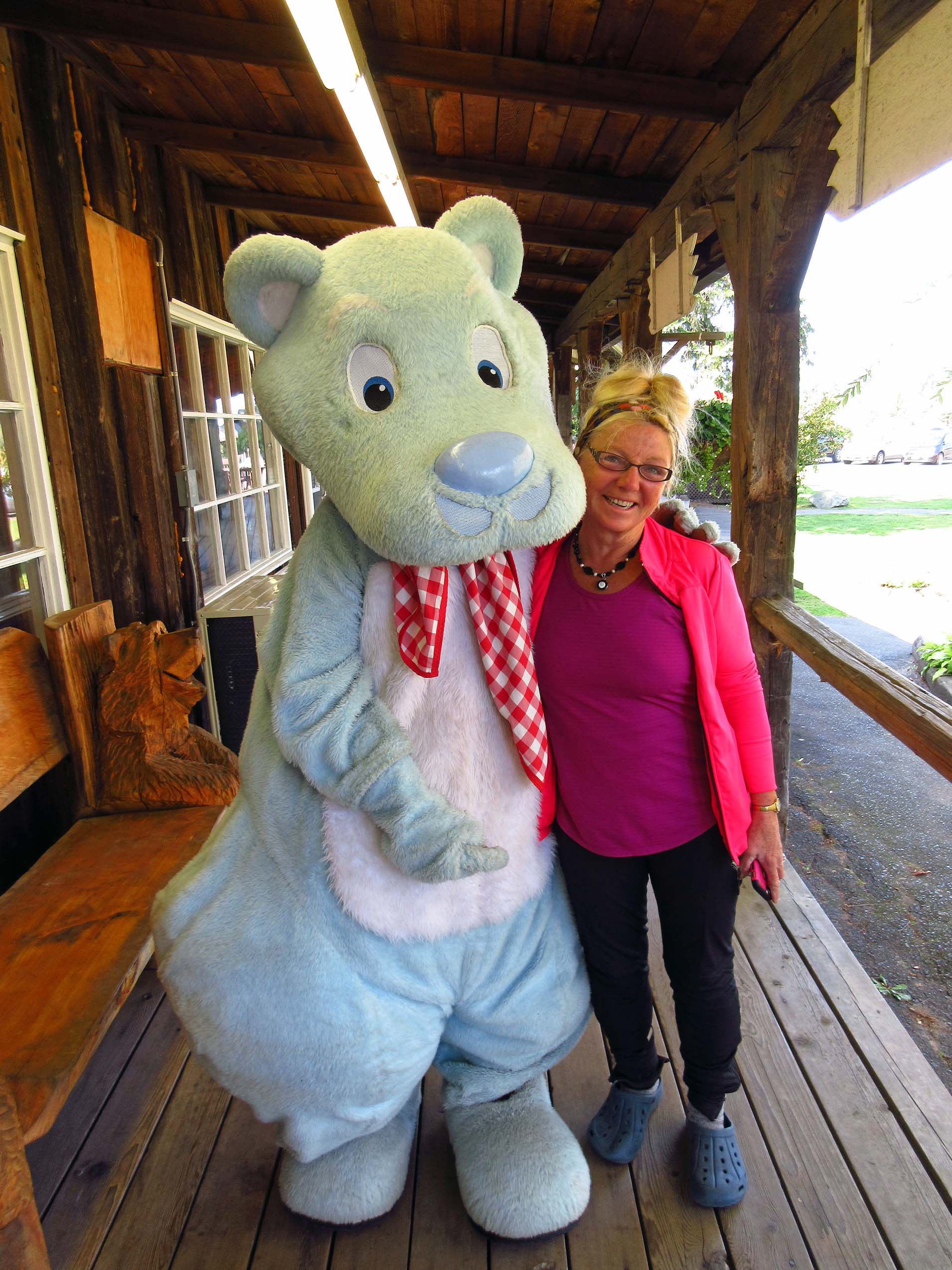
Catherine just made a new friend, "The Hungry Bear"!

On Sunday, September 10, 2017, we left our splendid campsite at Killbear and drove up north on highway 400 to the Hungry Bear Restaurant, one of our de rigueur stops whenever we were in the area. It was still accessible from the highway, but there was major road construction taking place and when the two-lane road is turned into a freeway, there would be an off-ramp from the freeway leading to the restaurant and the Trading Post. I sincerely hoped that they would still remain in business for many decades!

Our campsite between Lake Carlyle and Terry Lake

Eventually we arrived at Killarney Park’s George Office. Even though we had a reservation, there was a big screw-up with the bill, they kept overcharging us and could not figure out how much we should pay (we had 2 vehicles), but at the end we left the office quite satisfied. I think that all provincial parks should simplify the reservation system so that we did not have to spend so much time lining up in the office—after all, in our case the whole reservation had already been made online months ago.

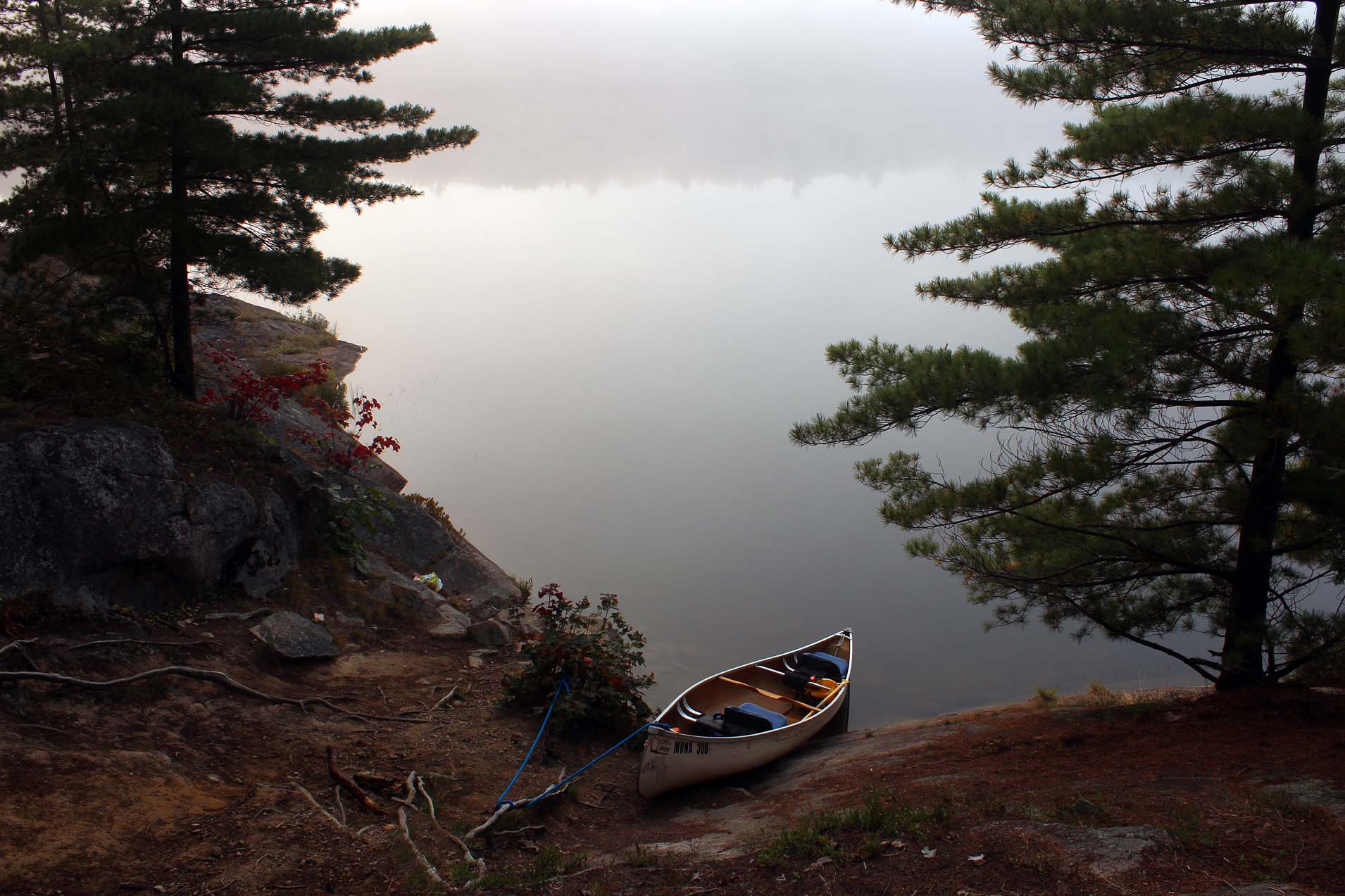
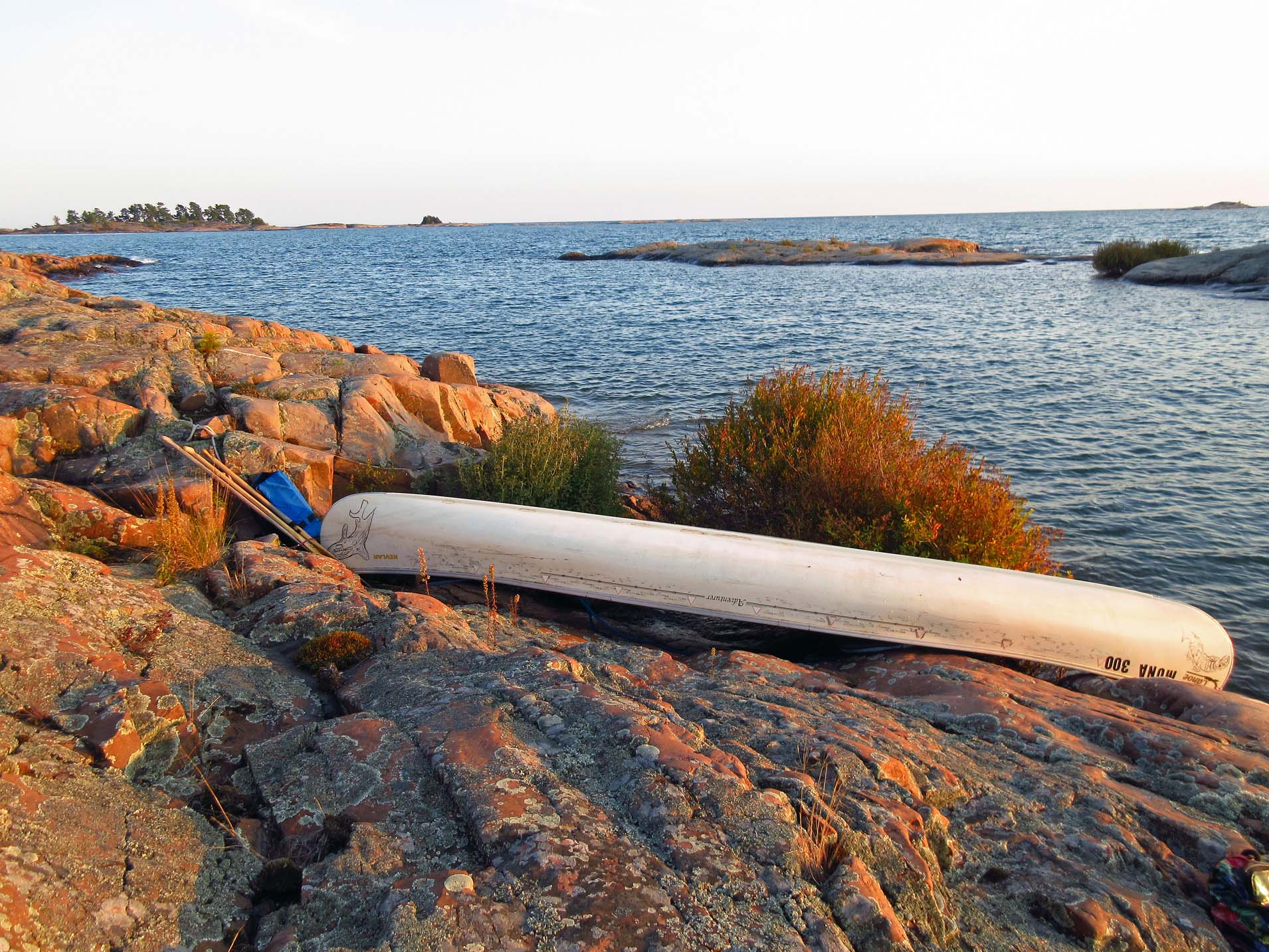
Our 'canoe parking'

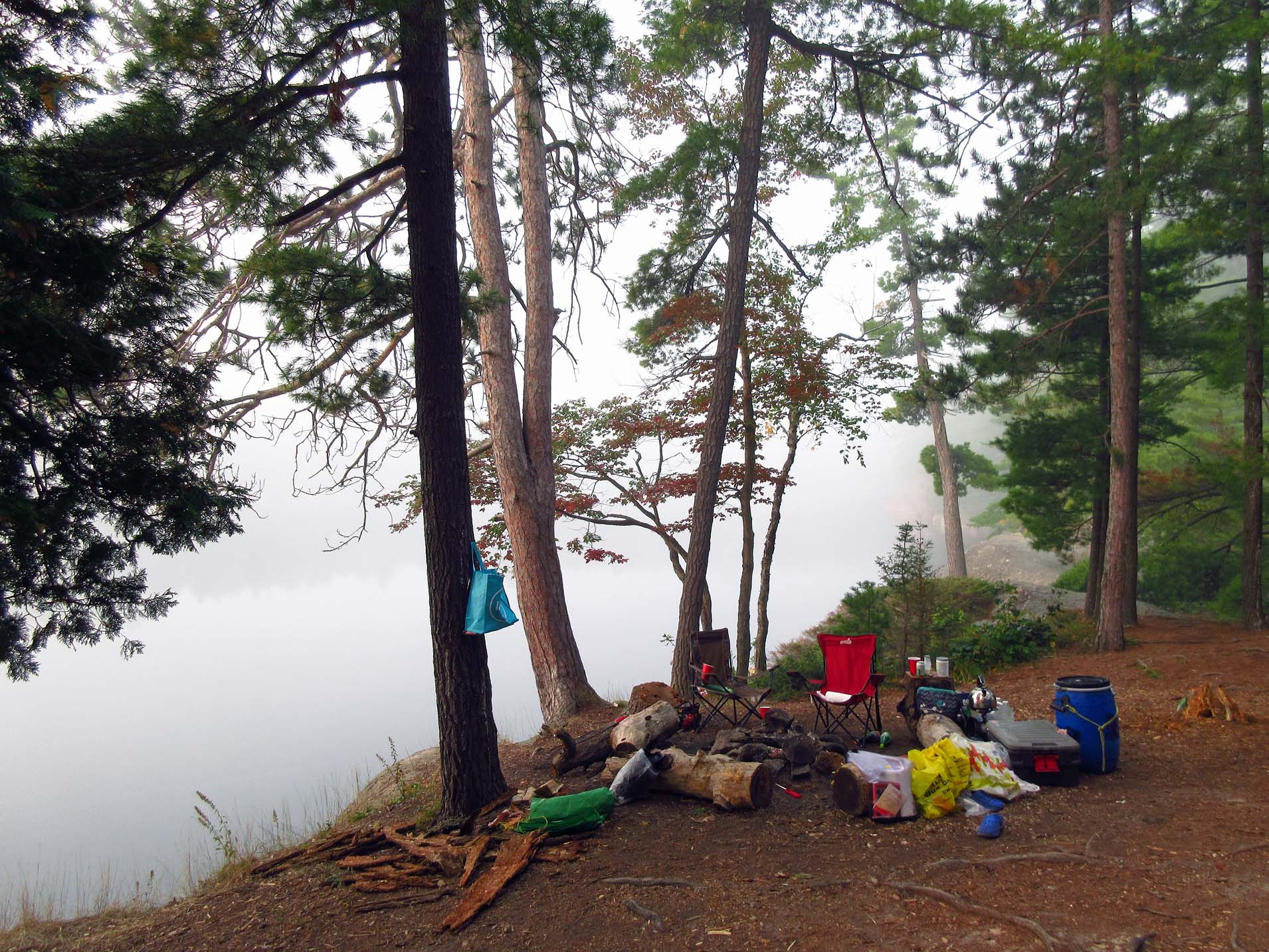
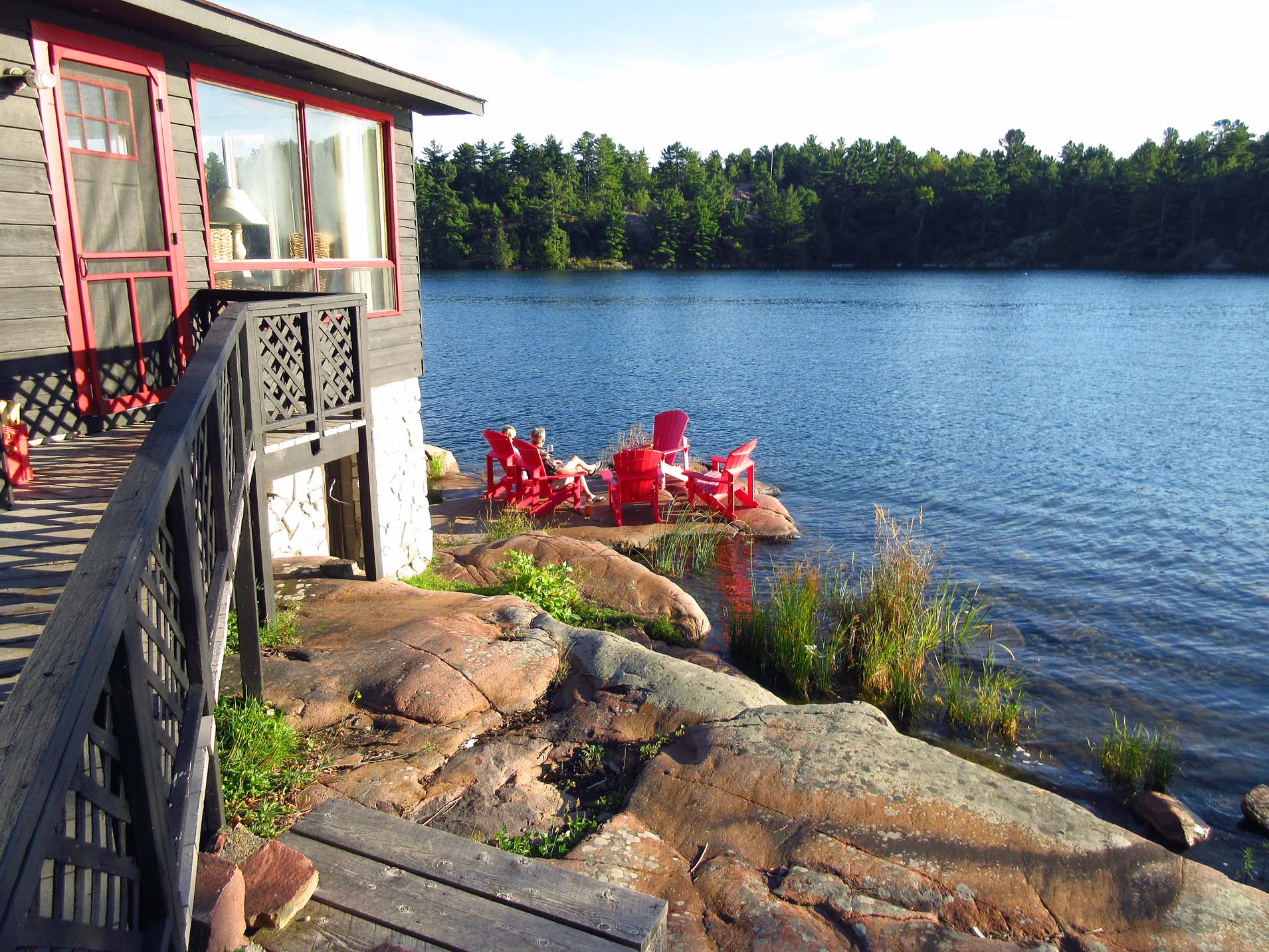
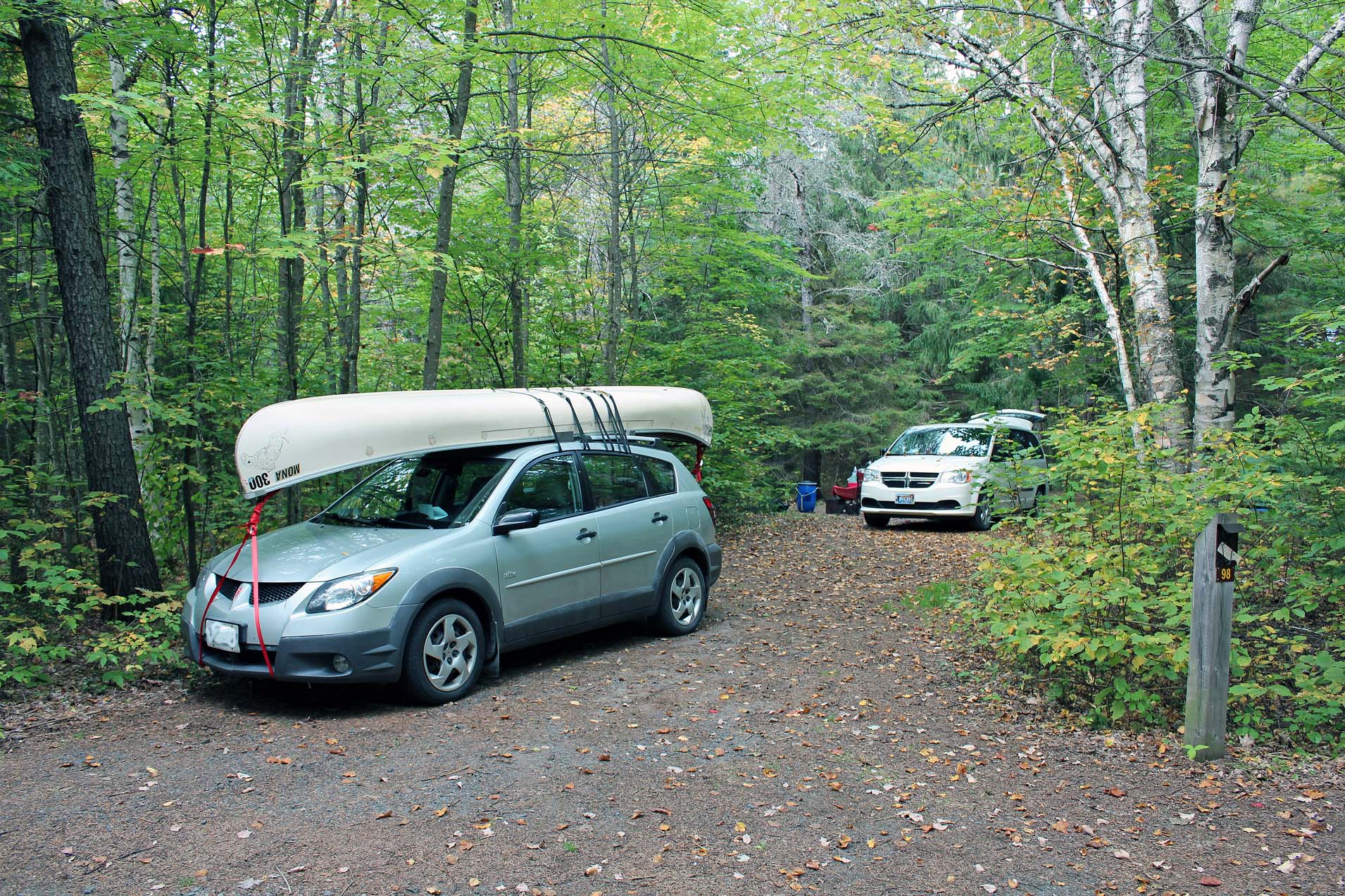
It was very difficult to reserve a site in this park and of course, I had done it a few months prior. Interior camping does not allow to reserve a particular campsite—there were a number of campsites on each lake and in our case, we just booked a campsite on Carlyle & Terry Lake—once we came to the park, we could stay on any campsite that was not occupied. It was our fourth visit to this particular area and we knew which campsite we wanted (altogether, there were a total of 6 campsites). Luckily, all the campsites were vacant, so we got site #55. It was very nice, offering the view of both lakes (Carlyle and Terry) and there was a small waterfall, but whereas those camping on the opposite campsite could see (and especially hear) it, we could not. The only drawback was the very precipitous hill leading up to the campsite. We had to carefully attach the canoe to the rocks & roots and then carry all our equipment up the rugged ridge. I felt ‘at home’ and in no time the tent was up and ready for our habitation and Catherine set up a great kitchen, ready for our gourmet meals!

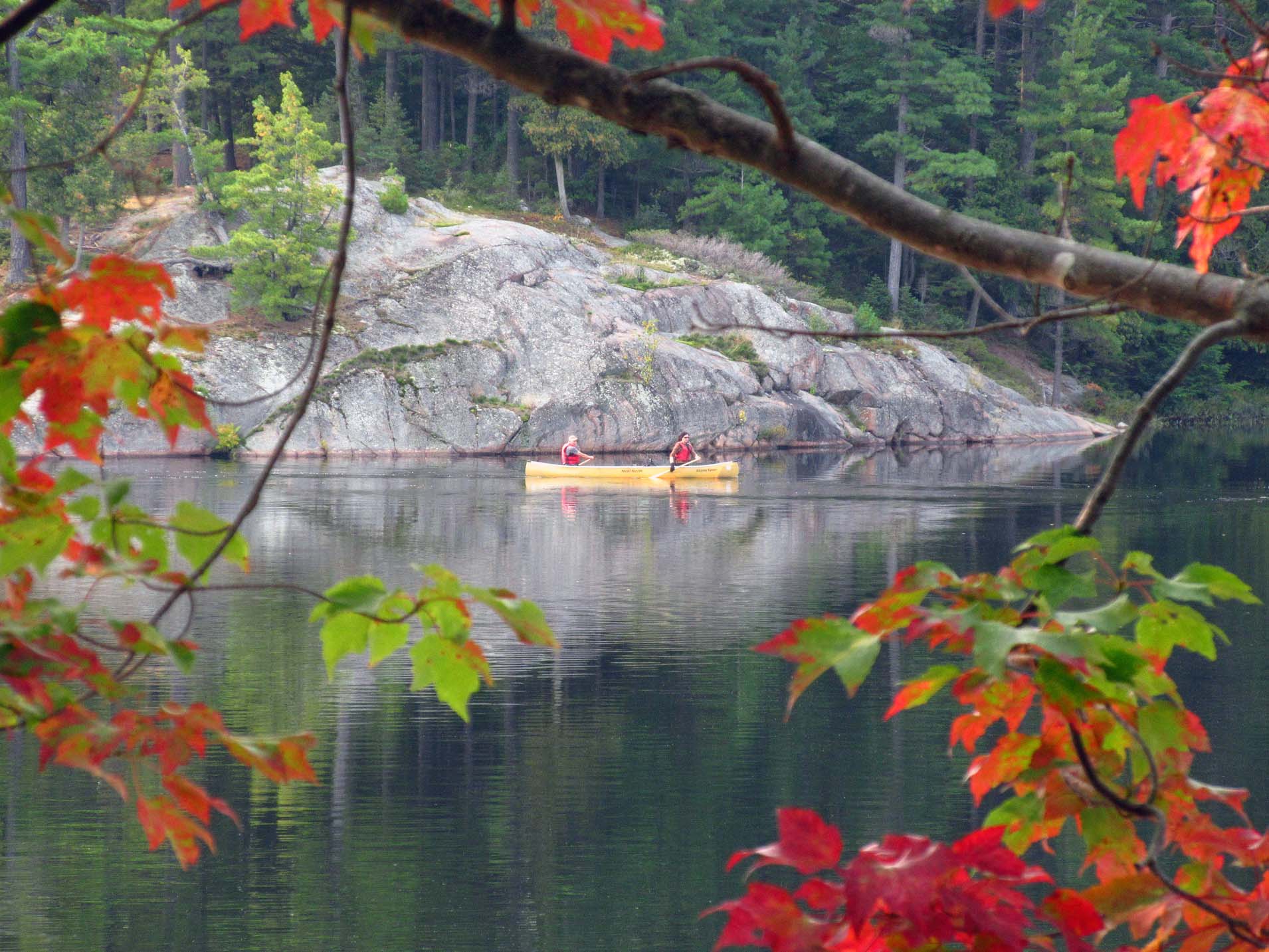
View from our campsite-from time to time we saw canoes

During our stay we had an excellent weather—it was sunny, not one drop of rain, warm and we did not see too many campers on the lake. Once we talked to an Irish paddler who had sprained her leg and was unable to follow her group on a hiking sally. From the outset Catherine refused to hang the food, but I insisted and after several attempts succeeded in throwing the rope over the branch. Although the food hanging area was relatively close to our tent and fire pit, it was certainly better than just leaving the barrel with food on the ground. We never saw any bears anyway, although twice we heard a very noisy thump or crash—Catherine thought it might have been a bear, but since no other noises followed, we assumed that perhaps a tree or a branch fell to the ground.


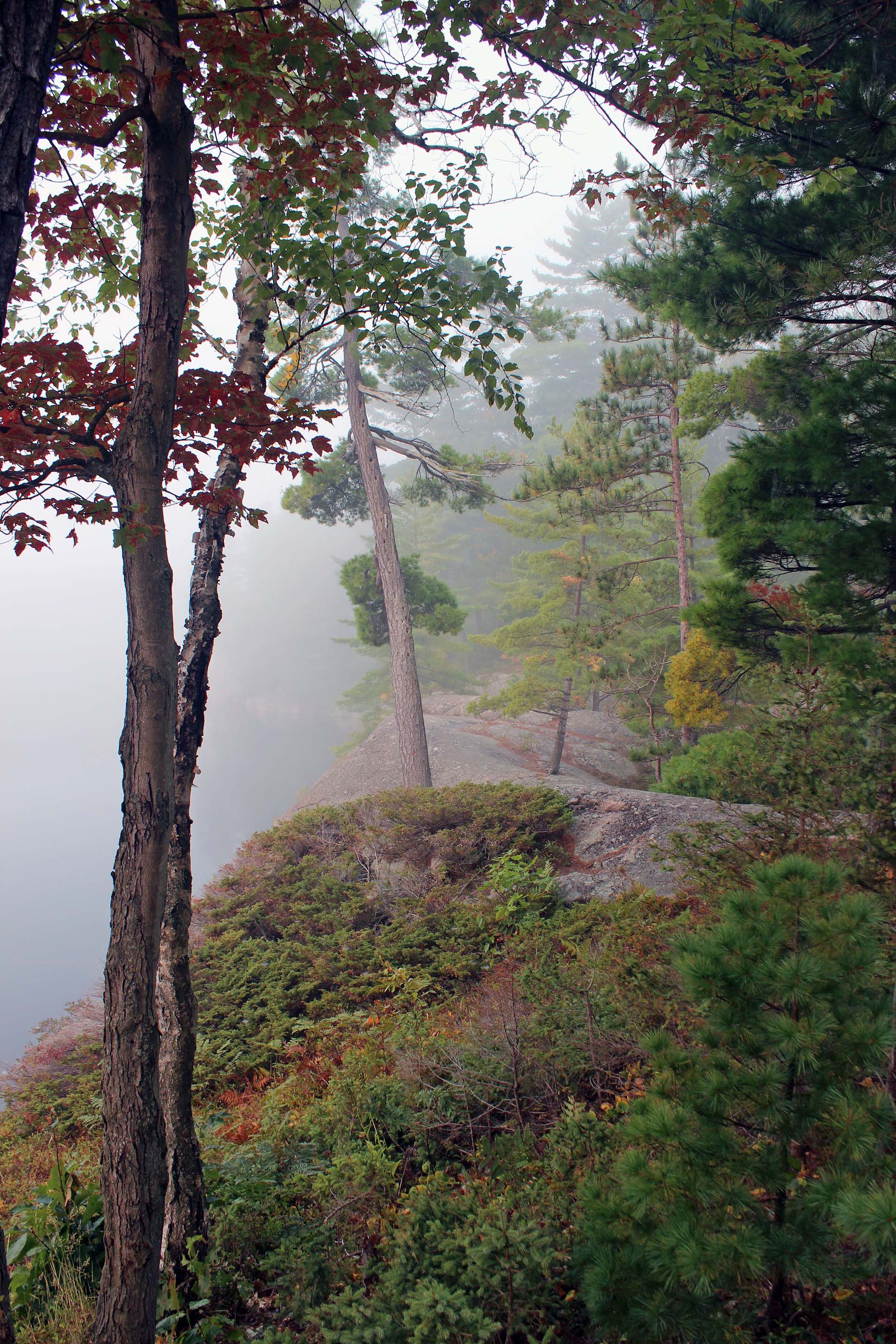
Some mornings were very foggy and I was glad Catherine woke me up; I took a lot of lovely photographs. In the evening we paddled towards Johnnie Lake, through a narrow channel, where beavers had made a dam (yet it was not very sturdy and we did not have to lift over the canoe) and we also saw a couple of beaver lodges.


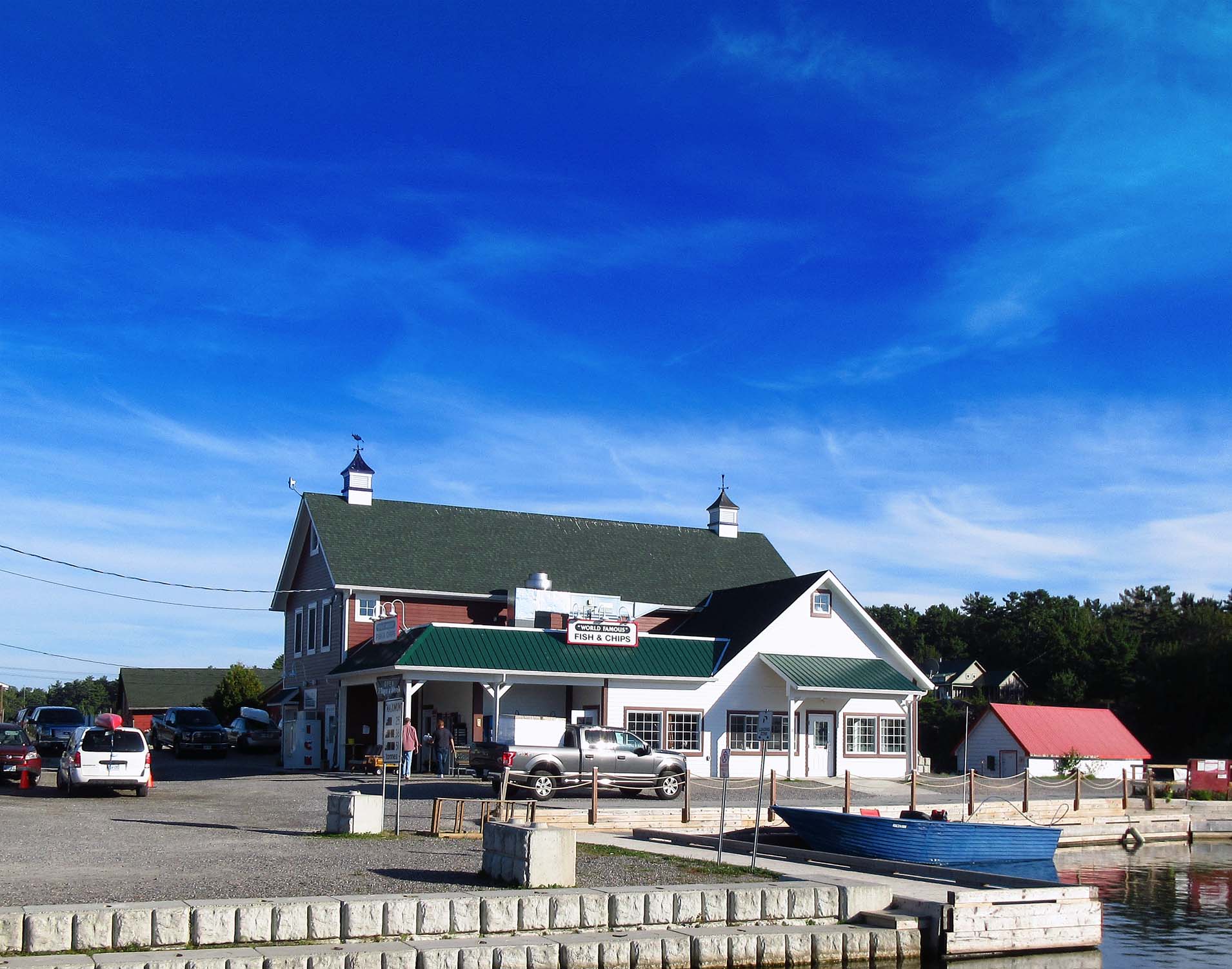
Almost daily we paddled from our campsite to the parking lot (about 30 minutes) and drove to the town of Killarney, where we had fish & chips in the Herbert Fisheries Restaurant. It looked so differently now, as the small school bus (which had become almost a symbol of Killarney) had been gone and a new building had been erected. The food was good, but the décor in the new place was so-so… I think that more old, historical photographs from the area and fishing artifacts would make the place much more original—and it would not take a lot of money. In any case, each time we consumed the food outside, sitting on the dock. We also went to the LCBO store (which sold liquor and beer) and Pittfield’s (the only grocery store in town).


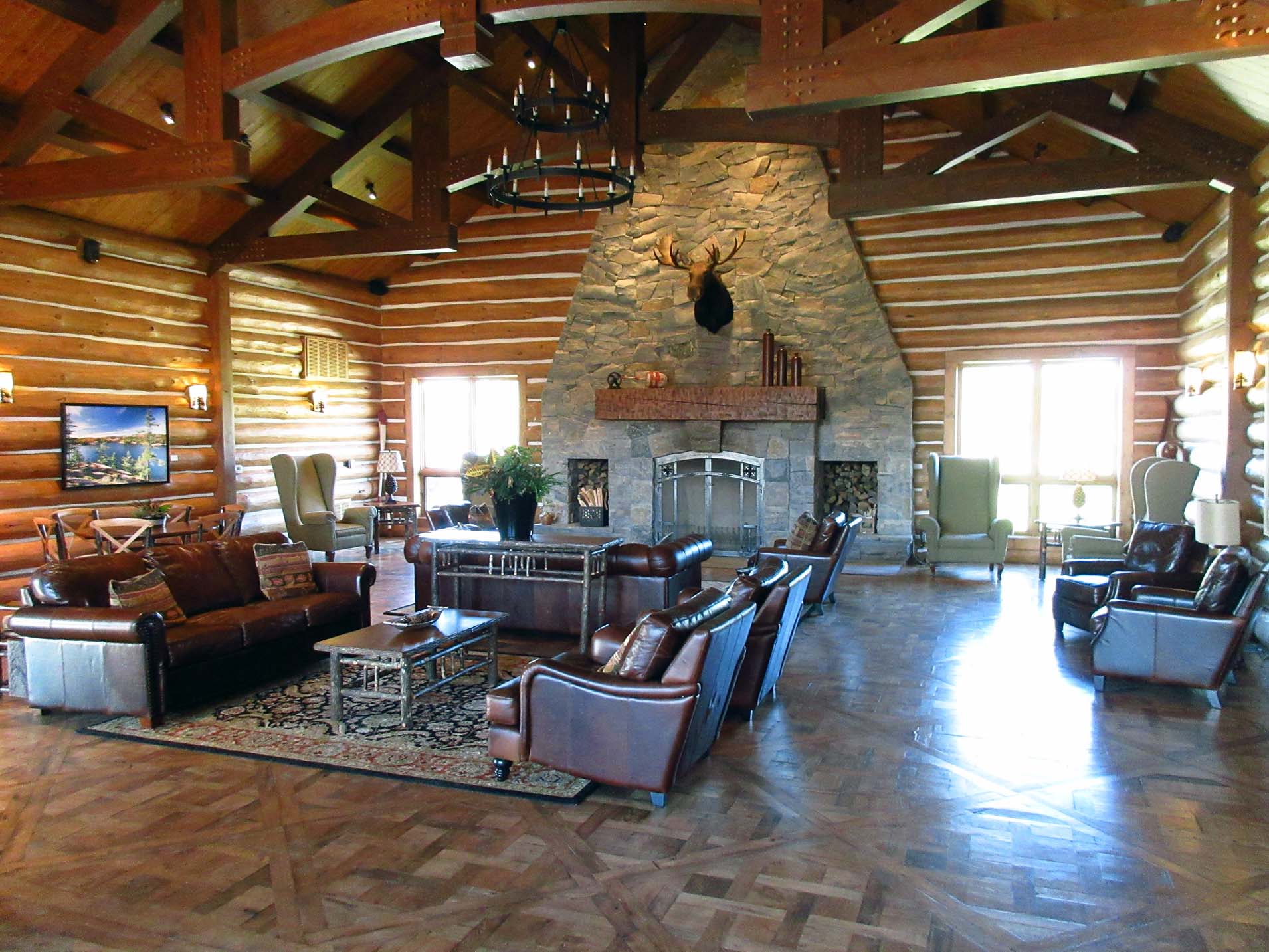
One evening we walked to the Killarney Mountain Lodge, which had just undergone very major & expensive renovations. We ran into Mr. Kelly McAree, General Manager, a very nice, no-nonsense man, with many years of experience in the hospitality industry. Considering that he must have constantly dealt with employees and guests, he certainly had to possess very exceptional qualities to successfully run such a place. He immediately offered to show us the whole property. He even took us to the chalet which used to be the residence of the original owner/builder and his family. The view from the Chalets was breathtaking and they offered very luxurious, yet still rustic experience.


From the hotel’s balcony we spotted a van towing a kayak. He told us it belonged to Traci Lynn Martin (http://www.justaroundthepointe.com/), a brave and extremely adventurous Missouri woman, who had embarked on an 8,600-mile Great Lakes odyssey in March, 2017, hoping to complete it in 2017. According to the “Detroit News”, she stopped her journey in late 2017 because of the rigors of wintry weather on Lake Ontario. Still, she paddled 3,582 miles from March and completed lakes Superior, Huron and Michigan. On October 15, 2017 she became the first person to circumnavigate the three lakes in one calendar year. She said she would try again in 2019. What a spirit!
The next night we went to Killarney Mountain Lodge and had a tasty dinner, sitting outside on the porch.


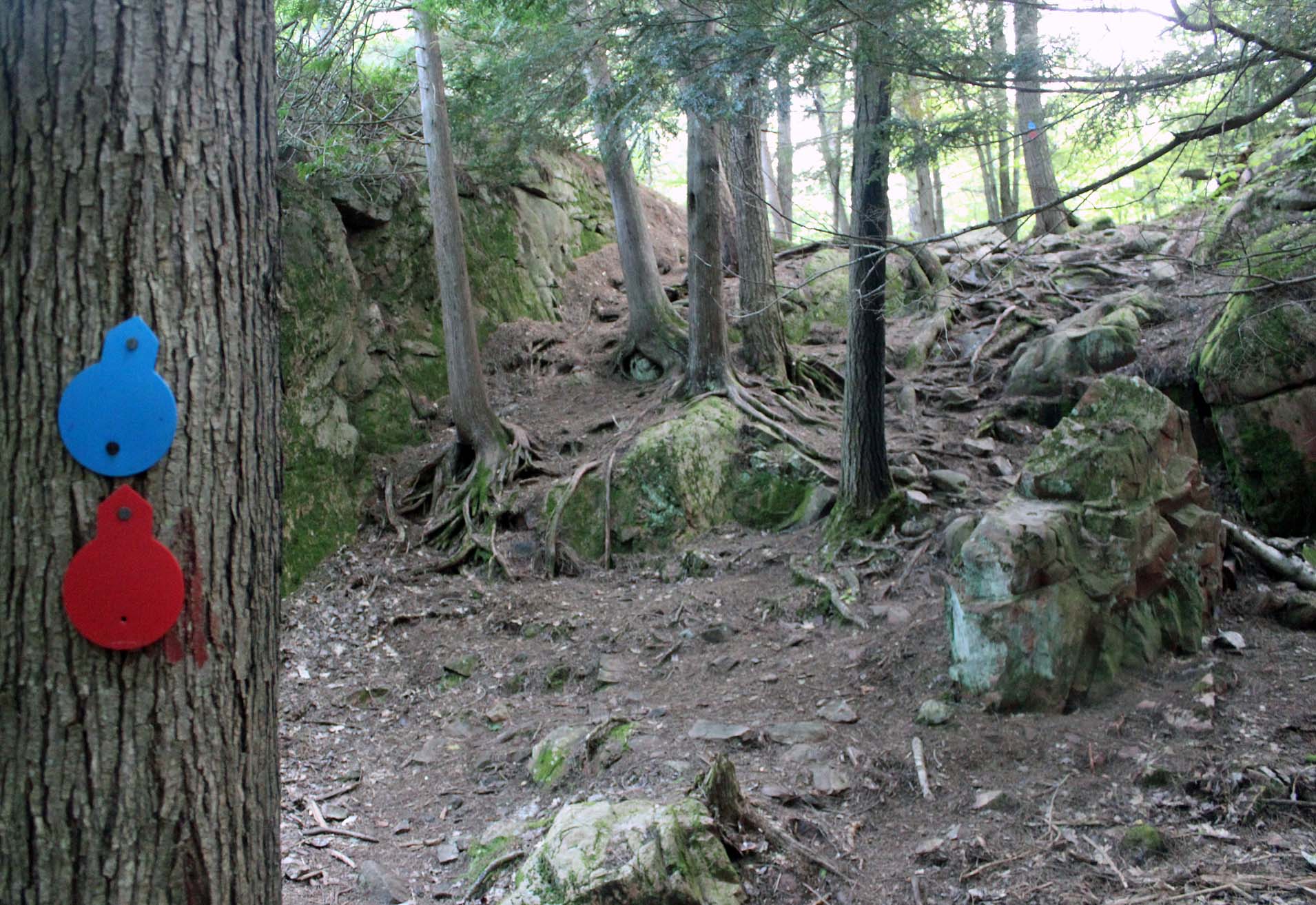
We also drove to the park and had a hot shower (what a luxury!). Then we did the 4 km Cranberry Bog Trail, which was very picturesque, meandering among bogs, wetlands, marshes and lakes. At one point we had to hike up and then down a very steep, rocky hill. We saw plenty of pretty looking mushrooms. I was quite sure I saw the most deadly mushroom, the Amanita Ocreata, a.k.a. the death angel, destroying angel or angel of death. Once eaten, it causes only a mild gastrointestinal and include abdominal pain, diarrhea and vomiting. They go away after 2–3 days, but all the while the damage to the internal organs us is taking place during this time, leading to a coma, liver & kidney failure, and eventually death. While hiking, we saw the La Cloche Silhouette Trail—there was a sign warning that once you started it, you had to walk for the next 78 km. Even usually courageous Catherine was not interested in following this trail…

We spotted this snapping turtle on the main road as it was trying to cross it. I made a U-turn and helped it safely get to its destination

On two occasions, when we were coming back to the Carlyle Lake access point parking from the town of Killarney, we saw two ladies, who were setting up their cameras on tripods in order to take photographs of the Northern Lights. They were quite surprised that we were going to paddle to our campsite in total darkness! While canoeing back to our campsite, we told the campers staying on campsite #56 about this phenomenon. However, I believe no aurora became visible that night—well, it is a hit or miss.

The new Herbert Fisheries Restaurant in Killarney

September 16/17, 2017 (Saturday/Sunday) was our last night at Killarney. We did want to extend our stay and each day went to the park office, inquiring if any campsites on Carlyle/Terry Lakes had become vacant, but none had, all had been solidly booked-up. On Saturday we left for the town of Killarney late afternoon—there was a lone camper on the site across from ours. When we returned to the Carlyle access point, it was about 9:45 p.m. and we headed to our campsite in total darkness. Although the route was easy and straightforward, as we were approaching the location of the campsite, we had to use my powerful 1,000 lumen flashlight to pinpoint our campsite—we had forgotten to attach a blinking light to a tree, which we usually did and it was always a great idea.

When we were disembarking from the canoe (which was tricky, as the rocks were slippery and it was dark) and unloading our bags, suddenly Catherine gave a shirking, very loud cry, as she spotted one or two water snakes, perfectly visible in the flashlights’ shining light, swimming near the canoe—and she was quite certain that at any moment they would try to jump into the canoe and attack her! I did not much care about the snakes, so I slowly lifted the canoe and pulled it up the sloping, rugged ridge and then tied it to the roots and rocks. Just seconds later I was startled by a very thunderous noise (considering it was so still and quiet around, it sounded absolutely deafening). The canoe simply slid down the ridge, ended up in the water and was slowly, but surely, floating away! It turned out that in the darkness I had not properly attached the rope to the canoe. We had to make a very quick decision. Catherine instantaneously took the initiative, unwaveringly stating,

“I’m not going into the water, no way!”

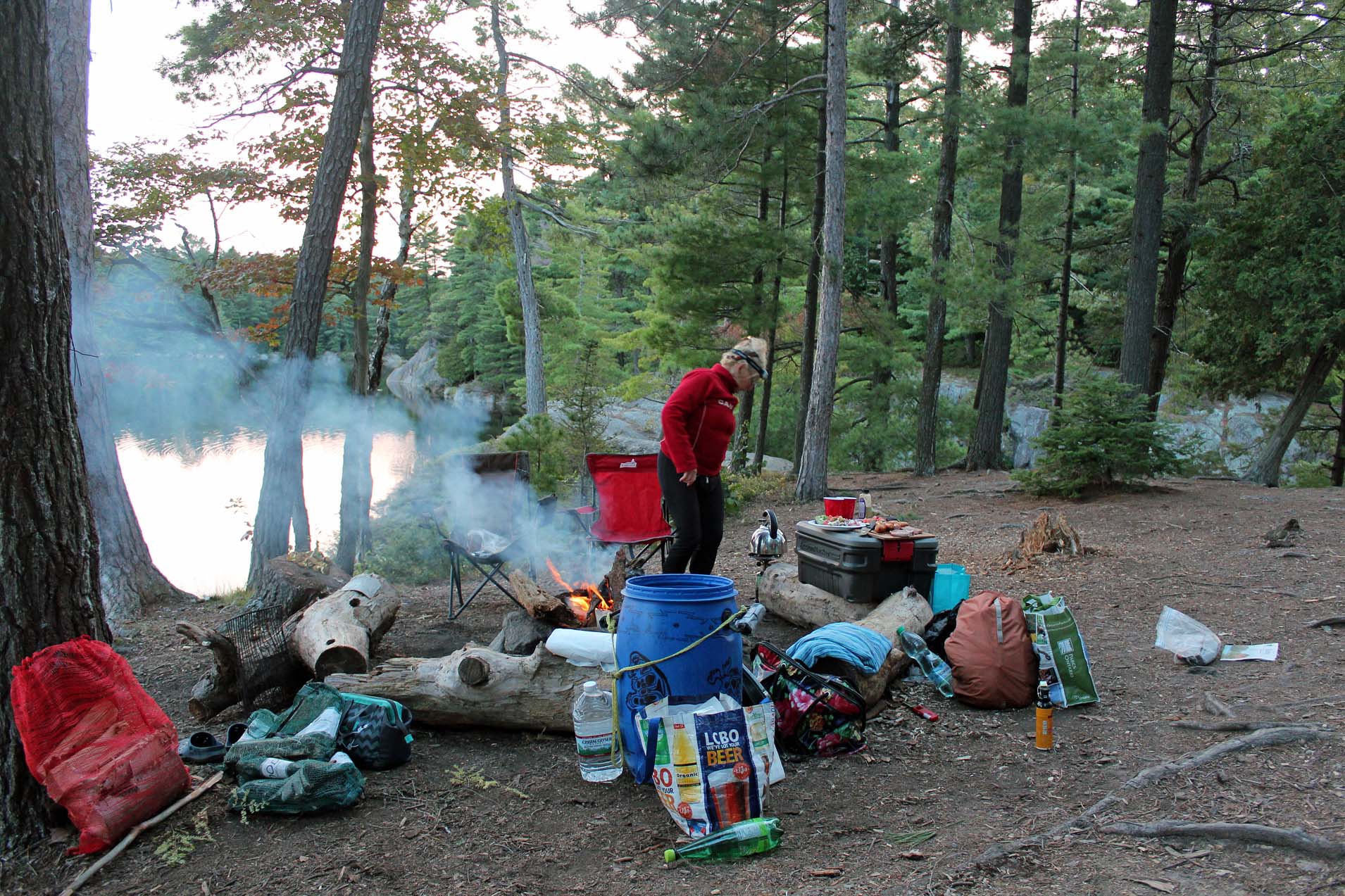
What a mess! Fortunately, Catherine is responsible for the kitchen

Fortunately, we still had the rope and a few powerful flashlights & headlights. Besides, long ago we had attached reflective stickers on the canoe, so even though it was drifting farther and farther away, we could still see it. I was a little reluctant to swim in total darkness and thought about wearing a lifejacket, but it was impossible: we always left lifejackets in the canoe, so I did not have one—but before I could even contemplate this predicament any further, I took my clothes off and got immersed in the water (forgetting about the water snakes and the legendary Killarney lake monster, if there was one). My headlight shining bright, the rope in one hand, I commenced swimming towards the canoe as Catherine kept shining the 1,000 lumen flashlight, using only 1/3 of its maximum output. I did not know how long it took me to reach the canoe, but once I did, I fastened the rope to the canoe (this time, correctly!) and swam back, pulling the canoe behind. Although the water was quite cool, it was warm outside. Within 10 minutes I was dry, dressed up and sitting near the warm campfire! I felt sorry for the camper at the campsite vis-à-vis ours… he must have thought of us as some total neophytes, with no canoe & camping skills and no outdoors etiquette!


The next several nights we were planning to spend on Philip Edward Island, which still constituted Crown Land. However, first we had to buy from the park office two vehicle stickers to park my car and her van at the Chikanishing access point. There was another major screw-up in the park office and it took us a while to finally make the proper payment.


At 4:00 p.m. we paddled on the Chikanishing creek, but once we reached its mouth, we saw it was windy and the water was relatively rough. Although we were going to set up our tent on the western tip of the island (South Point Island), we still had to paddle across the open water, some 700-800 meters. I kept trying, but each time we were on the open water, we felt the somewhat powerful waves. I still had fresh memories of our paddling the same stretch of the water, when the waves had been so big that from time to time the water had been flowing into the canoe.


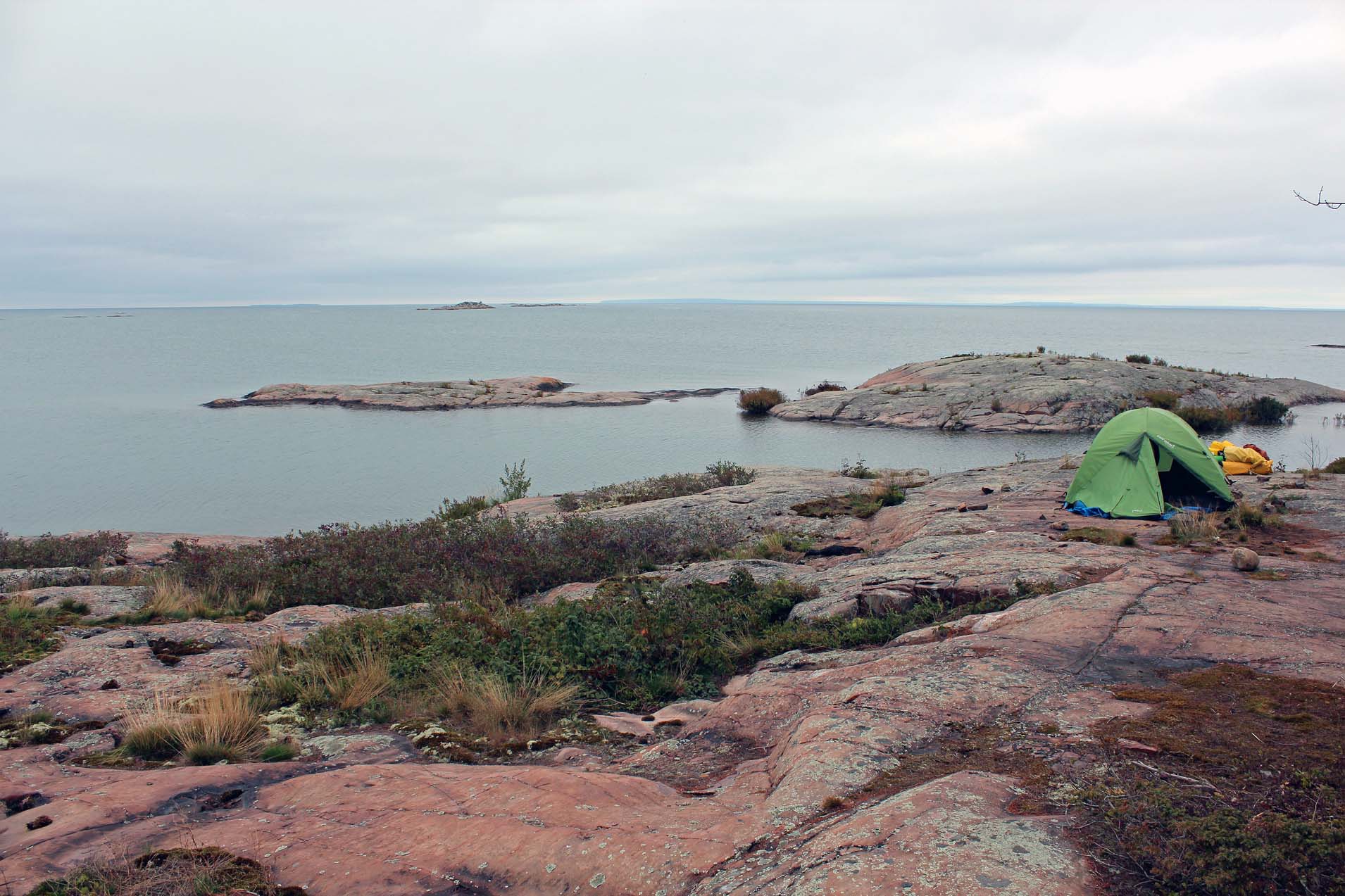
We stopped near the mouth of the creek and even considered camping there, not sure if it was the park’s land or Crown Land (later I determined it was the park’s), but I did not like that spot. I pulled out my marine radio and listened to the most recent marine weather forecast—which fortunately said that the wind would subside in the late afternoon! So we waited for a while and in less than one hour ventured out again. I kept the canoe perpendicular to the waves, paddling not towards the island, but towards the open water of Georgian Bay, since the waves were coming from that direction. Eventually we made a sharp left turn, paddled very fast and entered a small narrows between South Point Island and some rocks. After exploring the area, we disembarked on the rocky shore and decided to stay in that pristine spot. On the other side was a family of 2 adults & 2 girls, with 2 golden labs, which came over to our side to say ‘hi’. They were very quiet and we hardly noticed them.


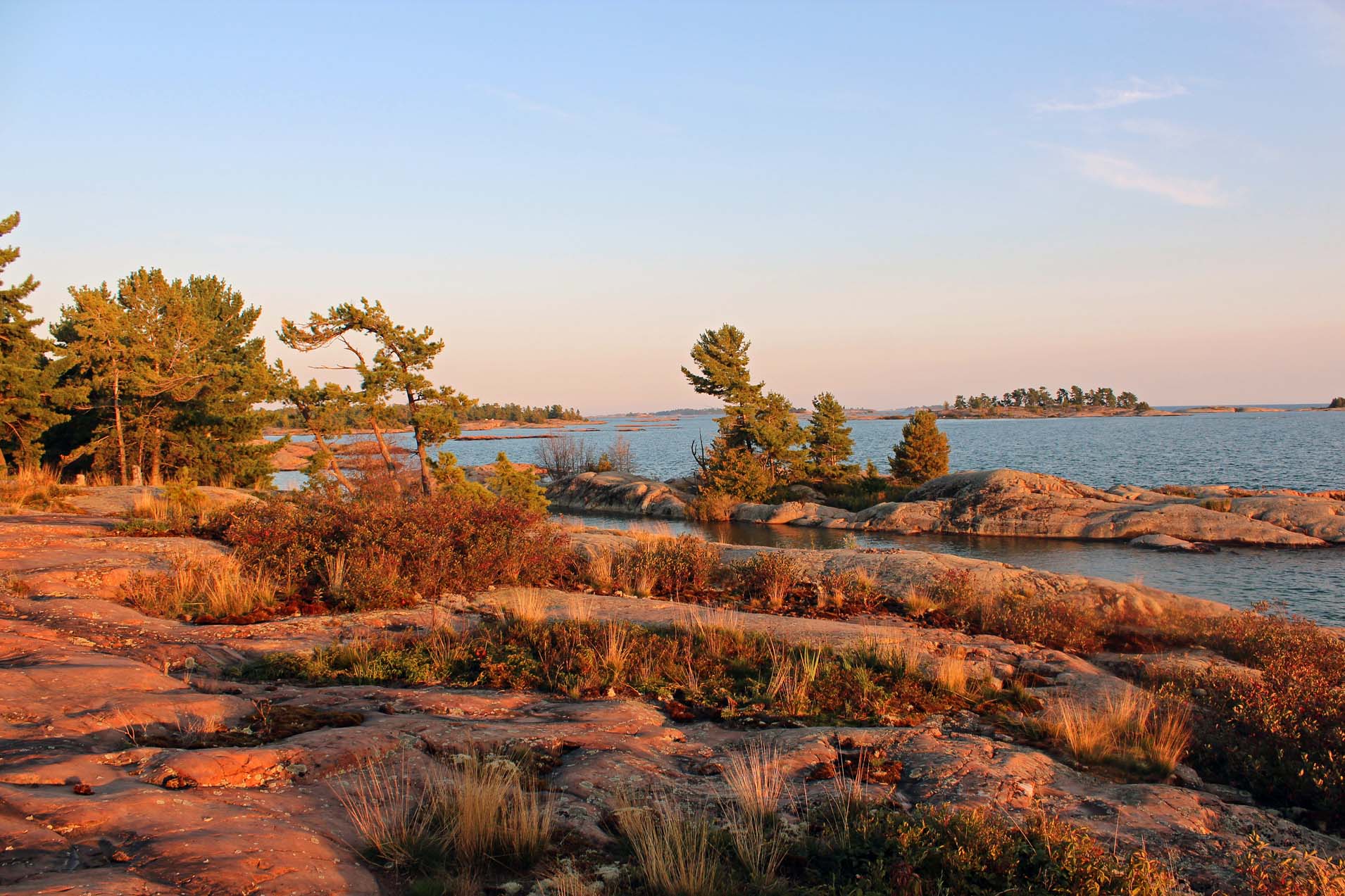
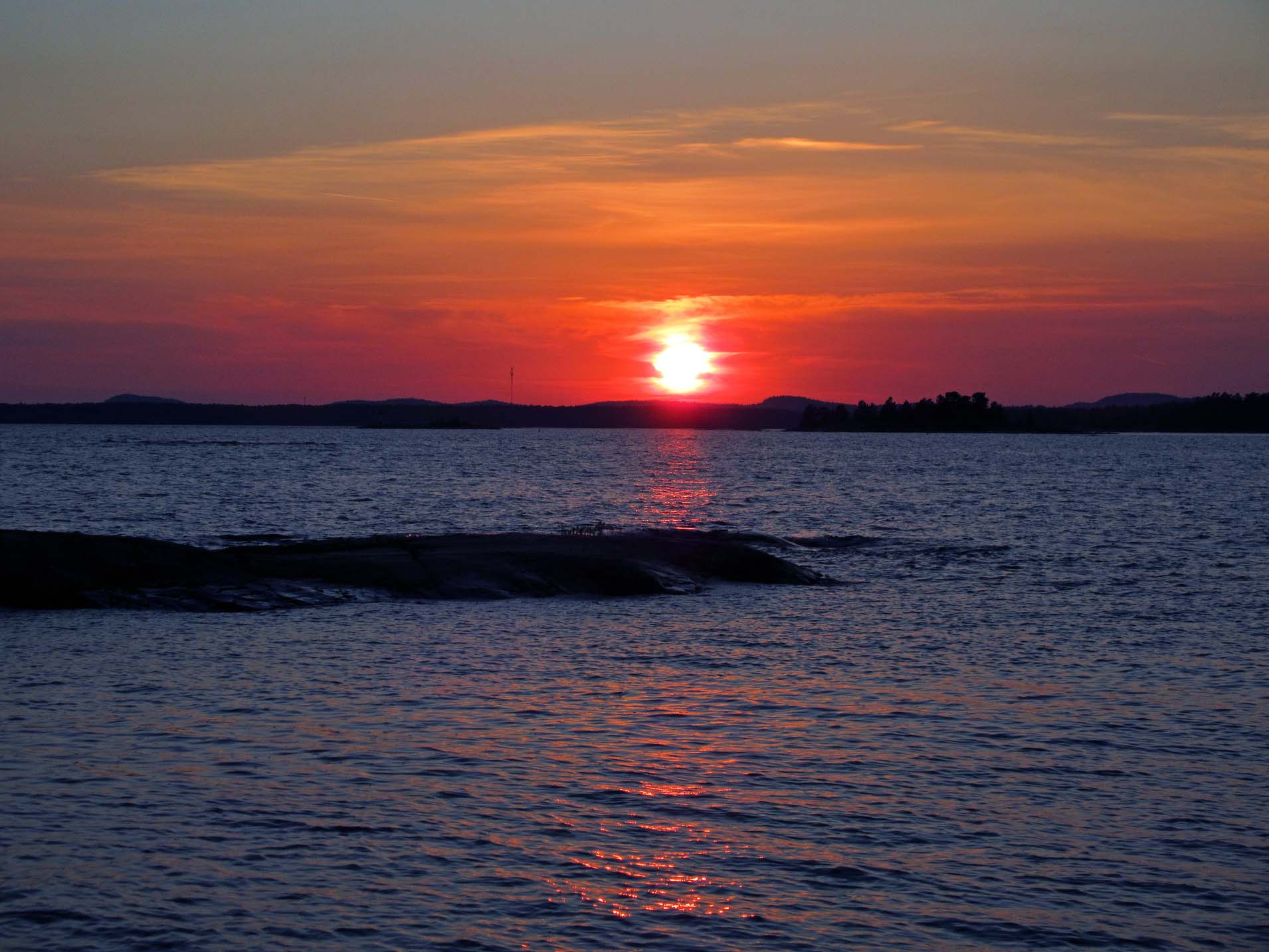
The view was spectacular—whenever I am paddling in that area, I just love the scenery! We set up the tent, but did not have the fire that night. We could admire blinking lighthouses and buoys in front of us. The family left the next day and we wandered at their former campsite and explored the island. We had stayed on a ‘campsite’ located just 50 or so meters in 2012, but this spot was much better. There were plenty of fire pits here and there, as well as broken layers of rocks, indicating that somebody had had a fire there long time ago. We chose one of the existing fire pits because it was large and there was also a primitive table.

The first morning, at about 4:00 a.m., we were awakened by some voices. We looked out the tent and saw a flotilla of canoes, moving towards the parking lot. Each canoe had a glow stick attached and it looked marvelously from our campsite! Of course, the canoers must have left very early to avoid potential winds and waves, which could have made their return journey impossible.


We were planning to stay longer, but the next morning (Tuesday) the weather was iffy—it did not rain, but the sky was cloudy and eventually it did rain a little. I was not concerned about the rain, but rather about the rocks becoming slippery and immediately we decided to pack up and paddle back. At least there was no wind, so we did not have to worry about the non-existent waves.


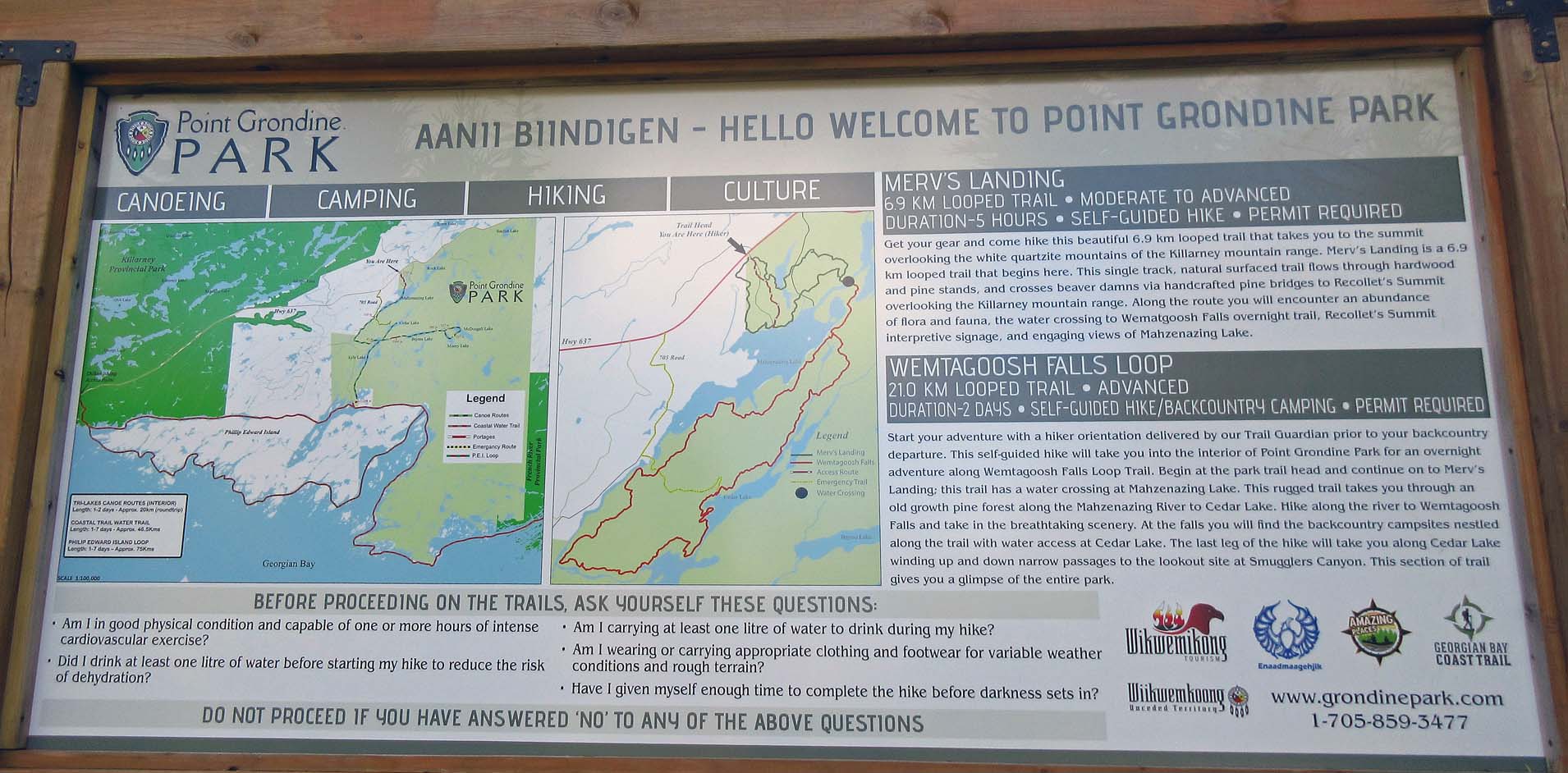
We went to Herbert Fisheries in Killarney for chips & fish and drove to Point Grondine Park. We had found out about this new park from a brochure, located on Native Land and run by First Nations, and called the number given in the brochure, but there was a recording directing us to their… website! Well, considering that there was no cell coverage in most of the park, it would have been quite difficult to follow their instructions! There was a map and self-serve payment station. We talked to a young guy with a big dog who was about to embark on a long hike—he had encountered problems while trying to make the payment, the machine did not want to accept his money and when we changed some bills for him, he was finally able to pay. There was a guest book and according to recent entries, some tourists, unable to make the payment, left the park. I hope that the management will eliminate those issues which discouraged many potential visitors. I think that there are only hiking trails and a water trail, which includes a 3 km portage—or the ‘portage-less’ loop around Philip Edward Island. Nevertheless, I though it was a great idea to have established the park and I sincerely hope that next year all the glitches would be resolved.

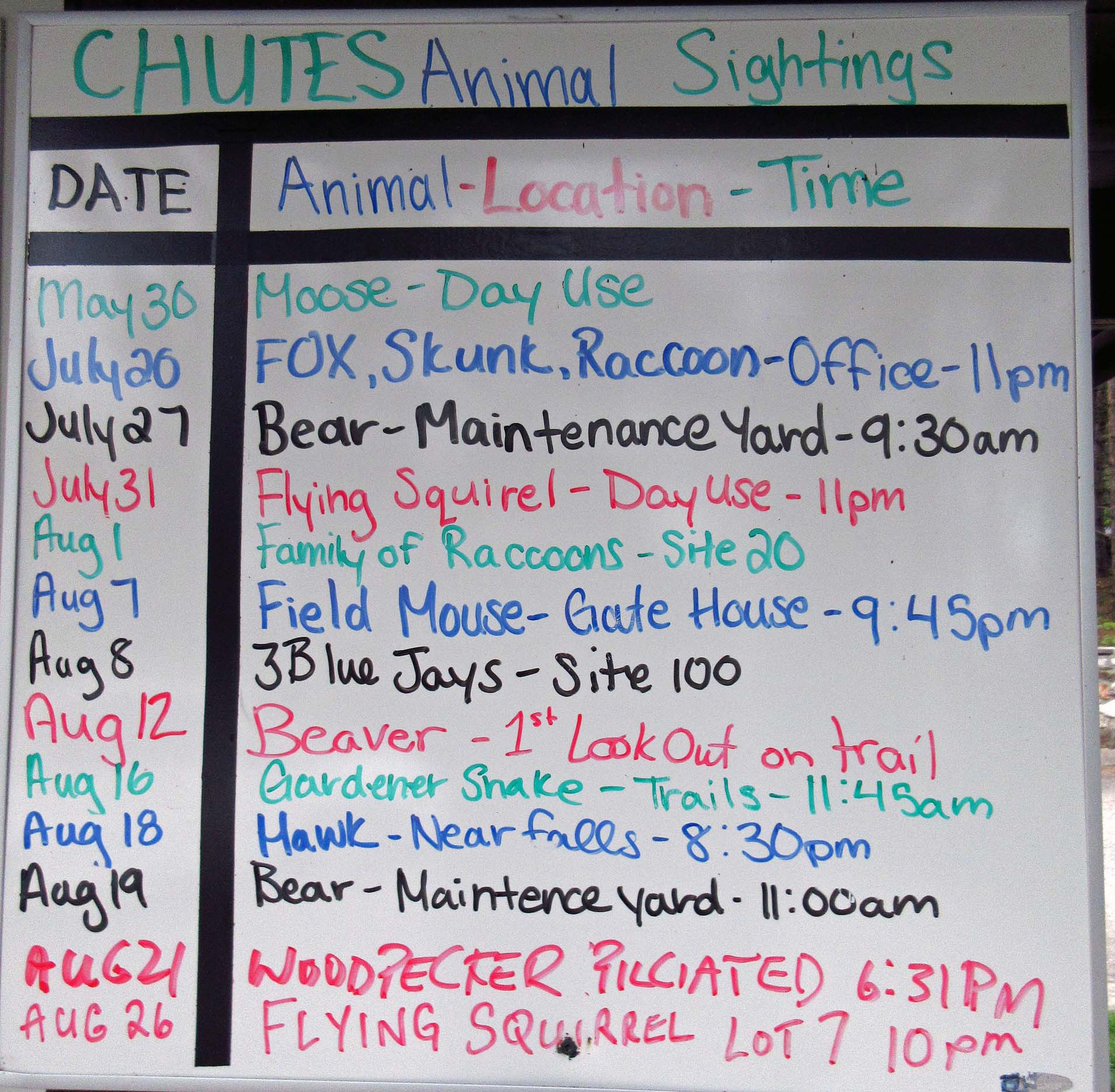
In Chutes Provincial Park, we got the same campsite we had stayed on just one month ago!

We drove to Sudbury, where Catherine went to the TD Bank regarding a money order: unfortunately, she had experienced so many problems with this bank and spent so much time on the phone that the quality of her vacations certainly suffered. And it was a clear fault of a TD Bank employee in Mississauga, who did not enter just one number on the money transfer!

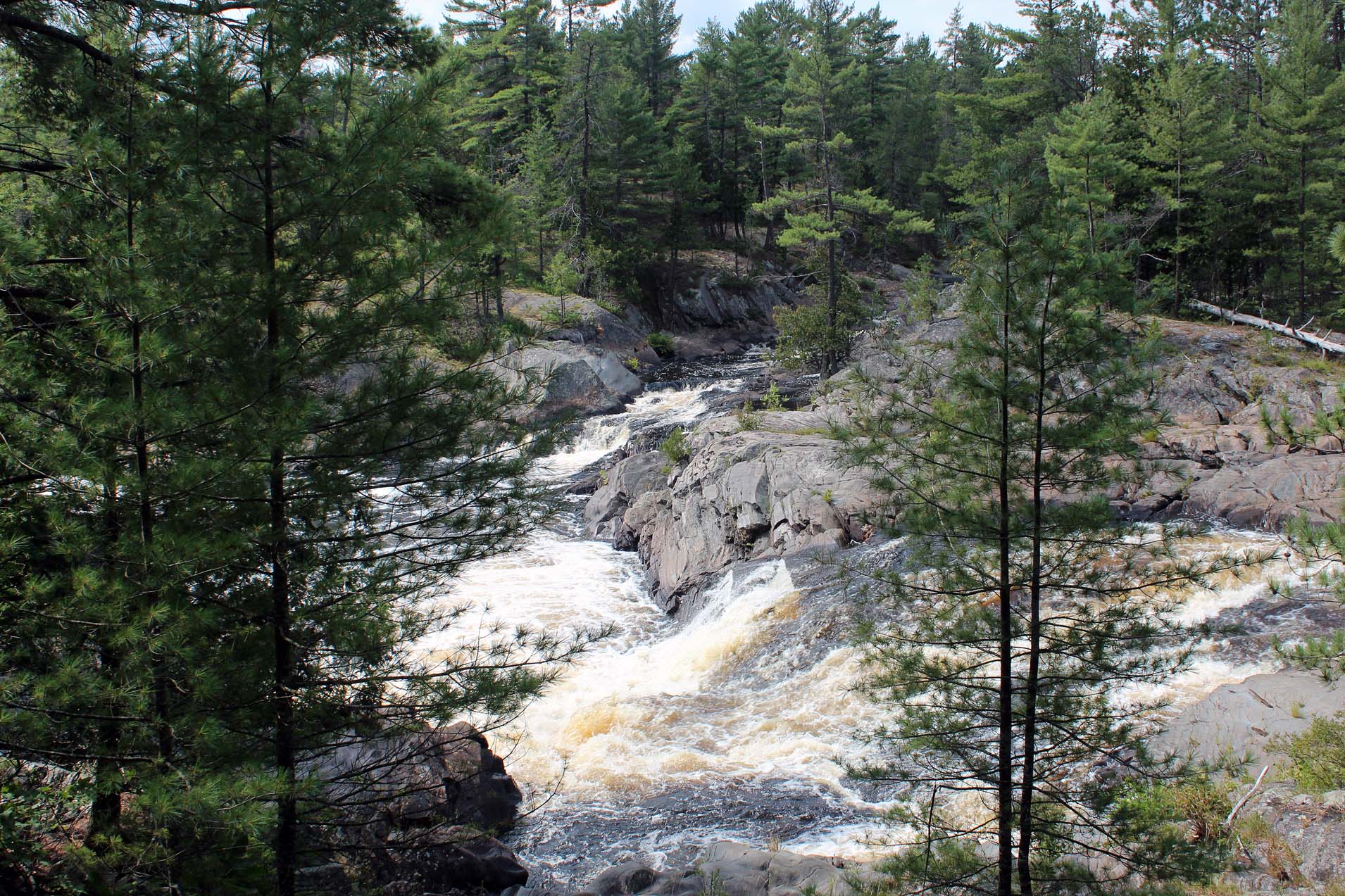
There were plenty of falls and rapids in the park

We also went to Independent (a big grocery store), where we bought plenty of food items bearing the sign of quality (i.e., a pink sticker staying “50% OFF”). Then we drove to Massey, to Chutes Provincial Park—yes, the same park we had camped at just over 2 weeks ago and we even got the same campsite! The park was quite empty—very few people expected that the summer was going to start a couple of months later! Later, we spoke to a park employee, Amanda, who grew up in Massey.

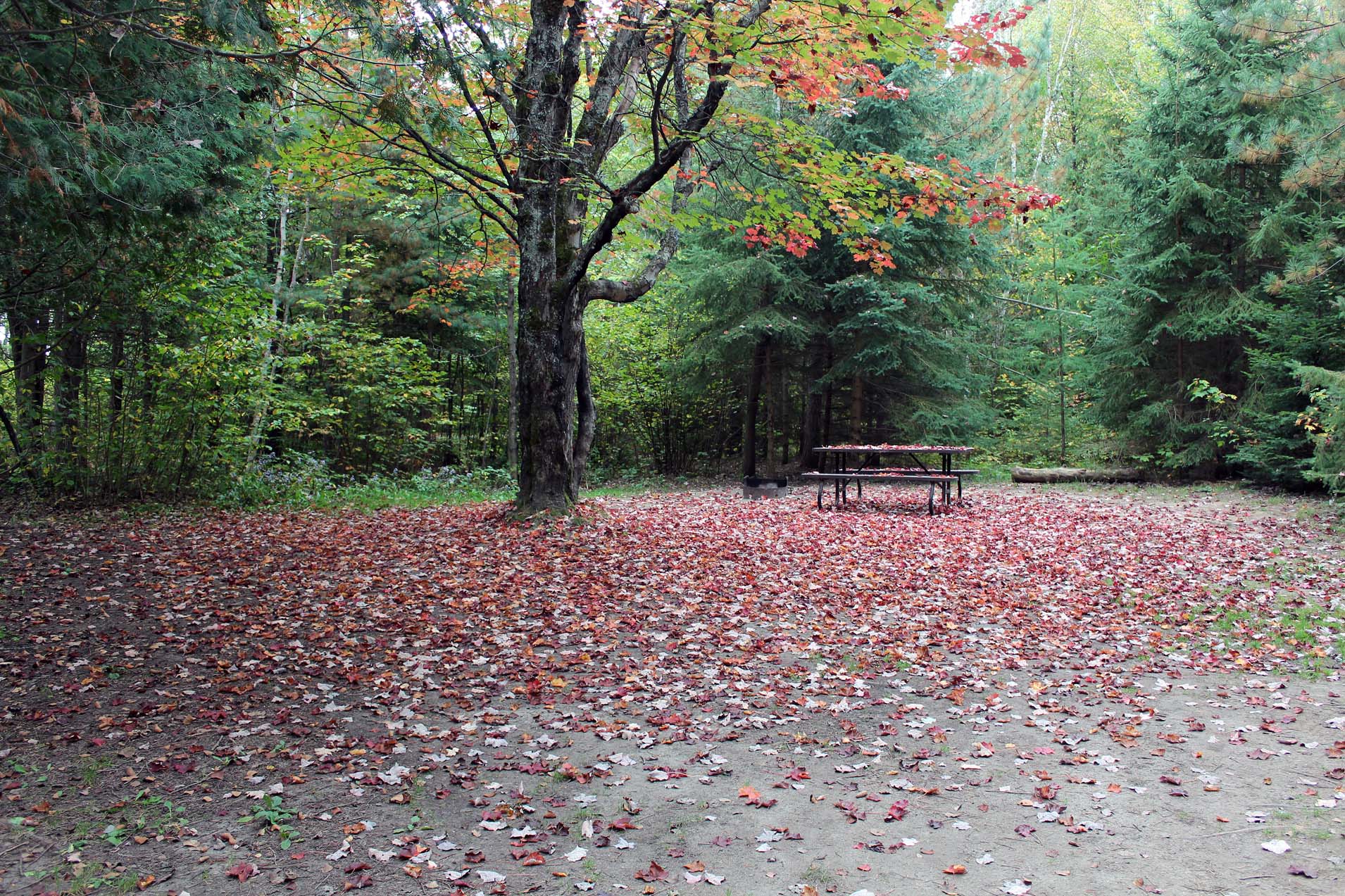
We liked sitting at this scenic campsite, which was just vis-a-vis our

Catherine often went over to the other campsite, which was covered with falling leaves, to have her coffee, listen to the radio or just listen to the nearby falls and meditate. One day we met a young Thai lady with a 13 week old miniature dog (Chow/Australian Sheep Herder), she got it from a breeder and it was ADORABLE! I loved stroking it—its fur so soft! She caught a salmon in the river and wrapped it up to take home. Then her husband came and we chatted with him too. A few days later we again ran into them on the beach, talked to her husband’s father from Sudbury (he was wearing a pink ‘prison suit’’), quite an interesting chap in his 80s.

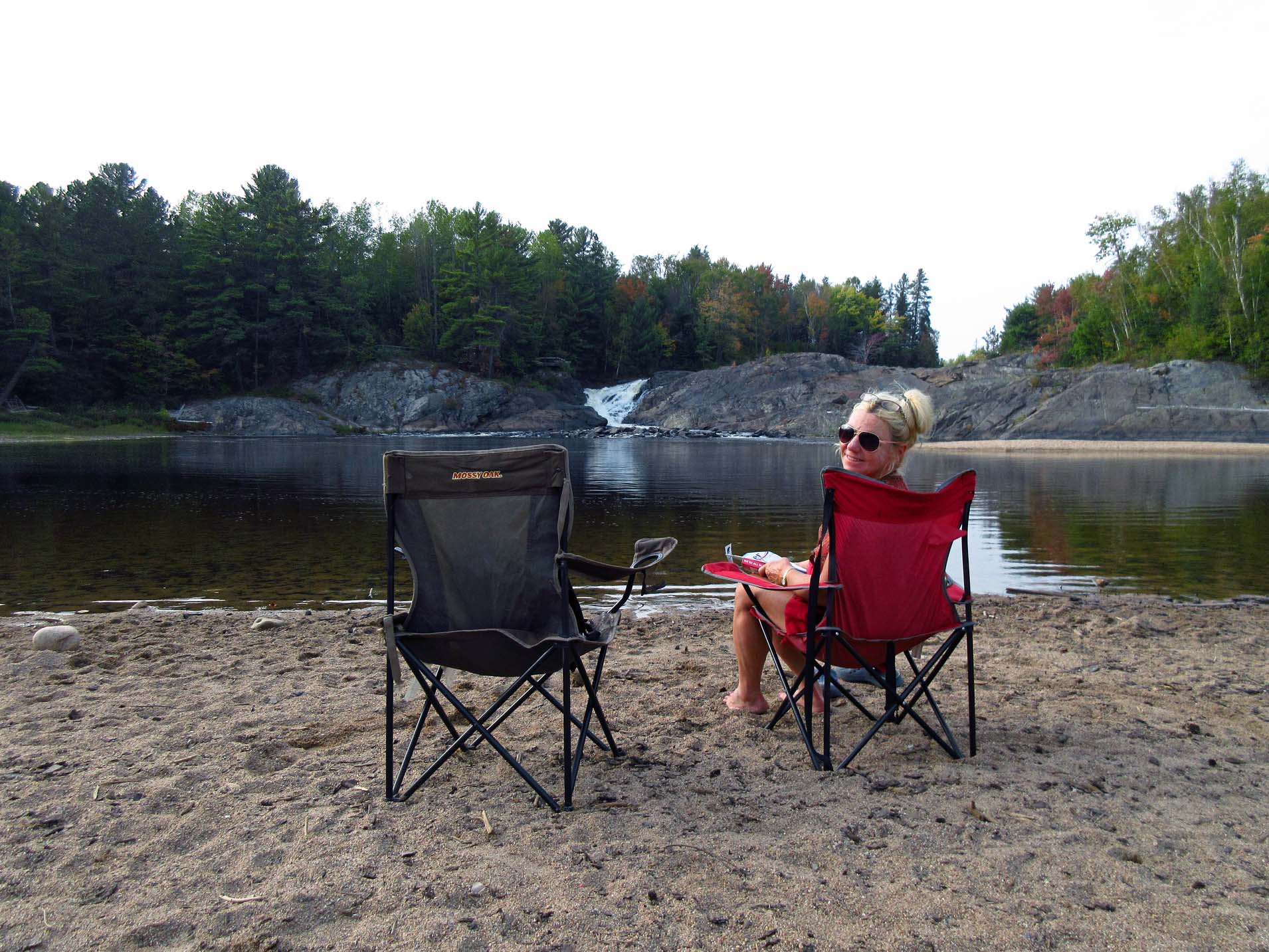
And this was another spot where we loved sitting, watching the falls and listening to sound of the water

My last book that I started reading at Chutes was “Red Heat: Conspiracy, Murder, and the Cold War in the Caribbean” by Alex von Tunzelmann, which I had picked from a second-hand book store in Toronto. I immediately found the book totally fascinating and captivating—after all, I had been going to Cuba for many years and even in my teens I had been interested in that region and its politics. The book was about the Caribbean (Cuba, Haiti, and the Dominican Republic) and its leaders (Fidel Castro, Che Guevara, Rafael Trujillo and François "Papa Doc") during the presidencies of Eisenhower, Kennedy, and Johnson. The superpowers thought they could use those countries as puppets during the cold war, but what neither bargained on was that their puppets would come to life. I could not put this book down, it was remarkable! By the way, I thought that the author was an older, distinguished looking gentleman, coming from an aristocratic German family. Nothing could be further from the truth: Alex von Tunzelmann was actually a British, Oxford-educated woman historian, born in 1977. And she wrote this exceptional book when she was just 34 years old!


On Sunday, as we were leaving the LCBO store in Massey, we saw about 10 Mennonite horse-drawn carriages on the road leading towards the park. There were plenty of Mennonites in the area—some were even selling home-made pastries at the corner of highways 17 & 553—and on the other corner there was a… how can I call it… a second-hand store with thousands of items, including furniture. The Home Hardware store had a special parking designed for the horse-drawn buggies!


We again walked part of the Twin Bridge trail. The weather, as I said before, gradually kept becoming summer-like, it was sunny and humid and the mercury in Sudbury hit a record of +35C. Several times we drove to Espanola and once Catherine went to the TD Bank there, sat with a consultant, trying to setup cross-border account—for some inexplicable reasons it was NOT possible!

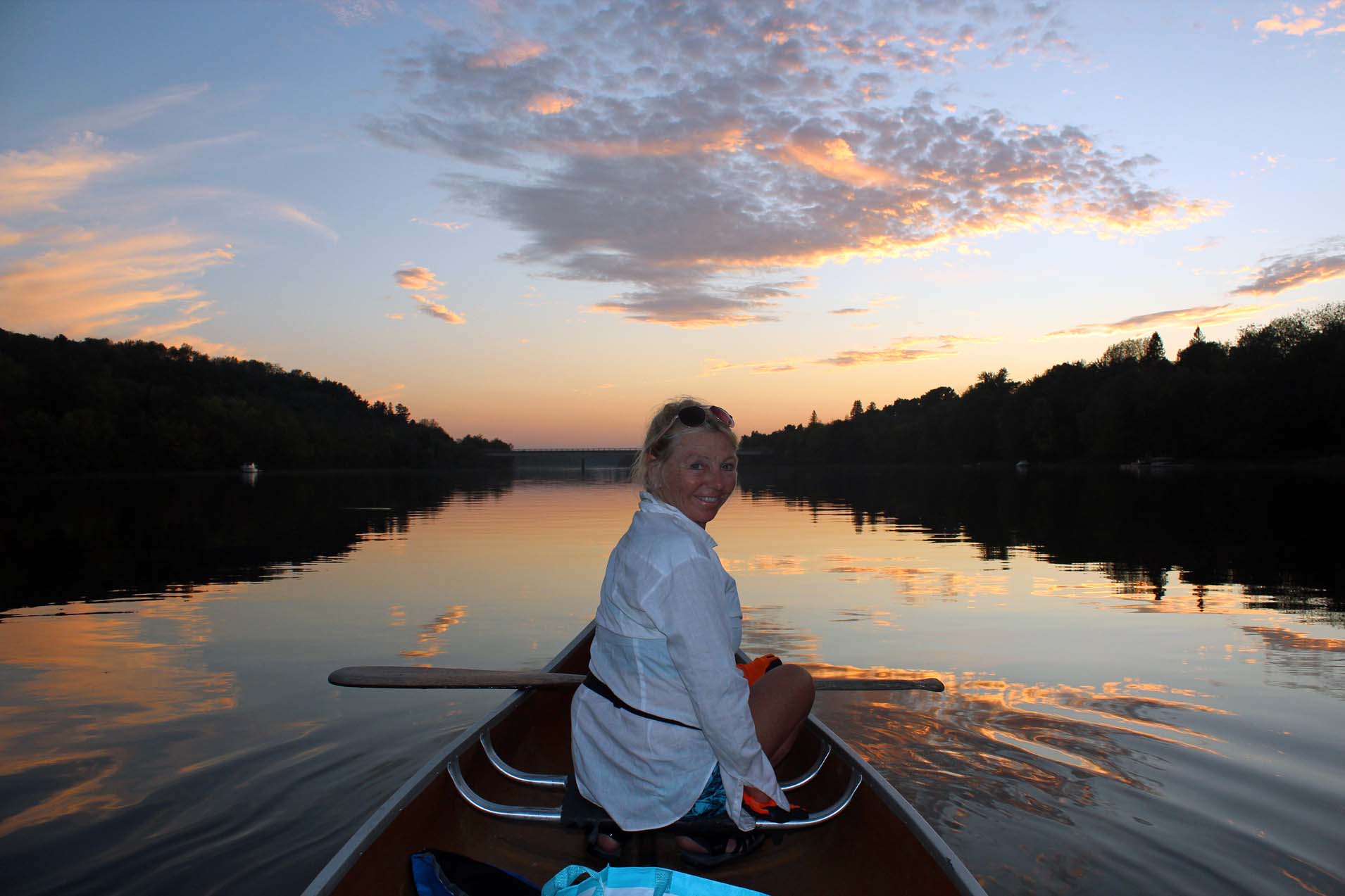
Paddling on the Spanish River in Massey, ON

While in Chutes, we did a number of canoeing trips—it was a great base for paddling on lakes in the vicinity. We drove to Espanola, took Panache Lake Road and parked near the bridge. First we paddled on the Darkies Creek, which soon merged with the Spanish River. It was a lovely, quiet paddle; we did not see any other people around. The ridges along the shores were sandy. From afar we saw the Domtar Paper Mill in Espanola. We still managed to go to Hart, Independent, Canadian Tire and Dollarama for more deals.

Very picturesque road to Willisville

On Thursday we drove to Espanola, then took road number 6 (leading to Manitoulin Island) and turned left, to a small settlement of Willisville. By the way, the road was quite steep, but it was also very scenic and offered awesome views of the area. Once I reached the town, I kept driving on what I though was a regular road, but when that “road” became very narrow and rough, I realized that I was driving on the abandoned railway! So, I had to back up and finally reached Bearskin Resort.

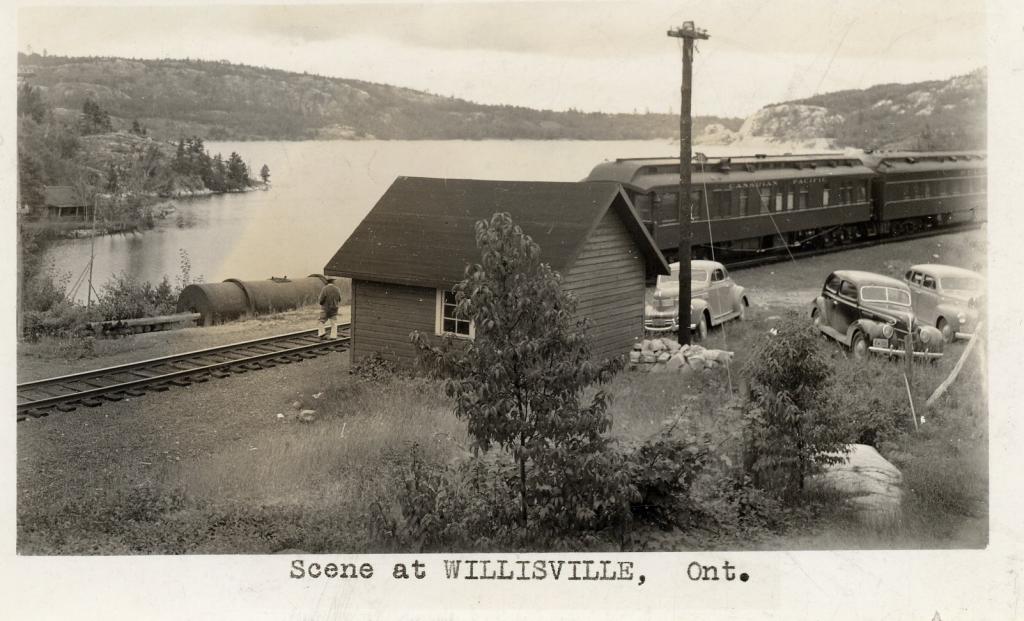
Old train station in Willisville. By permission. Source: http://www.willisville.ca 

Willisville was settled over 100 years ago and at that time the Algoma Eastern Railway was opened from Sudbury to Little Current (on Manitoulin Island). Passenger service to Little Current ended by 1963 and the line itself beyond Espanola went into disuse and abandoned. Nowadays, much of the former right-of-way remains visible and is used in certain areas as a road or path—we spotted a few motorcyclists using it. Many Group of Seven members painted in the area.

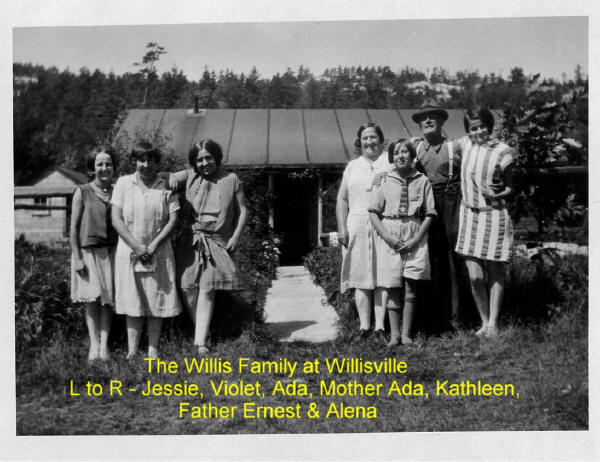
The Willis family, from whom the town derives its name. By permission. Source: http://www.willisville.ca 

We parked at Bearskin Lodge & Outfitters and talked for a while with Darcy, who regaled us with many interesting stories from the area and told us that Franklin Carmichael’s (one of the Group of Seven’s members) cabin was on the lake nearby. The Lodge was situated on both sides of the narrows and a small ferry transported tourists to their cabins on the other side of the narrows. It cost us $5 to park the car.

Canoeing near Willisville

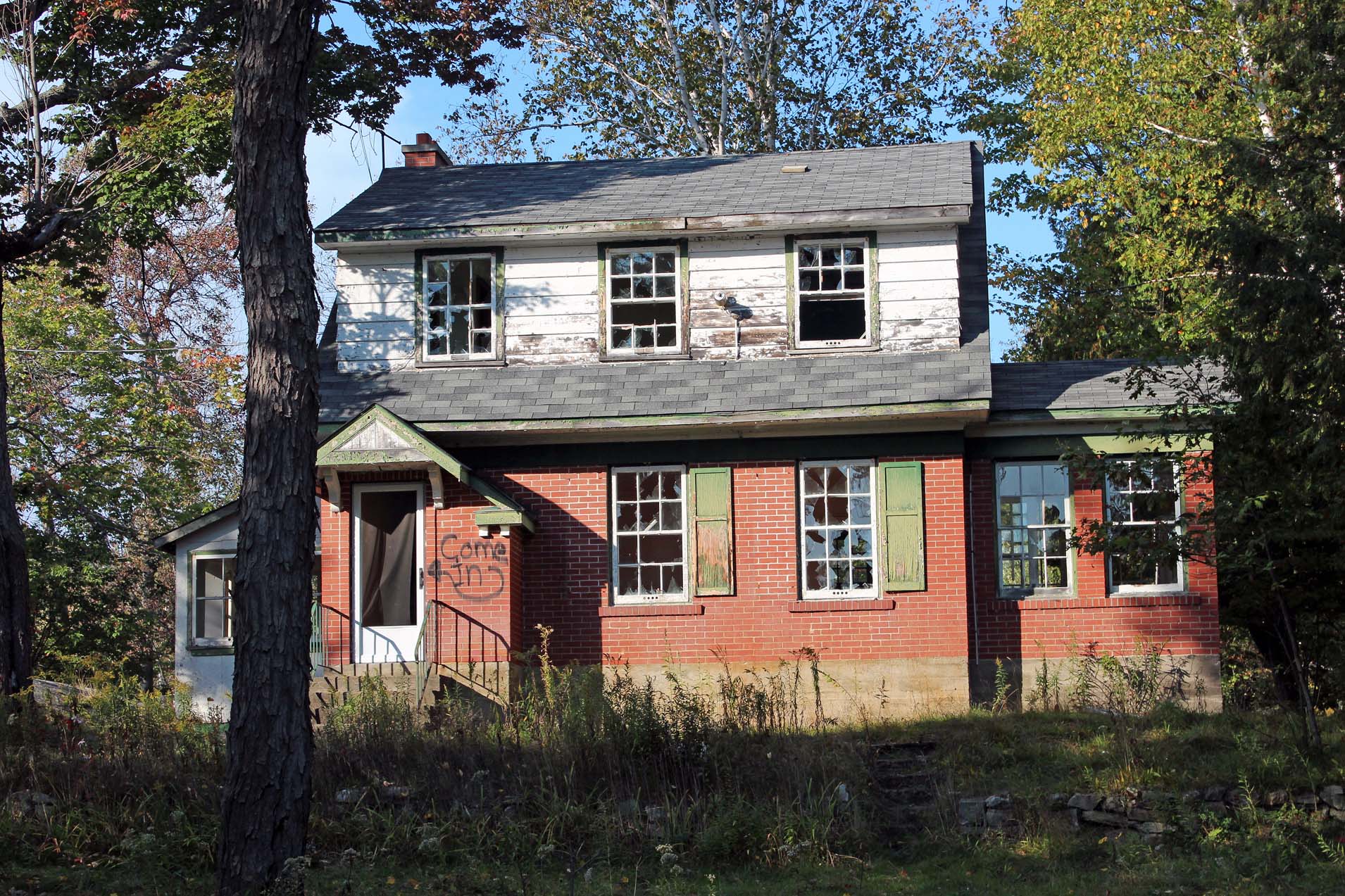
We paddled on Frood Lake—there were a lot of rolling, white quartz mountains. Then we paddled on the lake north Bearskin Lodge, reaching a small channel leading to Charloton Lake. There were lots of islands with nice cottages, otherwise known as “camps” up north here. The other day we paddled along the shores of Frood Lake towards the Lawson Quarry, there we saw the former right-of way of the Algoma Eastern Railway. We reached the dam—there were some small, abandoned buildings—and walked a little. I spotted a nice, albeit abandoned and dilapidated house—somebody had sprayed on the door, “Come In”, so we did. It must have been occupied not long ago, but now was deserted and covered with graffiti. I wonder why nobody had bought it—after all, there was a road leading to highway 6. Near the house I walked for a while on the former railway path and there were still some decayed railway ties deep in the ground.

Abandoned house near highway 6

We also drove to Espanola and then to Widgawa Lodge & Outfitters, where were wanted to put in the canoe, but it turned out that the lady charged $20 for parking (vs. $5 at Bearskin Lodge) and there was no accessible dock—we had to carry the canoe over a hill. Besides, I realized that we could reach exactly the same lakes from Bearskin Lodge, so we went there again.

La Cloche Provincial Park

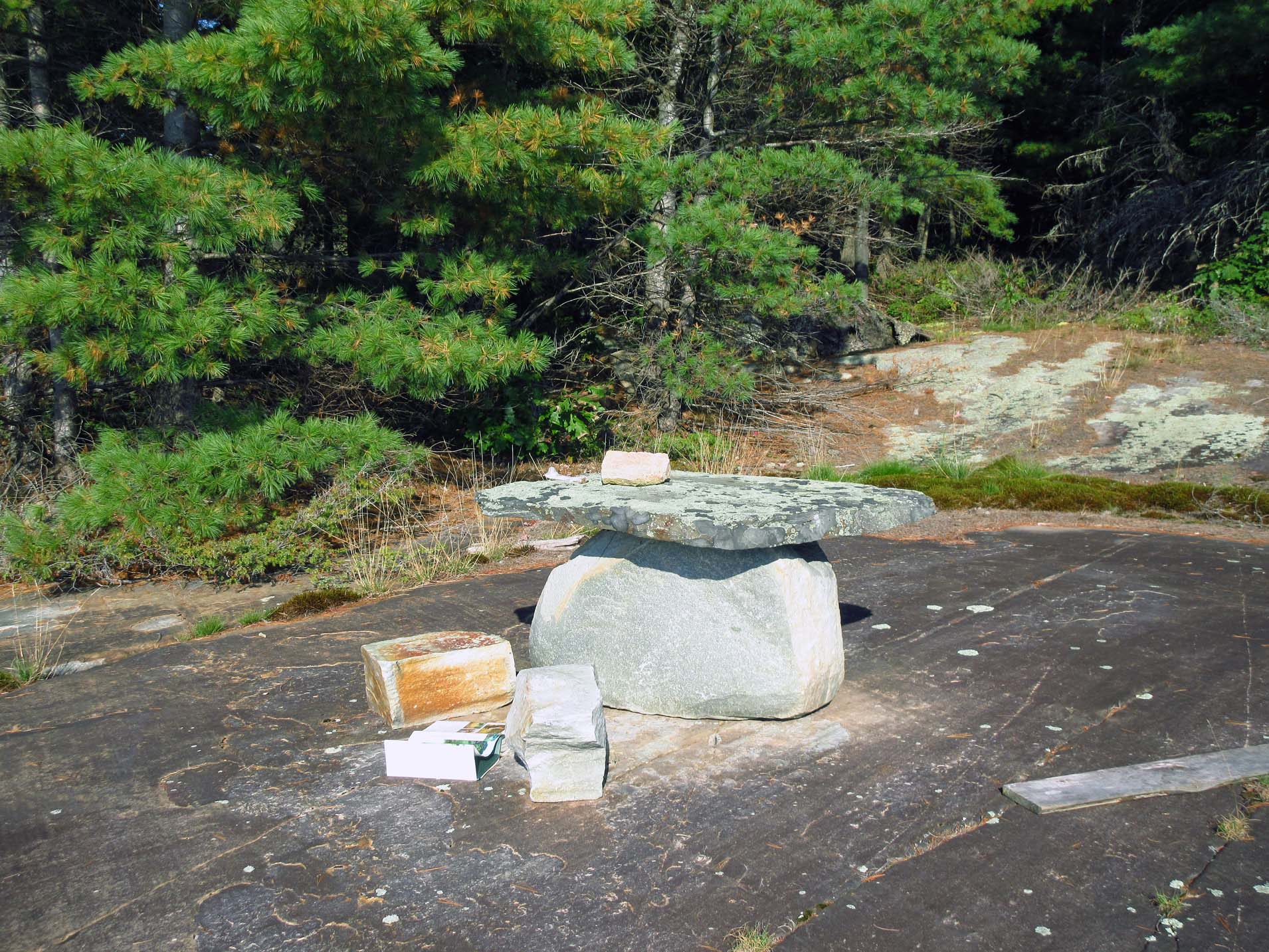
Another day we took La Cloche Lake Road to the very end (upon the park warden’s suggestion) and reached La Cloche Lake—part of this lake was crown land, park a provincial park, part belonged to Sagamok Indian Reserve. It was very hot and sunny and it was very difficult to paddle on the open water, so we headed towards a rocky clearing with a rock table. There was a shady spot where we spent a few hours reading, drinking and then went for an invigorating swim.


Our last paddle was in Massey on the Spanish River, we put in near the old bridge (just the abutments remained). We were told that it used to be a very narrow bridge and had been abandoned decades ago, when the new bridge was built. We turned left into the Sables-Spanish River and paddled to the very end—i.e., three bridges—a train bridge, highway 17 bridge and an old, abandoned arched bridge, now used for foot traffic. As we were paddling back, we started chatting with a fisherman; he was, if my memory serves me well, from Hamilton and retired here with his wife. He loved this area. He said that his wife was volunteering in the Massey Museum—indeed, when we went there the next day, she instantly recognized us (or, to be precise, me) from her husband’s account of his meeting us the day before. We enjoyed a wonderful sunset on the river and I took a lot of photos. Once we arrived at the launch site and were loading the canoe on the car, a big truck drove up and we also saw a 24” pontoon boat on the river—both were waiting for us to drive away. The lady from the truck was Native and we spoke with her for a while—she was getting her Master’s degree at Queen’s University in Entrepreneurship. They just had a fishing tournament with big prizes! I told her that over 10 years ago my friend had won the 1st price at such a tournament—a car—but he had not been able to even come close to repeating this feat since then. I think that luck always has A LOT to do with succeeding—especially catching a big fish!

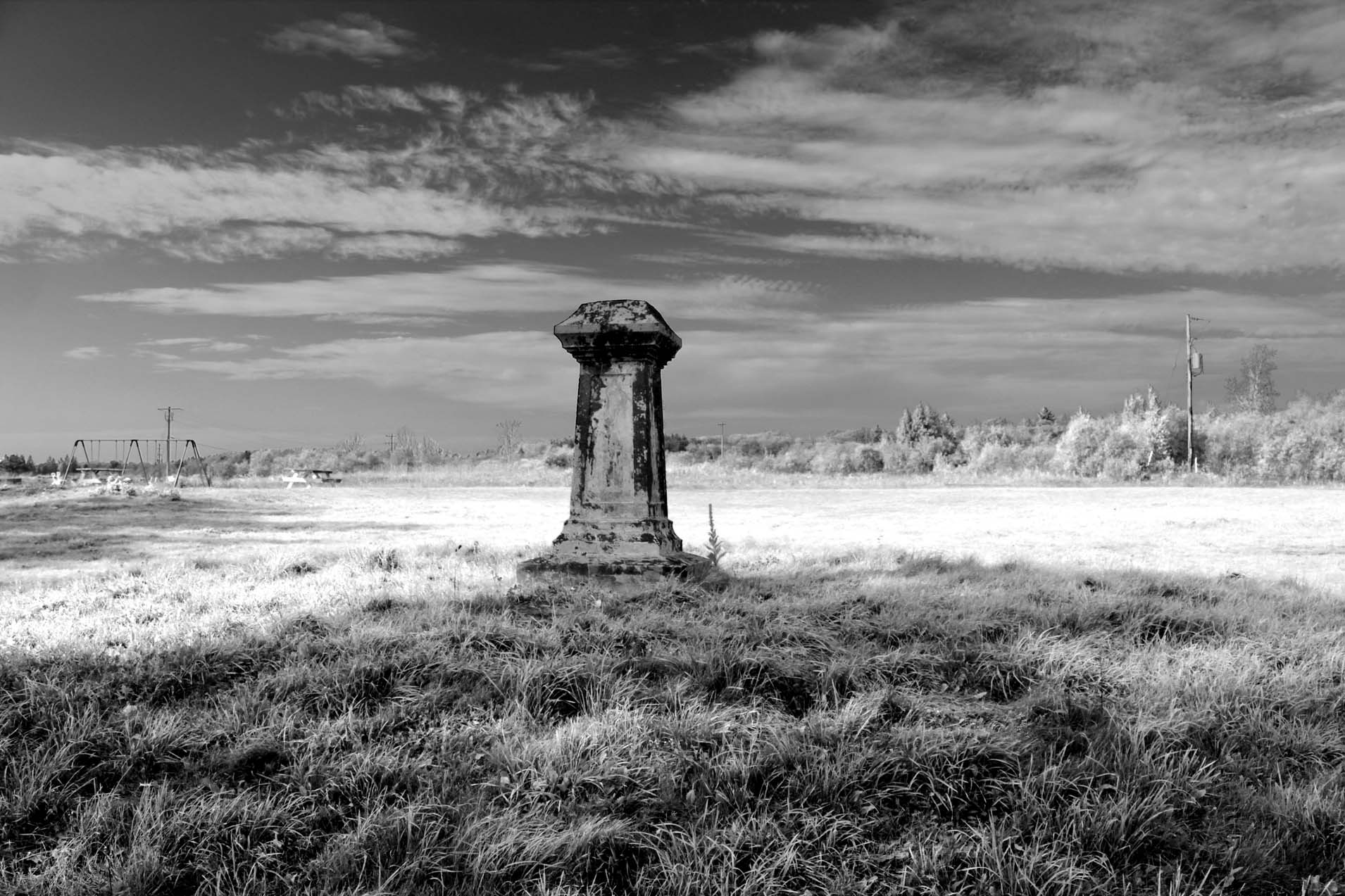
The site of the Garnier High School. Only the pedestal remains, on which a statue of Jesus once stood in front of the school's entrance

The day before leaving the park we drove to the town of Spanish, called “the gateway to the north channel”. We drove on Garnier Road to the Spanish Municipal Marina. There was a modern building with fitness facilities as well as a trail which Catherine decided to do—I was waiting for her in the car and had to find a shaded location because it was extremely hot (September 25-unbelievable-over +30C!).

The Garnier High School for Boys, as it looked many years ago. The pedestal, with the statue of Jesus, is visible.

Very close to the marina there used to be two Residential Schools. One was for boys (The St. Peter Claver School and the Garnier High School, operated out of the boys school) and run by Jesuits. The other school, St. Joseph's School for Girls, was run by the Daughters of the Heart of Mary. The Garnier High School (also referred to as “Garnier College”) was closed by 1965 and the Garnier building was demolished in 2004. The St. Joseph's School for Girls closed in 1962 and the building sustained a fire in 1981.

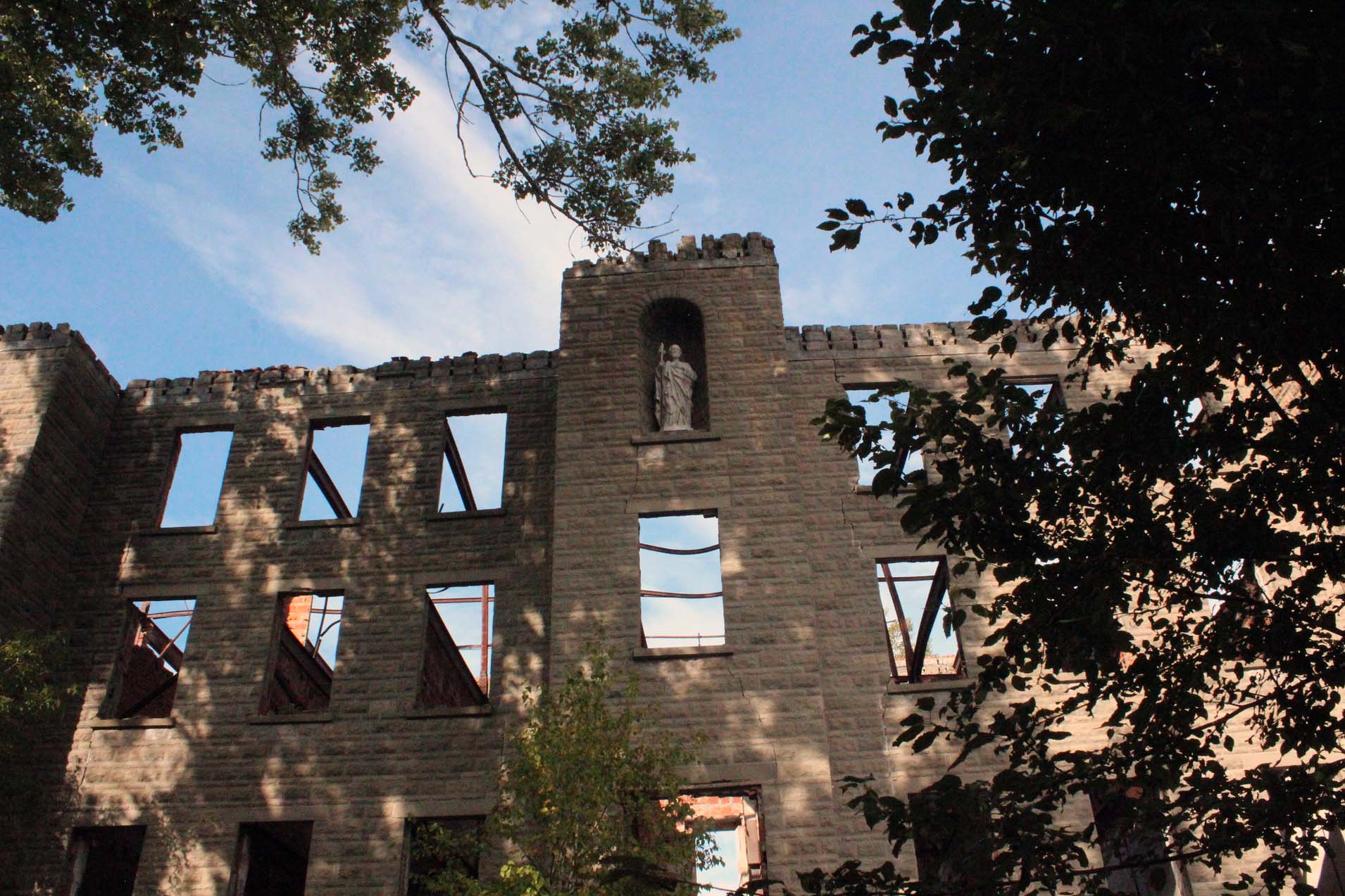
The ruins of St. Joseph's School for Girls

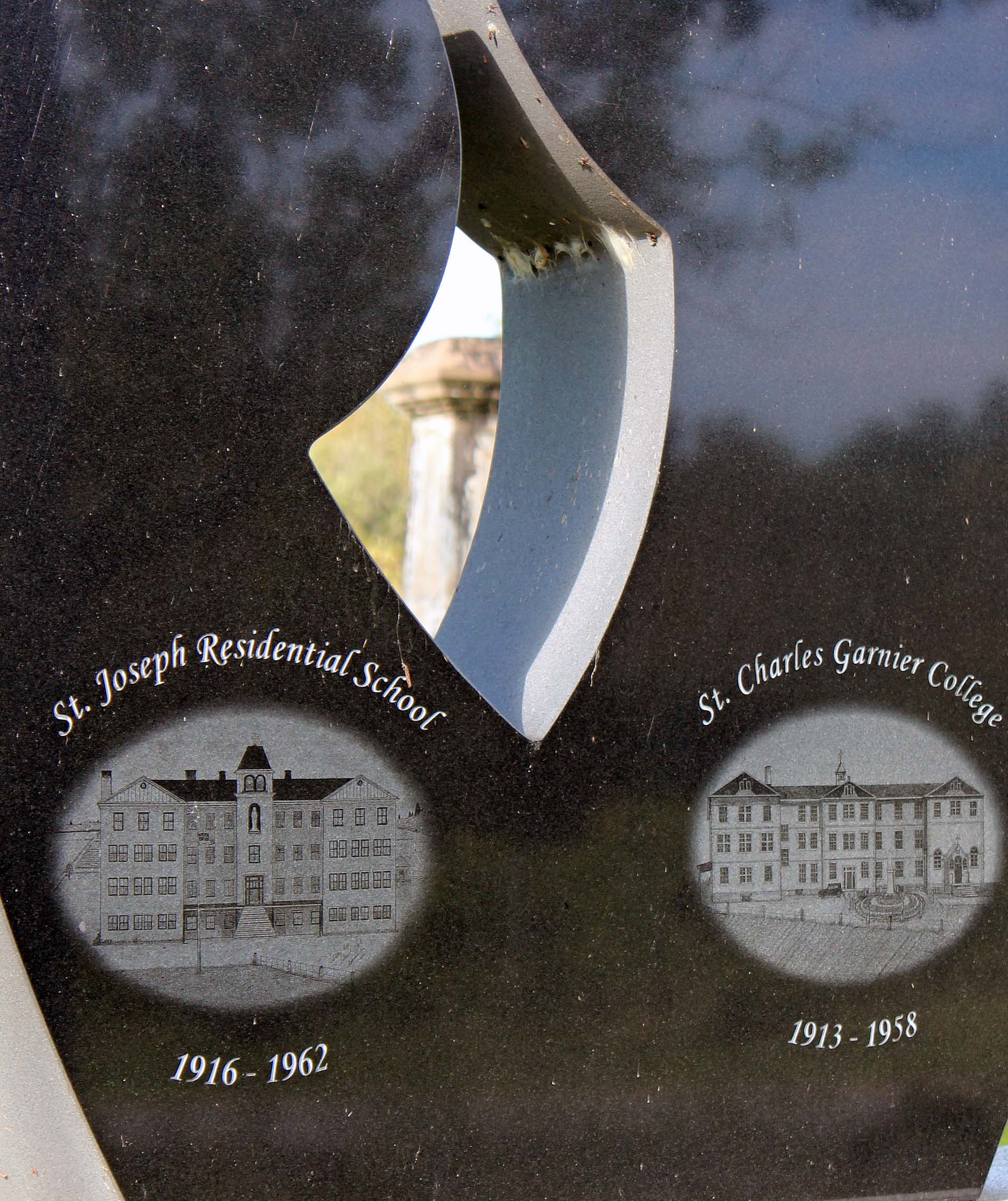
When I had visited that very same area in 1994, I still remember the ruins of the Garnier School, along with the pedestal, albeit empty. According to old photographs of the school, the statue of Jesus, his arms outstretched, used to be there. When we were there in 2017, the school building was gone and the only remnant was that lonesome pedestal. There was also a new granite monument, on which both schools were depicted, with the following inscription:

The Granite Monument

“Dreams flash across the minds of many, gratifying, satisfying, unrelenting, but dreams pass and we find peace at last.” Mae Evelyn Smith, Buswa, a student. “This memorial is in honour of all children who attended these schools.”

An old photo of the two schools-the Garnier High School for Boys and St. Joseph's School for Girls

The building, or rather its shell, that used to house St. Joseph's School for Girls, still stood a few hundred meters from the site of the other school. The statue of St. Joseph was still there. The gate was open, so we entered the premises—I think that somebody was next to the building, the place was quite interesting and we wished we could have talked to the owner.

The residential schools had left a painful legacy and for many years those who attended the schools had often been publicly reminiscing about the years spent there.

Incidentally, since 1994 I have been attending annual Jesuit retreats at Manresa, Pickering, Ontario. Adjacent to the Retreat House is the Jesuit Infirmary (René Goupil House), where most older and infirm Jesuits come there to retire—and eventually die. Over the years I had read their obituaries and from time to time they mentioned that a given Jesuit brother or father used to teach or work at the Spanish Residential School. During my last retreat, at the end of 2017, I was told that only one Jesuit associated with the Residential School in Spanish was still alive and resided in the Jesuit Infirmary.


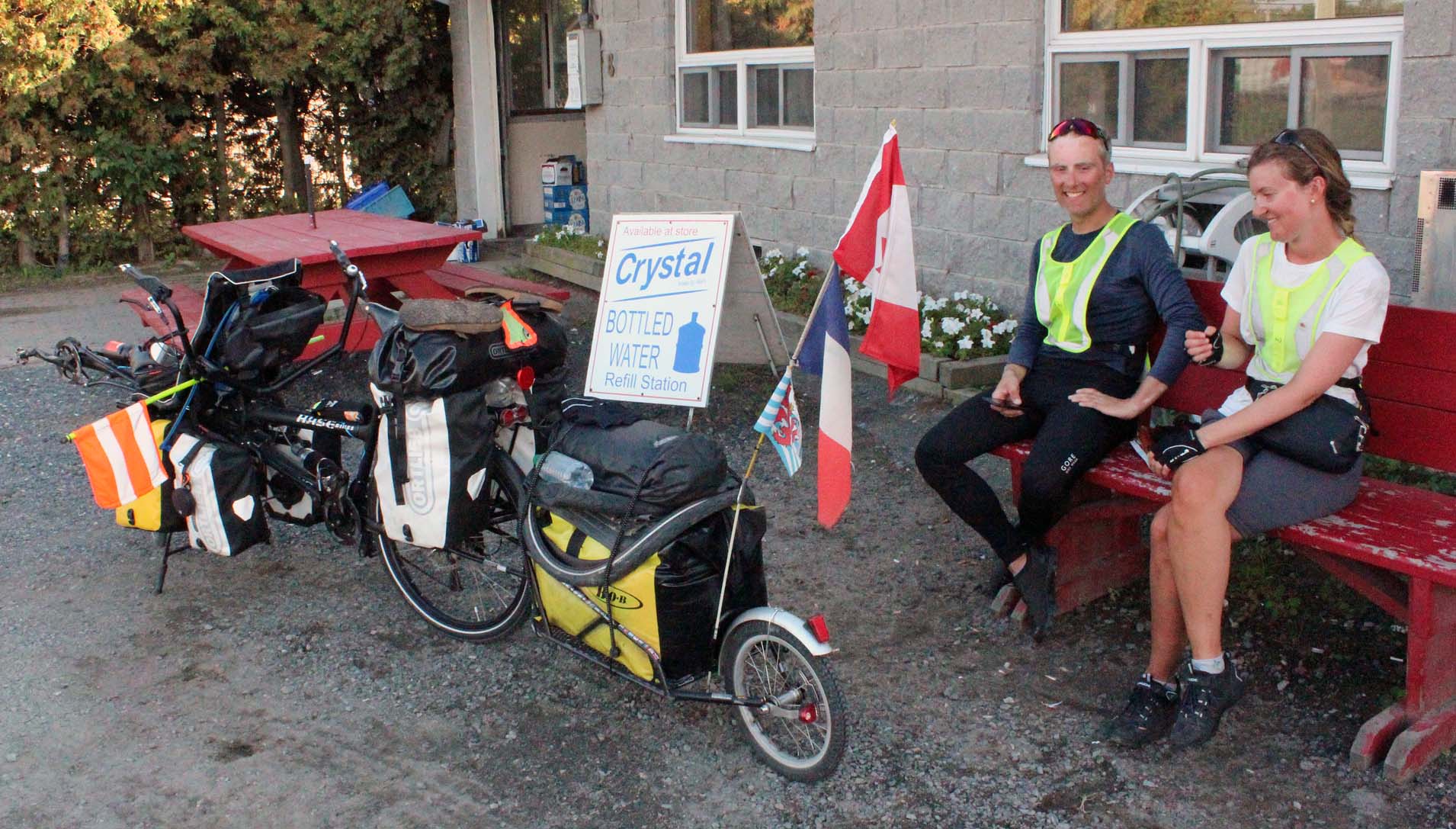
On our way back to the park, we stopped at Variety Store for ice cream and talked with a French couple who were tandem riding from Vancouver to Quebec City—they started in July. I always have a high regard for such adventurous individuals!


And then inevitably came September 26, 2017, our last day at the park and our last day together, period! After packing up, we went to the Massey Museum, but only spent 10 minutes there, getting low-priced books and videos. Just before noon, after 36 days travelling together, we bid farewell! Catherine drove west to Minnesota; I was on my way to Mississauga. I still stopped at Espanola as Catherine had asked me to buy her some headlights. I also went to The Giant Tiger to buy a simple t-shirt: it was very hot, +32 C, and I had run out of t-shirts, not expecting it would be so hot at that time! Next to the store there were rail tracks, leading from the Domtar Paper Mill towards the south. I believe it was the only existing and seldom used spur of the Algoma Eastern Railway.


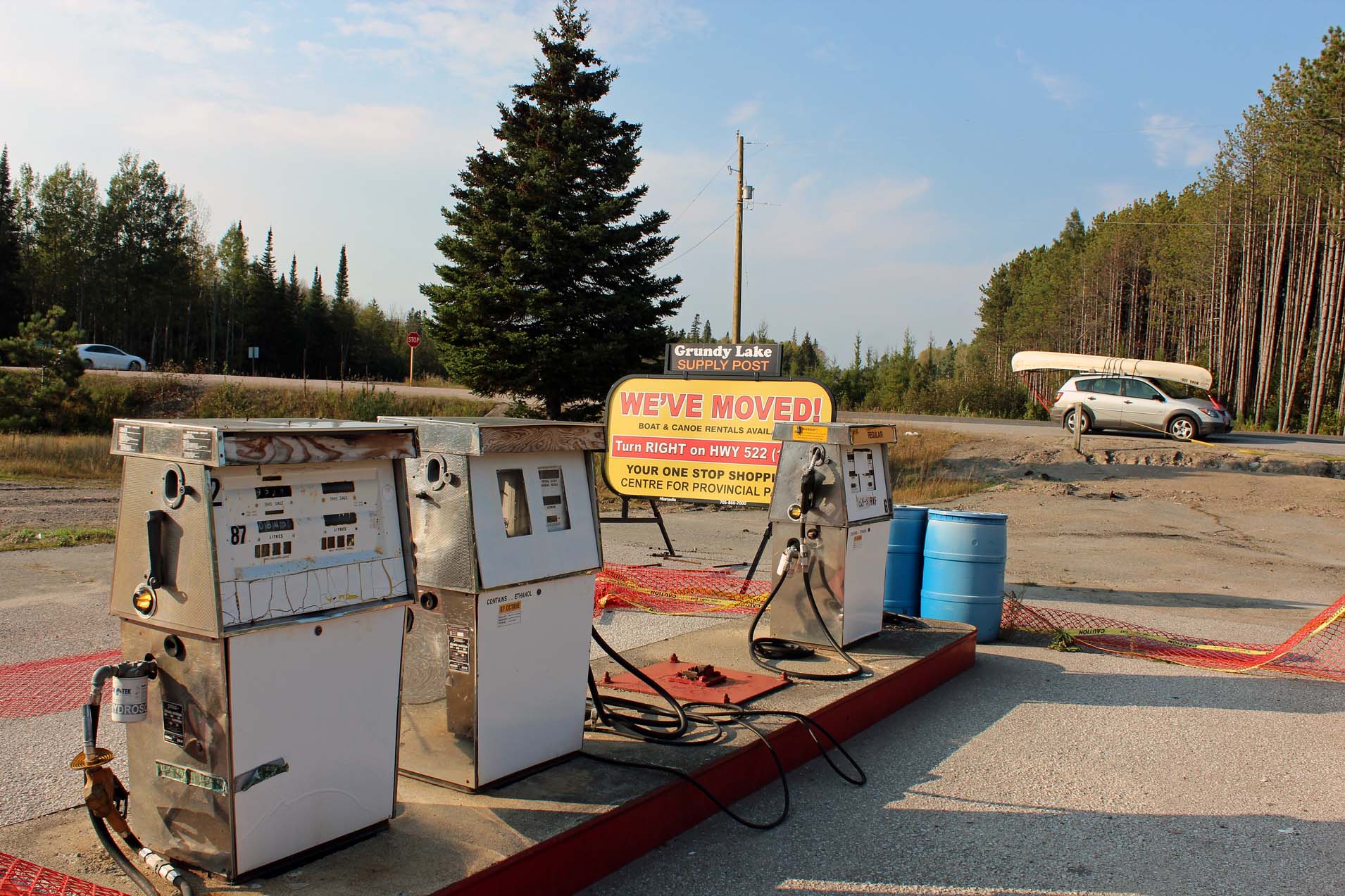
I made a quick stop at the Hungry Bear Restaurant and went to the Trading Post and next I arrived at the intersection of highway 69 & road 522, where the Grundy Supply Post used to be located—and where we had purchased our canoe in 2010. Now it was gone, only the rusty shells of the gas dispensers remained. Fortunately, it had just relocated to the entrance of Grundy Lake Provincial Park—most likely the new highway would pass through its former location.

The former location of Grundy Lake Supply Post, at the intersection of Highway 69 & Road 522. In 2010 we bought our canoe here! Fortunately, it moved just 1 km and now is located in front of of the entrance to Grundy Lake Provincial Park

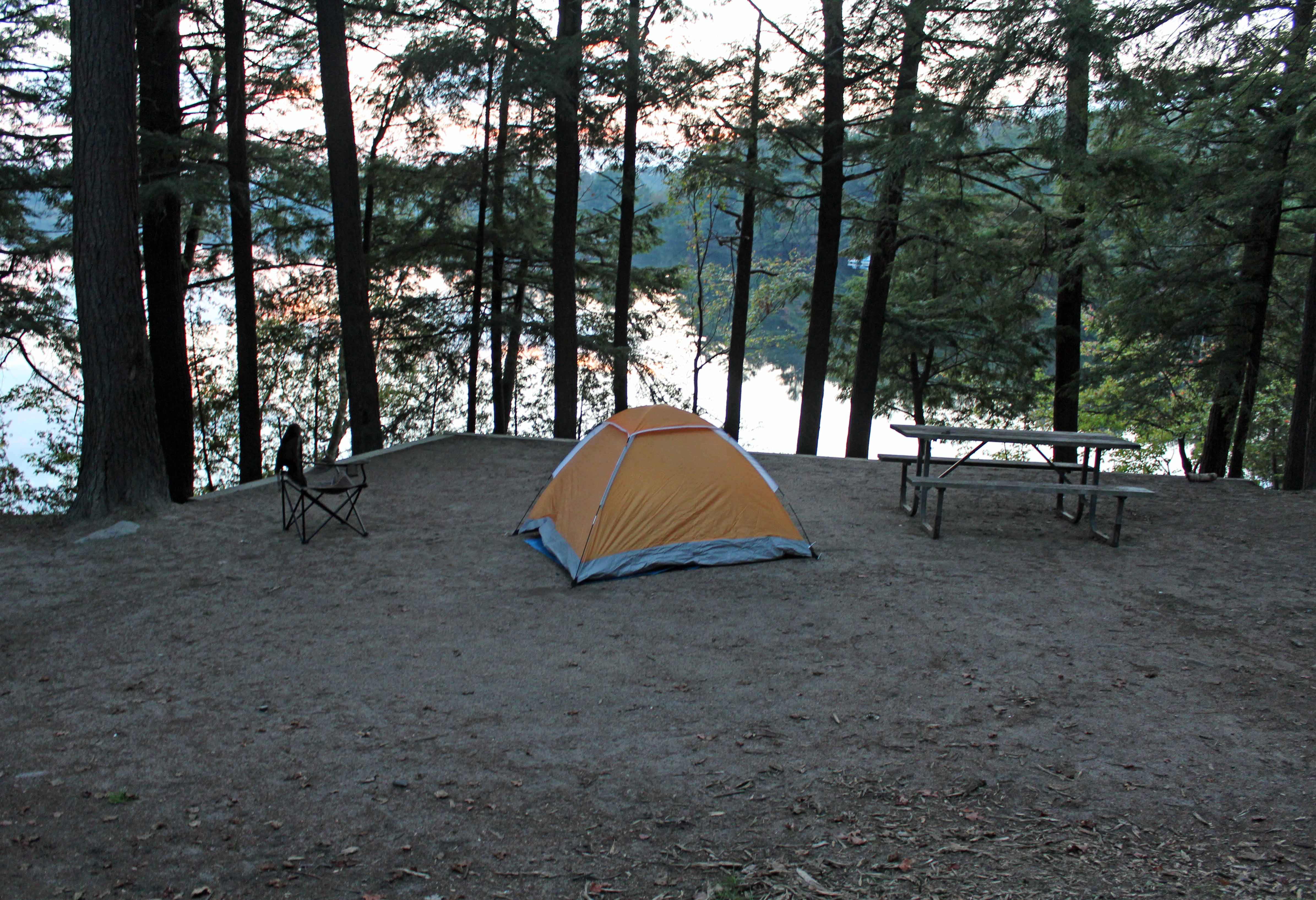
I was planning on spending the night at Six Mile Lake Provincial Park, but soon realized that I would not make it there on time. Instead, I drove to Oastler Lake Provincial Park, several kilometers south of Parry Sound. The park was almost deserted, the park offices were closed and I quickly drove to campsite number 132, where we had stayed once. Since I only had Catherine’s very small ‘emergency tent’, my inflatable matters did not even fit in, but well, it was for only one night, so I kind of made it fit! To make the tent waterproof, I covered it with a tarp. It was still very hot and humid, but the weather forecast called for a much cooler weather from then on—it was a perfect timing to end our vacation where we did.

Campsite #131 in Oastler Lake Provincial Park and my 'emergency' tent, much too small, but OK for just one night

I drove to the park’s office and made a call from the pay phone outside. Then for the first time I heard the train. OMG, it was so noisy! Without any exaggeration, I thought the train would suddenly materialize on the road and run me over, like in some horror movies! I had to postpone the call because it was impossible to hear anything. Then I drove back to the campsite and spent some time reading and sipping wine. Several times I heard the trains (there were two railway tracks very close to the park, one for eastbound, the other one for westbound trains). Whenever the train approached, first I hear the train whistle blowing, it became lauder and lauder and finally I could hear the rhythmic sounds of the train, so acute that sometimes I had a feeling that trains were crisscrossing the park, just next to my tent! I did manage to fall asleep after 1:00 a.m., yet at least once during the night I was awakened by the train. Just before 6:00 a.m. I woke up due to a shrieking train whistles—falling back asleep was pointless, as in no time I heard another train and yet another. I had stayed in this park several times before and honestly, I had no idea why those trains had not bothered me then! I quickly packed up the tent—which was a good idea as it started raining a little—and left the park just after 7:00 am. After making one quick stop at MEC in Barrie, I arrived at home before 11 a.m.


NEW PERSONAL BLOG

On April 11, 2026, I launched a new blog: Autographs, Pins and Memories.

In this blog, I share my memories of Poland in the 1970s, as well as recollections from later years and from my life in Canada. I also write about my collection of autographs, photographs, pins and other objects connected with my life, including the stories behind them.

The blog is available in two language versions: English and Polish.