Showing posts with label Cuba. Show all posts

Sunday, August 30, 2020

HOTEL CARISOL LOS CORALES AND SANTIAGO DE CUBA, JANUARY 8-22, 2020

Blog in Polish/blog w języku polskim: http://ontario-nature-polish.blogspot.com/2020/08/hotel-carisol-los-corales-and-santiago.html 

More photos from this trip: https://www.flickr.com/photos/jack_1962/albums/72157715783102422


It was our 15th trip to Cuba since 2009 and third to the Hotel Carisol los Corales, so we knew what to expect. We paid $1,295 CAN per person for 2 weeks (from Toronto) for a junior suite in the Carisol Section.

Junior Suite C-3

Before our January 8, 2020 departure (from Toronto to Santiago de Cuba), we had booked our Sunwing seats online 24 hours in advance and got the boarding pass. We thought it was a great idea—until we got to the airport (Pearson’s Terminal 3). We had to deal with the kiosks to print luggage tags and figure out how to put them on our luggage, which was not as easy as it looked, there were plenty of confused tourist and two employees were quite busy helping them. Then there were problems with placing our suitcases on the conveyor belt, somehow they were not ‘recognized’ by the scanner. We had to carry our baggage and line up to another conveyor belt and airport employees had to help us a lot. Overall, we spent more time than in the past checking in the luggage.

Club Amigo Carisol

We were told to go gate B26 and get on the bus. On the BUS? I thought she meant the PLANE? Actually, we did get on the bus and after a 10 minute ride, we ended up at the Infield Terminal, which I had no idea existed! Later I found out that this overflow terminal was rarely used, but in December, 2019 Sunwing Airlines moved their operations there. It is also frequently used as a location for major motion pictures and TV productions.

We also enjoyed the company of various animals, grazing just in front of our room

The plane was leased from the Czech Republic (hard to believe now, during the coronavirus situation, but at that time there was a shortage of planes due to the Boeing 737 Max airliners grounding) and it had bilingual signs—in Czech and English. The take-off was late due to deicing. Dinner was no longer served onboard, just coffee and other drinks, but it was possible to buy or pre-order extra food. The flight lasted 3 hours and 41 minutes and we landed in Santiago de Cuba. Two weeks later we flew back home, no problems, and again landed at the Infield Terminal. Overall both flights got us from point A to point B, no complains.

The Sunwing plane

Because of TripAdvisor’s Cuban forums, I knew that unexpectedly the US dollar had become a hot commodity in Cuba—and we happened to have plenty of US dollars anyway. Within minutes of getting on the bus we exchanged $200 US and got 200 CUC—more than enough for our whole stay. I also ran to the nearby kiosk and got 2 cans of Cuban beer (Cristal). It turned out that I bought the last 2 cans—and that was the only Cuban beer (in cans or bottles) I had during my whole trip. Some tourists also discovered that their luggage was not on the plane and it was supposed to be delivered the next day(s). It took us over 1 hour to get to the hotel. Our very nice and personable rep on the bus, Sahidy, told us a lot of interesting things on Cuba.
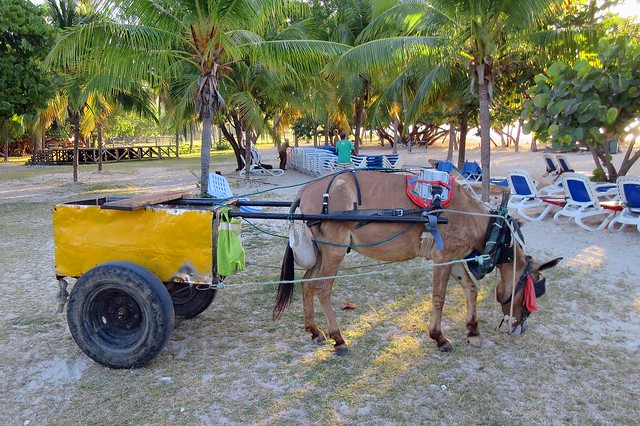
On the beach

HOTEL

We got the Junior Suite C-3 (upper level). We were not very thrilled with the room (or rather the location of the building), but decided to stay—we liked better the Junior Suite H-4, where we had stayed previously. We had the same maid as 2 years ago, Martha.

The staff was overall nice and helpful, although I saw a lot of new, young people working at the reception and most of them barely spoke English—and I had a feeling they were not too eager to practice their meager linguistic skills with tourists.

Inside our Junior Suite C-3

The two-level room was nice, but there was cold & hot water, although the pressure was bad in peak hours. Otherwise everything else worked (A/C, TV, fridge, hairdryer). There was no phone in the room. We had to ask for the safe a few times—eventually it was brought (!) to our room and bolted to the wall (2 CUC per day). Both the safe and the room use traditional keys, so bring a lanyard.

Some outlets in the room were 110 V, others 220 V and they were NOT clearly marked, so ASK the maid before using them or you might damage your electronics! We brought a small coffee maker (and coffee) along with a surge protector bar—2 year ago, due to a spike after a power outage, we had lost our coffee maker. 

Sunset at the beach

There was no Canadian channel on TV, only the CNN, which I never liked watching. We tried to watch the 6 pm news, but sometimes such ‘momentous’ news like the story about the royal couples announcing their intention to step back as senior members of the royal family took up the first 20 minutes, relegating other ‘inconsequential’ news items as the Ukrainian plane disaster, Iranian Crisis or the coronavirus outbreak in the background! That was why we spent just minutes watching TV. 

Ruins of the old hotel buildings, destroyed years ago by a hurricane

From our balcony we could see the ocean and, mostly covered by vegetation, the ruins of old hotel buildings (disco), destroyed years ago by a hurricane. There were always various animals grazing the grass around, mostly horses and donkeys (with cattle egrets hanging around them), which gave this place a very rustic look. Cats and dogs were not as numerous as in the past.

The beach was nice and the beach guys quickly brought us loungers. The coco bar served cold beer and other drinks—Frank the bartender did a great job and I especially loved the piña colada. There was a massage place on the beach and Catherine had a massage every day. I hoped to do snorkeling, but every day was quite windy and there were relatively high waves near the reef, making snorkeling there too risky. But closer to the shore I did see a lot of colorful fish and even a moray eel, luring from an opening in a rock.

I brought a relatively new book by John Grisham, “The Reckoning”. It was certainly NOT a typical legal thriller that one would expect from this author. The story was set in Mississippi, in the 1940s, and in addition to some courtroom drama, it contained a lot of other elements, such as family matters & secrets, life on a cotton plantation and race relations. And from the flashbacks to the Second World War I learned a lot about the Japanese invasion of the Philippines, the surrender of the U.S. forces and the Bataan Death March.

We had the best January weather ever in Cuba: every day was sunny, about +30 C and it rained a few times, but by the time we reached our room, the sky was blue again. Because of the wind there were no mosquitos or other bugs.
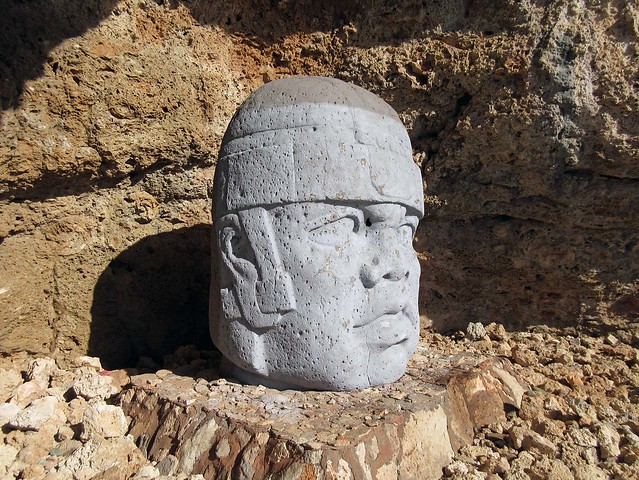
Exposición Mesoamericana close to the hotel. Apparently it is genuine fake pre-columbian art!

The Carisol section (where we stayed) was much quieter than the los Corales section, where all the entertainment took place—and it was one of the main reasons we decided to stay in the Carisol part of the resort.

On the bus to the resort we ran into a couple from Streetsville that we had met at the hotel two years ago and during our stay we frequently enjoyed dinners together. We also (finally!) met in person two well-known TA members, Cubacarol and CoralQueen, whose posts I had read for many years and often relied on their valuable advice. In fact, it was CoralQueen who had recommended our casa particular in Santiago de Cuba in 2010! We met Karen from Quebec, with whom we had gone biking two years ago to the Jardin de Cactus and whose excellent Spanish greatly enhanced our outing! Besides, we often intermingled with other tourist from Canada and exchanged a lot of interesting stories on travelling in Cuba and in other countries.

FOOD/DINING

The food was average, but tasty and I had no complains. For breakfast I always had fried eggs, coffee and yogurts. Most of the time we skipped lunch, but a few times we went to the Ranchon Restaurant for excellent ribs and fish. Dinners offered a lot of various dishes. I loved grilled pork at the cooking station, it was delicious—unfortunately, twice I tried beef and it was tough & stringy—well, at least the local dogs enjoyed it… We brought several salad dressings which greatly enhanced the taste of salads. Yet after a week I did experience some mild stomach problems—there was nothing wrong with the food, but I guess the greens did not agree with my gut flora. Although we never noticed any beer or wine shortages in the resort, the wine was ‘rationed’—the servers poured only half a glass of wine and never left a bottle of wine on the table.
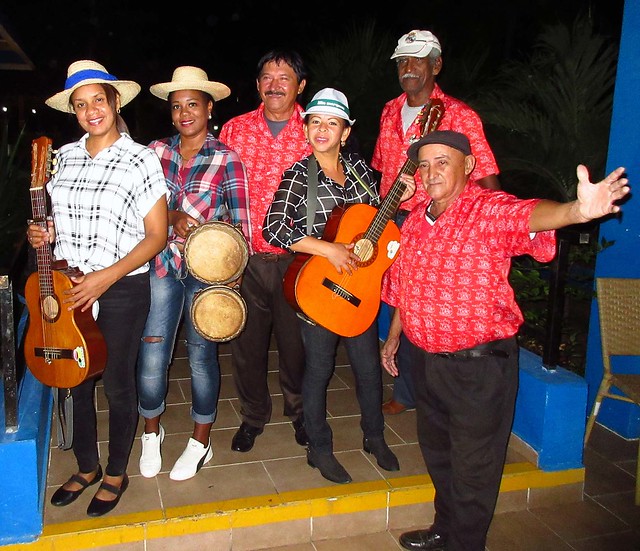
The (very noisy!) Cuban band

Every evening a Cuban band would provide musical entertainment while we were dining. I had really mixed feelings about them: on one hand it was nice to listen to one or two songs and admire their artistic talents, but after a while they kind of overstayed their welcome, making it literally impossible for us to conduct any meaningful conversation at the table. The performers were standing very close to our tables and were very deafening! Even if Frank Sinatra were singing like that, I’d say, “Get lost, Frankie, and pop up somewhere else!” We were often relieved when they finally went elsewhere in search of other victims... I mean, tourists!

During our stay a painter created this mural

HOTEL STORES (TIENDAS)

For the first time in 11 years it was impossible to buy any Cuban beer in the hotel stores! What’s more, on the second day after our arrival I purchased one bottle of mineral water and 2 bottles of Cuban liquors—it turned out that from then on there were no liquors and no mineral water available at the store! I brought tabasco sauce, hoping to make a Bloody Mary—but there was no vodka and no tomato juice in the store either. Well, I’m glad that there was draft beer at the bars. By the way, during our two trips to Santiago de Cuba, it was impossible to obtain Cuban beer and I only managed to get Heineken. At Plaza Dolores two restaurants had no beer and the third one eventually got some. I could not even find mineral water and I got very thirsty.

Catherine with a broken bike. As you can see, despite any predicaments, she is always smiling! After all, 'es Cuba'...

RENTAL BIKES AND WALKS AROUND THE HOTEL

We had been looking forward to renting bikes at the hotel and exploring nearby attractions. This year there were only 4 bikes available for rent. We rode to the blow holes (past the aquarium) and then Catherine’s bike got a flat tire—it was literally peeling off the wheel, so it was impossible to even walk the bike. She rode my bike to the hotel and sent a horse carriage to pick up me and the broken bike. 


The blow holes several kilometers from the hotel

We got another one and the next day in the morning rode to the village of Baconao—just in time to see the start of the elementary school at 8:00 in the morning, where students were reciting some revolutionary stanzas and singing. Later we toured the small school and spoke to the teachers, giving them several bilingual periodicals. 

Since we were supposed to return the bikes at 10 am, I was already at the rental place at 9:45 am, but it was still closed. I waited for over one hour (in the meantime, two people wanted to rent scooters and another tourist was impatiently waiting to return one), but the rental place remained closed, its sole employee nowhere to be seen. Just before 11 am I dragged the bikes to the reception and in spite of the protestations of the reception clerk, I placed them in the storage room. I suspect that the hotel is going to be very pleased when the remaining bikes finally break down—one less issue to deal with!

School in Baconao village

In the morning we walked around the hotel and twice explored the nearby caves along the coastal cliffs with indigenous cave art from Central and South America (Exposición Mesoamericana). On a couple of occasions we spoke to the gardener working there—he showed us bats (“murciélagos”) attached to the caves’ walls. We also noticed that the restaurants that we had seen two years ago now were gone—a tourist told us that they were private and too successfully competed with nearby government establishments…

Start of the day in elementary school in Bacono village

The hotel offered a free trip to Santiago de Cuba, which was leaving at 10 am on Saturday and we took advantage of it twice. The first time the bus was full, the second time there were two buses and there were still some empty seats on the second bus. Each time Julio, a very entertaining man, was our guide on the bus and kept regaling us with a lot of interesting stories. The bus dropped us off—and later picked us up—from Plaza Dolores. 

Monument of Francisco Vicente Aquilera

There were many restaurants and the old church of Dolores, converted into a concert hall, as well as an impressive monument of Francisco Vicente Aguilera (1821-1877), a Cuban patriot, mayor of Bayamo, Vice President of the Republic and insurrectionist.

Calle Jose Antonio Saco, a.k.a. Enramada

Just steps from the plaza was Calle Jose Antonio Saco, a.k.a. Enramada, closed off to traffic, always full of pedestrians, shops, restaurants and other businesses. We walked along this street several times, bought several delicious ‘churros’ (paying with CUP, or “Moneda national”) and also visited a number of casas particulares, some were quite nice and offered a great view of the city. There was even a shop offering “Las Mascotas”—yes, it was a pet shop!

An antique vehicle on Plaza Dolores, which I was not supposed to photograph, according to one funny Cuban fellow!

There were plenty of Cubans at Plaza Dolores—indeed, some tried do beg and asked for money, but most of them did not bother tourist. Two years ago I had taken a video of an older Cuban gentleman who was playing the guitar and singing, which I later posted on YouTube.

With a guitar player

Later, as I was taking photos of surrounding buildings, I spotted a beautiful antique car which I commenced to photograph. All of a sudden an agitated man showed up and, while hurriedly waving his arms, was shouting that I was not supposed to take photos of the car without paying (him?). Of course, I totally ignored him and continued my business. As quickly as he appeared, he was gone—and to make the story even more amusing, the car did not even belong to him!


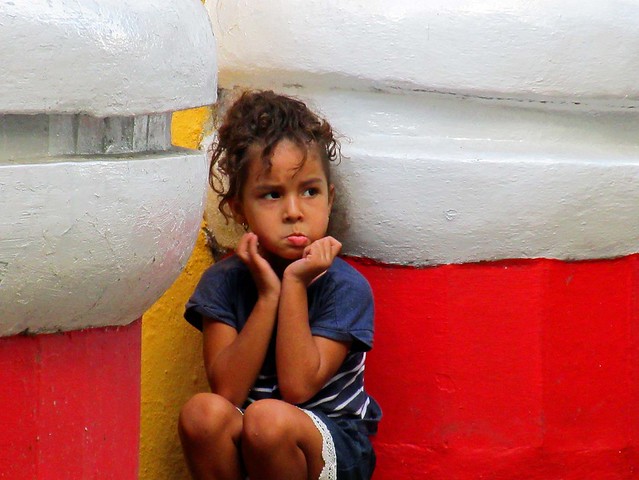
This Cuban girl was so adorable!

While waiting at Plaza Dolores for the hotel bus to pick us up, we sat at the outdoor patio of the Restaurante Don Antonio and ordered a couple of drinks as well as cold beer—it was the only establishment in the vicinity that had beer, the other ones had none. There was a Cuban family sitting nearby and I took a series of amazing photographs of their adorable daughter! The servers were quite nice and I am grateful that they managed to find beer—who would have ever guessed beer would become so difficult to find? 
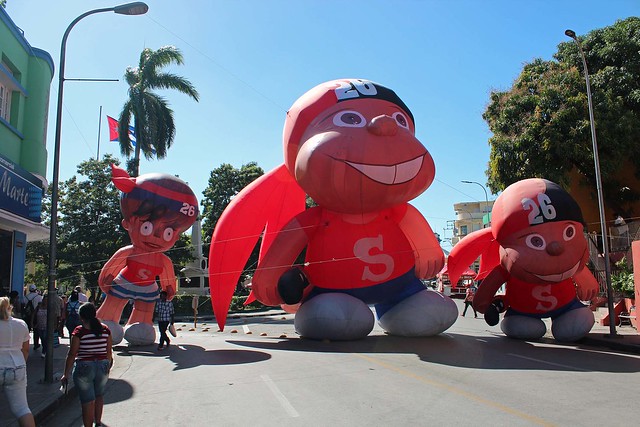
Festivities at Plaza de Marte

Twice we walked to Plaza de Marte, where some kind of festivities were taking place there, the surrounding streets were closed off to traffic and there were plenty of various booths/kiosks selling food. Of course, the plaza was teeming with Cubans, who were strolling, sitting and checking out the attractions. Unfortunately, it was impossible to purchase any Cuban beer anywhere nearby and only after searching several stores I managed to buy German-made beer “Heineken”, created to commemorate Havana’s 400th anniversary. Very close to the Plaza was a Communist Party of Cuba Provincial Head Office—since there were a lot of photographs hanging in the lobby (most likely related to the Cuban Revolution), I asked if it was possible to take a look at them, but the guards did not let me in. I wonder why?
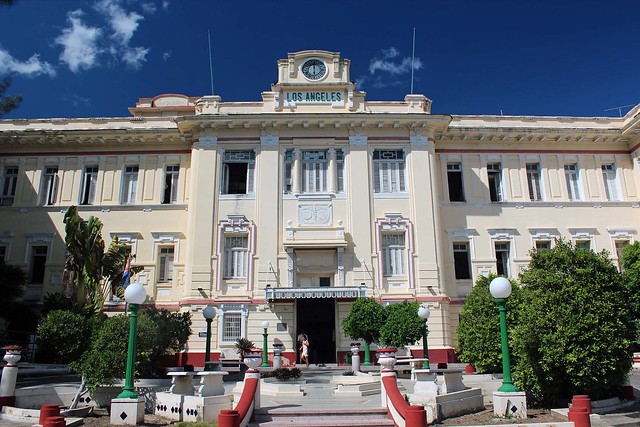
Los Angeles Hospital

On our way to the Moncada Barrack, we made a shortcut through the Los Angeles Hospital grounds. Built decades before the Revolution, it was quite impressive. On our way back we also wanted to cut through the hospital’s grounds, but that time a security guard said ‘no’ and was very adamant not to let us through. The only explanation is that between certain hours tourists are not allowed on the hospital grounds…

The Moncada Barracks, with bullet-pockmarked walls

The highlight of the trip was the visit to the Moncada Barracks. In fact, we went there, albeit briefly, during our first bus tour to Santiago, but only during the second bus trip to Santiago we spent over one hour inside the building and saw the exhibits.

The Moncada Barracks, today an elementary school and a museum

I had seen the building numerous times on TV, in books, magazines and propaganda materials. Indeed, it is called the cradle of the Cuban Revolution. It was here that on July 26, 1953, the 26-year old Fidel Castro, along with a band of 111 ill-armed men attacked the Moncada Barracks. It was a total failure—some 60 men were shot or tortured to death, the rest, including Fidel Castro and his brother Raul, fled. Later Fidel Castro was captured by Lieutenant Pedro Manuel Sarria Tartabull who, instead of executing him on the spot, as ordered, kept him alive. It was during his trial that the uttered the now famous words: “History will absolve me.” He was sentenced to 15 years, yet released after 2 years. Soon Fidel and Raul Castro left for Mexico, where they befriended an Argentinian doctor, Ernesto “Che” Guevara. On November 25, 1956 Castro (incidentally, he would die, to the day, 60 years later), along with 81 revolutionaries, left Mexico on a decrepit boat called “Granma” and landed in Cuba on December 2, 1956. The landing, like the Moncada Barracks attack, was another disaster—62 of the rebels were killed or captured. After a 2 year guerilla war, Batista fled into exile on December 31, 1958 and the next day Castro proclaimed the victory of the Cuban Revolution. That is why the number “26” has become a symbol of the revolution and can be seen everywhere in Cuba.

In front of the Moncada Barracks

The building has this very distinctive mustard-and-white color. Part of the building is a museum, the other part a school. The museum exhibits plenty of photos, uniforms, maps, torture devices and photographs of Castro’s men who took part in the attack. At the entrance to the barracks there were a number of photographs depicting various dignitaries visiting the Moncada Barracks, often guided by Fidel Castro himself. I immediately recognized Henryk Jabłoński, head of state of the People's Republic of Poland between 1972 and 1985, who paid a visit in 1979. Unfortunately, all the descriptions in the museum were in Spanish, not in English, so I was not really able to comprehend and understand much. It is quite puzzling—after all, I believe that it would be in the interest of the Cuban government to inform tourists about its revolutionary history.
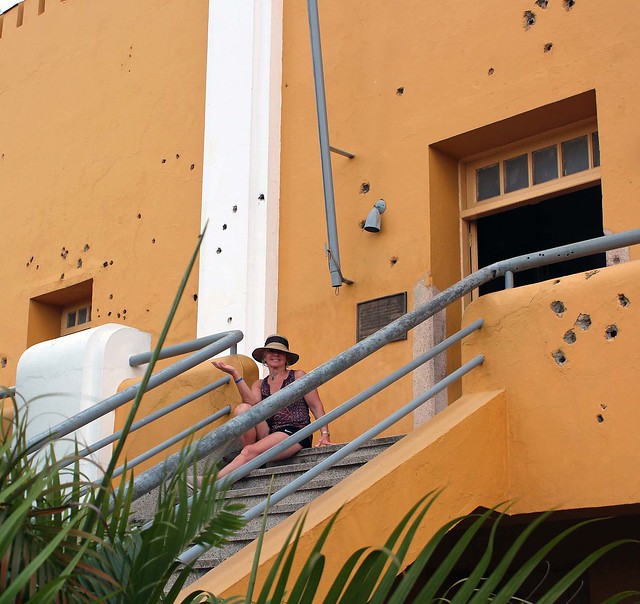
The bullet holes on the Moncada Barracks' facade. Not as authentic as one would think, though--yet Catherine's smile is 100% authentic-she's happy that the Cuban Revolution eventually succeeded and we can enjoy visiting Cuba!

One of the most prominent features of the building’s façade are the bullet holes, allegedly made by the rebels’ inadequate weapons. Recently I found out that they were not real! According to an article by Stephen Hunter from “The Washington Post” (2003), as well as according to Dr. Antonio de la Cova’s presentation on his new book, “The Moncada Attack: Birth of the Cuban Revolution”, the original bullet holes had been eradicated by the Batista regime after the attack. It was only after the Revolution the holes were re-created by the new government. Besides, Dr. de la Cova said that the holes had NOT been made by the rebels, but by the soldiers.

The Moncada Barracks

I also discovered another interesting bit of history about the Moncada Barracks attack. According to Dr. de la Cova (a native of Havana and an assistant professor of Latino studies at Indiana University), in July 1953, more than a dozen soldiers killed during Fidel Castro's attack on the Moncada garrison were interred in the Cuban Constitutional Army pantheon at the Santa Ifigenia Cemetery in Santiago. After the rebels seized power, they cleared out the pantheon of the remains of their former enemies and incinerated them, added the word "Revolutionary" after "Armed Forces" at the entrance, and interred Communist soldiers in it. 

I would also like to mention the Siboney Farm, where the rebels had been preparing for the Moncada attack—and it was from this farm that they left for Santiago to carry on the attack on the Moncada Barracks. After the attack some of the rebels returned to the farm. The same day soldiers discovered the farm and eventually sprayed the façade of the house with a machine gun—the bullets holes are still visible. Since the Farm is just meters from the road between Santiago and our resort, we passed it many times.

No roof? No problem, the umbrellas will protect you from rain! I remember a Polish song by Maria Koterbska, appropriately called "Umbrellas, umbrellas"; its refrain goes like that: 
Umbrellas, umbrellas for adults and for children!
Umbrellas, umbrellas – they won’t let through a single drop!
Umbrellas, umbrellas, very cheap umbrellas!
Umbrellas, umbrellas – please buy them, ladies and gentlemen!


https://www.youtube.com/watch?v=yugEIsB2wV0
  
On the last day of our stay the weather took a turn for a worse and supposedly stayed that way for a while. At the Santiago airport it was impossible to pay with CUC, only CUP and US dollars (and probably other currencies, too, but then there was some kind of surcharge). I quickly bought two bottles of rum. Some tourists were quite upset at the new regulations.

Comandante Juan Almeida Bosque, Fidel and Raul Castro

The flight home was uneventful, we again landed at the Infield Terminal in Toronto and had to take a bus to Pearson Airport’s Terminal 3. Incidentally, that very day (January 22, 2020) a man in his 50s arrived from Wuhan, China at Pearson’s and he became the first case of the new coronavirus in Canada.

Salud! And to our next trip to Cuba!

Overall, we experienced less problems than 2 years ago, the weather considerably better and we had a very good time. Of course, we always travel to Cuba with a very open mind and do our best to overlook as many flaws as possible—after all, we come to enjoy our vacation, NOT to complain! Yet it’s obvious that this resort needs a lot of renovations and enhancements—thus, I’m not surprised that some tourists are disappointed. Unfortunately, given the current economic problems in Cuba (furthermore exacerbated by the unexpected coronavirus situation), I’m not very optimistic that any significant improvements will take place any time soon. So if you go, just focus on the positive and have a great time!

Friday, August 21, 2020

VARADERO, CUBA: TWO WEEKS IN THE HOTEL ROC BARLOVENTO, TRIPS TO SANTA MARTA AND MATANZAS, NOVEMBER, 2018

Blog in Polish/w języku polskim: http://ontario-nature-polish.blogspot.com/2020/08/varadero-kuba-dwa-tygodnie-w-hotelu-roc.html 

More photos from this trip: https://www.flickr.com/photos/jack_1962/albums/72157715579022731


I had never been too thrilled to go to Varadero, expecting to see almost 100 various hotels & resorts, sandy beaches—and nothing else. Fortunately, I was wrong! Granted, it is true that many hotels, located in the eastern part of Hicacos Peninsula (more-less east of Calle 64) might be much more luxurious, bigger and offer a much higher standard, yet they are ‘in the middle of nowhere’ and unless you take a taxi or a bus, there is not much else to see or explore. Yet the western part of Varadero resembles a small town. And our hotel, the Roc Barlovento, was located very close to the bridge over the Kawama navigation channel, at the very beginning of the Hicacos Peninsula. Thus, this turned out to be an EXCELLENT location, enabling us to make a number of strolls directly from the hotel. We often walked on Varadero’s main street (Avenida 1ra) for several kilometers and explored various restaurants, shops, parks, hotels, private homes and other landmarks—there was even a Canadian Consulate a stone’s throw from our hotel! We also walked along the channel in the evening, where plenty of Cubans were fishing, and saw Al Capone’s mansion, the Casa de Al (although it is almost certain that Al Capone had never been there). Yet the best walking excursions were to the town of Santa Marta, located just past the bridge. 

Cubans fishing near the bridge connecting Varadero to the rest of Cuba

It was our 14th trip to Cuba in 10 years (November 4-18, 2018). We picked the Hotel Roc Barlovento mainly because of numerous glowing reviews posted on TripAdvisor—and certainly we were not disappointed. Well, the manager was a German man—maybe that was one of the reasons it was quite well-run (although I know it would take much more than just one German manager to put things right in Cuba…). 

We had our meals outdoor in the building on the left-and every morning participated in exercises in the building to the right

The hotel is well designed in a Spanish style and quite cozy, no much walking is required to get around. Plenty of nice palm trees & gardens. And it is for adults only—no disruptive and screaming kids!

Morning yoga with Zahilys

Approximately 60% of tourists were Canadians (English & French speaking), 30% Germans and some from Spain, Italy and other countries.

There were 3 pools; the very shallow one had no water. There was a Jacuzzi in the center of the pool closer to the beach, but it was not hot.

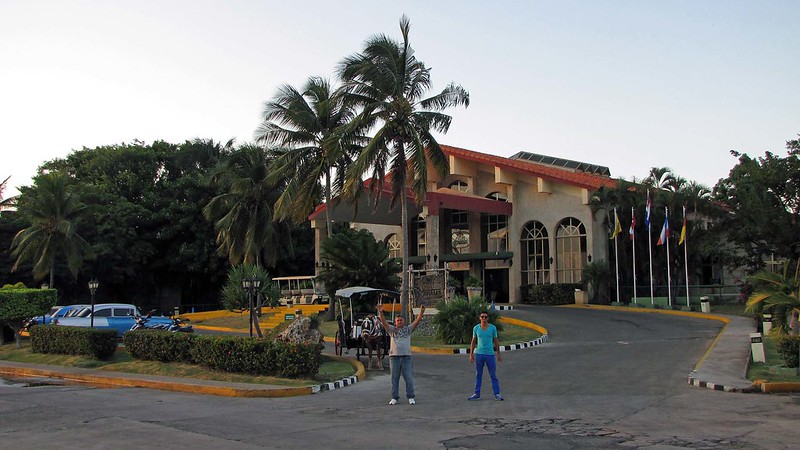
Entrance to the Hotel Roc Barlovento

There is a tienda (shop), with various beverages, rums, vodkas, souvenirs, shampoos, shirts, hats, toiletries, etc. Another stand near the lobby sells books, postcards and stamps—the mail box is at the lobby. On a couple of occasions I saw an artist painting and selling his works.

The exchange rate at the hotel was very poor—just 68 CUC for $100 CAN, whereas the bank offered about 73.50 CUC. Not fair!

The Beach at the Roc Barlovento Hotel

A number of very friendly (and chubby) cats roamed the property, especially the outdoor dining area during meal service—and they even had their own ‘cat café’. Unsurprisingly, they were picky eaters!

At 10 am there was half hour yoga/stretching on the stage of the entertainment area, conducted by Zahilys, a very friendly & outgoing woman, who worked at animation and conducted other activities as well. Bring our own towel! Yet there were not too many guests interested in doing the exercises, and quite often we were the only participants.

Roc Barlovento-our room number 333

There was a gym, but we never used it, preferring our morning workouts and swimming in the ocean.

Towels can be obtained from ‘the clubhouse’ near the main square. The club house also has a small library of books in English, French and German. We donated 4 of our books.

We ALWAYS had our breakfast, lunch and dinner outdoors, never inside--that was one of the most important advantages of this hotel. 

Every evening there is entertainment, but the only one we attended was the aquatic show (Thursdays) and it was impressive! The Elvis Show sounded great from our room on Saturdays.

Scuba diving excursions/lessons are available, there is an information stand set up every day in the main square.

Catherine enjoying her very healthy breakfast-of course, oudoors!

Various tours are offered in the lobby area. At the end of our stay there was information about a very cheap bus to Havana—I think it was 40 CUC both ways, or 25 CUC one way per person. 

We had sent an email to the hotel two weeks before arrival, asking for a quiet room on the top floor and indeed, our request was granted—we got room number 333. From our window we could see part of the tennis court—otherwise there was plenty of foliage that made the view quite pleasant. We could hear the traffic from the main street and occasionally caught a whiff of oil/petrol—about 1 km from our hotel, in Santa Marta, we saw two oil derricks. 

View from our room #333

The balcony was very small, but it was possible to sit there and enjoy the sun. There was a small bathtub—later the maid brought a plug. The room was quite contemporary, with 2 double beds, HD TV with about 25 channels. There was the CNN channel (devoting 95%+ of its air time to Trump—boring—another 4% to US affairs and only 1% to international news—worse than TV programs in the Soviet Union!) and a Canadian channel (CTV) in English, albeit from Montreal. We had to pay for the safe (2 CUC per day, 28 CUC for 2 weeks). We always had hot and cold water, the air conditioner worked perfectly and it was easy to remotely change the air flow or temperature. The small fridge was really cold and the hair dryer worked. We had some minor problems on 3 occasions (with the safe and falling curtains rod)—within 10 minutes of reporting them a technician came and fixed them. On a few occasions our magnetic cards stopped working and we had to go to the lobby to have them re-programmed. The maid, Norian, was great, always keeping our room spotlessly clean and creative. 

Casa de Al-supposedly, Al Capone used to live here, but according to my research, it is very doubtful that he even visited Varadero

The beach was large, with white sand. Lots of palapas and chairs, so there was no need to ‘reserve’ them in the morning, some were always available. We could also observe nice sunsets. The water was quite shallow for about 30 meters. At the end of our stay it became windy, the waves got quite big and there was a yellow-and then red flag (no swimming). Once an unexpectedly big wave swept the first row of palapas, catching many relaxing vacationers (and their belongings) by surprise. I saw some people snorkel, but there was nothing to see—just some small fish. Kayaks, pedal watercraft and sail boats were available for hotel guests. Beach assistants was great, he quickly brought us loungers. 

The 'famous' Polish Fiat 126p is still relatively popular in Cuba. Apparently, it's not a very good car...

Another reason that we picked the hotel was the outdoor dining, which surprisingly was hardly used. Not even once did we dine inside! The food was slightly repetitive, but varied and good—often even delicious. For breakfast I always had eggs & bacon—the egg station cooks were very efficient and quick—as well as plenty of fruits, juice and yogurt. Usually we skipped lunch, but when we had it (twice), it was excellent—in addition to the regular fare inside the restaurant, there was a big grill outside, serving delicious steaks, hamburgers, hot dogs and other grilled food. At dinner I always went to the cooking station offering sumptuous grilled pork and beef as well as several kinds of fish, shrimps, calamari, squids and mussels. Another cooking station served spaghetti and pizza. There were also scrumptious stews, chicken, prosciutto, cheese and salads. I did not see any tomatoes, however, which I like very much. I never had to line up for more than a few minutes at the cooking stations and the food was plentiful. Our servers were Leonardo & Janet (breakfast) and Raul (dinner). They always brought us plenty of coffee, juice, wine or beer to our outdoors dining table. There was a snack bar near the beach, serving basic food—hamburgers (very good), hot dogs, ham & cheese sandwiches, fruits and lettuce. Next to it was a bar serving cold beer and drinks and most of the time it was manned by the always smiling Pedro. There were also bathrooms in the back of the bar. 

Sunday Farmers' Market in Santa Marta. Pork costs 25 CUC per lb, or one US dollar

The small Bar El Traguis near the wooden ramp to the beach was nice, but the seating area was limited and the beer cost 1 CUC. Mixed drinks were free. 

Sunday Farmers' Market in Santa Marta

The lobby bar was OK, but there were frequently buses or taxis pulling up, so it was noisy and smelled of exhaust fumes. It was almost always crowded. In the evening there was often live music—I loved the violin & guitar players, they were fantastic (they played only on Mondays and Tuesdays, from 7 to 9 pm). The bar in the square (adjacent to the Mexican Restaurant) was great, lots of tables & chairs and never any lineups—we often spent some time there on our way from the beach. We never had an a ’la carte dinner. Once we wanted to go to the sushi bar, yet we were told that it did not server any sushi anyway and it opened at 11:00 pm.

Catherine in a Cuban store with cigars and alcoholic beverages

The gardeners often bring coconuts to a stand between the beach and lunch area and can cut them for you. 

Out of the 15 days, 12 or 13 were quite sunny and it was hot (over +30 C). It rained a few times, but it was still very warm & humid and it was not a big deal. Since we often kept the room’s balcony door open, we did see several mosquitos in our room, but otherwise I did not encounter any insects anywhere else. 

The famous Beatles bar in Varadero

We often walked from our hotel to the town of Santa Marta—it took us about 2 minutes to walk to the bridge, we crossed it, turned left and a few minutes later we were walking along the town’s streets. It is a very nice town, with plenty of restaurants, cafes and casas particulares. Most restaurant offer very varied menu at reasonable prices. Some parts of this town have impressive homes. Following a very valuable recommendation of TripAdvisor’s poster, SWNova, on Sunday morning we went to the Farmers’ Market—what a fascinating experience! There were plenty of fruits and vegetables sold by farmers, all prices were in CUPs (i.e., Moneda National, 25 CUP = 1 CUC = $1 US) and were very cheap. I bought beer served in small cups, for about 6 CUPs per cup, it was quite good and very different from that sold commercially. We also purchased some delicious food from a street vendor. 

Very attractive Casa Particular in Santa Marta

There were plenty of casas particulares and we visited one of them. The owner spoke English, he had even visited Canada (upon invitation of some tourists whom he had befriended) and told us a lot of interesting stories about this town. Certainly, it was quite well-off, as many of its residents had worked at hotels in Varadero. 

Cubans fishing under the bridge in Varadero

We also went to a private coffee shop a few times and had very good coffee and pastry. It was a new venture, all the equipment was brand new and ‘made in Italy’.

In the evening we often took a stroll along the canal—usually there were groups of Cubans fishing. We also walked on Avenida 1ra, even to the famous The Beatles Bar, visiting some restaurants, cafes and tiendas along the way. Once we went to the bank to exchange money, there were over 10 tourists inside and we had to wait for almost one hour—passport was also required to complete the transaction.

The easternmost tip of Varadero-what a luxury!

We tried to walk as much as possible, but when we were tired, there were always plenty of taxis, coco taxis and horse-drawn carriages, offering rides. Beware: once a horse-drawn carriage driver quoted us the price of 5 CUC—but later said it was… per person! 

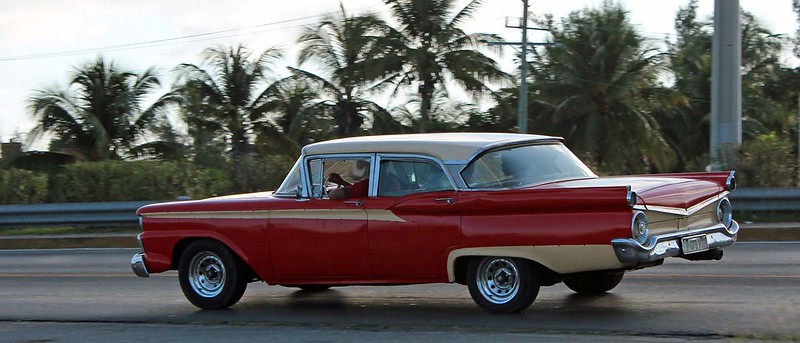
Pre-revolutionary, antique cars are a common sight in Cuba

Twice we took advantage of the hop-on-hop-off bus. It had its last stop just a minute away from the hotel (near the La Sangria Restaurant), it ran every 20 minutes (less frequently in the evening), cost 5 CUC per person and took us to the very end of the Hicacos Peninsula. 

Matanzas, Cuba--Libertad Square

There were trips to Havana offered from the hotel, but since we had spent a week exploring this beautiful city 10 years ago, we decided to just visit the city of Matanzas, which is approximately between Havana and Varadero. We managed to find a nice taxi for 30 CUC and it dropped us off at Libertad Square. Catherine went to the Pharmaceutical Museum and I explored a government building (a City Hall?); initially the staff did not want to let me in, but I explained that all I wanted to do was take a look at the photographs on the walls. They depicted Fidel Castro’s visit to this town. There was a de rigueur statue of Jose Marti in the center of the square. 

Matanzas-Teatro Velasco

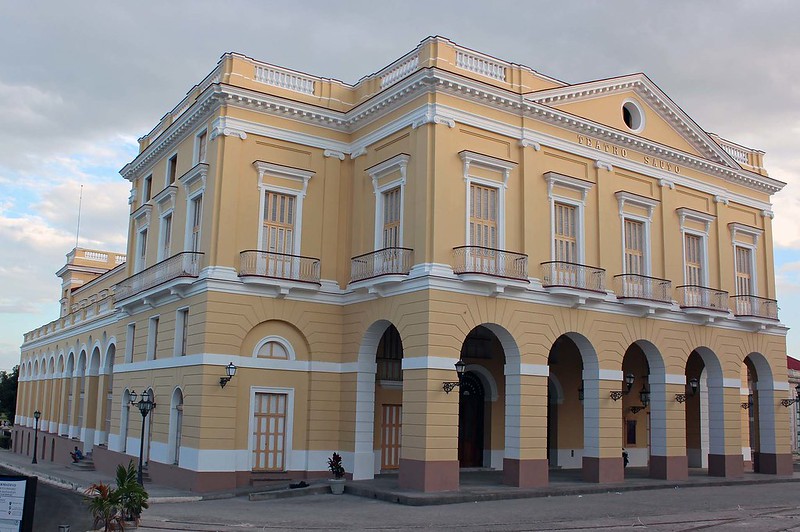
Then we went to a restaurant at the Hotel El Velasco, adjacent to the Teatro Velasco and afterwards walked on Calle Milanes toward the sea. Plenty of people congregated near the Catedral de San Carlos Boromeo. Eventually we reached the Teatro Sauto, which was apparently being renovated. There were old streetcar tracks in front of the theatre. The theater opened in 1863 and it has been a symbol of the city. Such famous performers as French actress Sarah Bernhardt, Russian dancer Anna Pavlova, Italian opera singer Enrico Caruso, and Spanish guitarist Andrés Segovia. 

Teatro Sauto

There was also the Museo de los Bomberos (Firefighters Museum) near the theatre, but we did not go there. We spent some time at the Cafe and Cremeria Atenas, vis-à-vis the theater and had a few drinks which were quite reasonably priced. By the way, it was very hot and humid and I had 9 cans of beer during the whole day! We sat outside and had a great view of the theatre and the city life. There were two bridges over the Rio San Juan nearby. 

Teatro Sauto, Palace of Justice and other historical buildings. 

We walked around the theatre, hoping that perhaps we could peek inside (no luck, though) and proceeded on Calle 272, more-less along the coast. There were some railways tracks along the shore and in the middle of the streets—I was sure they had been abandoned long ago, they looked old and rather broken, yet we were told that trains still ran on them! If this is indeed so, it a miracle! Just past Calle 270 there was a Cuban eatery on a small ‘peninsula’, all prices were in CUPs. We ordered a box of fried shrimps—as far as I remember, 10 of them cost about 30 CUPs and they were delicious! I think we were in the Haitian part of Matanzas and on a couple of occasions saw Cubans with rather peculiar facial features—perhaps they were of Haitian origin. 

Matanzas. Probably this is the 'Haitian' part of the city

In the evening we walked along Calle 97, along the Rio San Juan and stopped at the Lolo Galeria-Taller. It was amazing! There were a myriad of works of art—sculptures, paintings, statures, ceramics—by various artists. 

Galleria Taller

Some works were kind of scary, yet very creative. I liked many paintings and would not hesitate to hang them in my home or office. Unfortunately, the prices (at least the sticker prices) were quite high; I hope it would be possible to negotiate them with the artists. 

Galleria Taller

Eventually we ended up near the Cathedral again, there was some kind of celebrations and a group of people, dressed in fancy outfits, proceeded to the main square. We also visited a chess club, named after a famous Cuban chess prodigy, José Raúl Capablanca y Graupera (1888 – 1942), who was world chess champion from 1921 to 1927. 

Chess club, named after a famous Cuban chess prodigy, José Raúl Capablanca y Graupera

It was getting late and we were trying to catch a taxi (or any other mode of transportation) to take us back to the hotel. While looking for one, a Cuban man started talking to us and sensing what we were trying to do, immediately offered his assistance to us, probably expecting some profit (not that we really wanted his services). We walked with him for a while and eventually saw a private taxi; after a brief discussion, we negotiated a price of 25 CUC (we could see that the driver was not very thrilled about it) and also gave a few CUCs to our intermediary. 

Matanzas' streets at night

It was a very old car, the only things that appeared to work was the engine and the head & tail lights. As we were sitting in total darkness, we could not even conduct a conversation because of the noise and the interior of the car reeked of gasoline fumes, which must have been seeping through numerous cracks. Before entering Varadero, there was a police checkpoint and the police stopped the car—the driver got out of the car and the policeman officially clicked his heels and saluted, probably accentuating that it was an official police business. They talked for a while and then the driver was let go. I asked him if the cop wanted a bribe, but he said he did not. In any case, we got back to the hotel and gave him 30 CUC. By the way, if we were staying in a hotel farther up the peninsula, I am sure the price would be significantly higher, as it would take extra time to get there—as I said before, our location had plenty of advantages! 

An old man at Libertad Square

For many years I had been very reluctant to go to Varadero, thinking that I would be surrounded by only other resorts and hotels. It was not so—the location of the Roc Barlovento allowed us to explore many nearby areas and we never felt we were in a tourist enclave. We absolutely loved the hotel & its pleasant staff and had a wonderful time there. On the last day of our vacation, while on the bus to the airport, we spoke to many tourists about their vacation. Remarkably, we got an impression that we had a much better time at the Roc Barlovento than most of them in their often more superior hotels.

P.S.--December 22, 2021

After the Varadero Trip, we went to Cuba again, our 15th time, to the Carisol los Corales Resort in January, 2020 (see my blog). The day we arrived back in Toronto, January 22, 2020, the first COVID-19-infected "patient zero" also arrived in Toronto from China... We were, however, optimistic and remained quite confident that we would visit the Roc Barlovento in November, 2020; of course, it was impossible. We could not go in November, 2021, either. Then we hoped to go to Cuba in January, 2022, but now we're glad we did not book the trip due to the Omicron variant wrecking havoc everywhere. Our next potential trip to Cuba-most likely to the Roc Barlovento--would be in November, 2022. But at this point, we don't want to make any plans, as the situation keeps changing so much so quickly.

Bye, bye, Varadero-see you soon!


Blog in Polish/w języku polskim: http://ontario-nature-polish.blogspot.com/2020/08/varadero-kuba-dwa-tygodnie-w-hotelu-roc.html 

More photos from this trip: https://www.flickr.com/photos/jack_1962/albums/72157715579022731